How To Master Knight Versus Bishop Endgames?
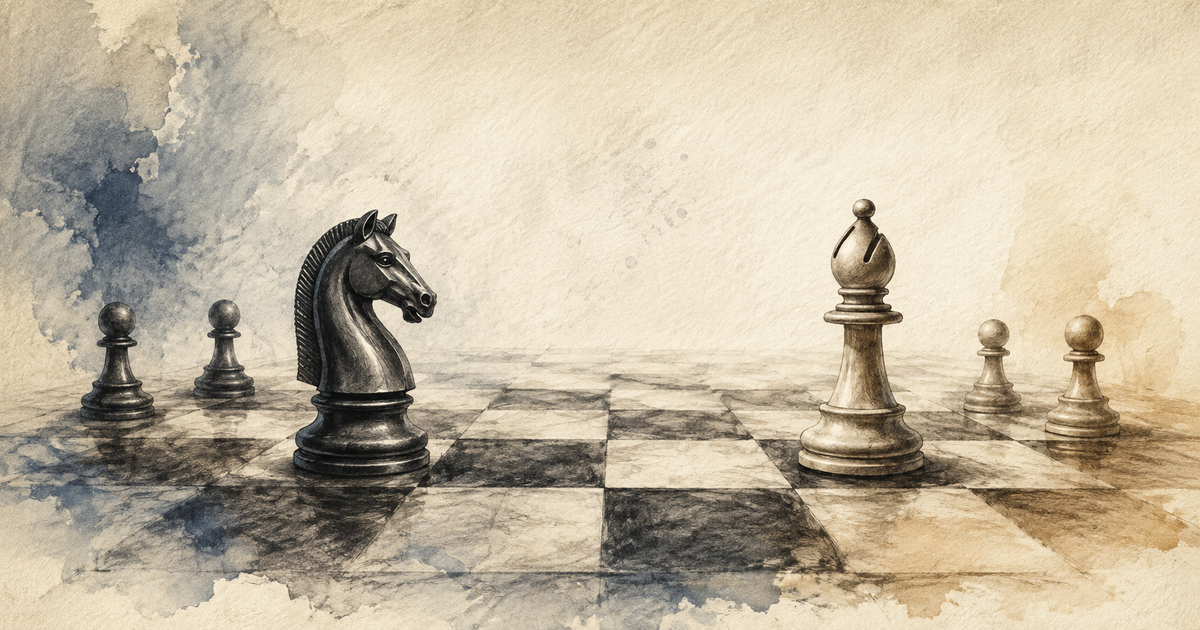
Knight-versus-bishop endgames are decided less by the nominal value of the pieces than by pawn structure, targets, and the number of playable wings. ♞ A knight may dominate a closed position, while a bishop can look almost unbeatable when play stretches across the board.
The right question is never simply which minor piece is better. 🔍 Ask which piece can attack the relevant pawns, which piece has stable squares, and whether the kings can enter.
Start With The Pawn Structure
Fixed pawns create permanent targets. A bishop wants enemy pawns fixed on its color, while its own pawns are often safest on the opposite color. A knight wants protected central squares and pawn chains that block the bishop’s diagonals.
🧱 Before moving the minor piece, identify which pawn exchanges would open the position and which would create an outpost.
Count The Wings
A bishop can influence both wings in one move; a knight needs several moves to cross the board. Passed pawns or weaknesses on both flanks therefore usually favor the bishop.
↔️ If you have the knight, try to keep play concentrated on one wing. If you have the bishop, create a second distant problem before committing your king.
Find A Permanent Knight Outpost
A knight becomes powerful when it cannot be chased by a pawn and attacks fixed targets. Central squares are ideal, but an advanced edge square can also dominate key pawns and promotion routes.
🛡️ Do not occupy the outpost too early if the knight will have no targets. Prepare the pawn structure so the square becomes both secure and useful.
Activate The King Before The Minor Piece
In many endings the king decides which minor piece is superior. An active king fixes pawns, protects entry squares, and frees the bishop or knight for offensive work.
👑 Calculate king routes with opposition and pawn breaks in mind. A beautiful bishop on a long diagonal cannot compensate for an enemy king entering the position.
Use The Bishop To Create Zugzwang
The bishop can wait along a diagonal while keeping the same responsibilities. The knight often has fewer useful waiting moves and may be forced away from a blockade or defensive square.
⏳ Preserve pawn moves and bishop diagonals when you are pressing. The ability to pass the move can turn a static advantage into a concrete breakthrough.
Use The Knight To Build A Blockade
A knight is an excellent blockader because it attacks useful squares while standing in front of a pawn. Against a bishop, choose a blockade square that the bishop cannot attack and that enemy pawns cannot challenge.
🚧 Once the blockade is secure, bring the king toward the opponent’s remaining weakness rather than wandering with the knight.
Calculate The Right Pawn Exchange
Every pawn trade changes the map of targets and squares. Trading on one wing may leave the bishop with too few winning chances, while opening a second wing may make the knight helpless.
🧮 Visualize the position after all forced recaptures. The resulting king activity matters more than whether the exchange looks structurally attractive at first.
The Piece-Quality Audit
For ten minor-piece endings, score the bishop and knight from one to five in four categories.
- Mobility: how many useful squares can the piece reach?
- Targets: which pawns can it attack or defend?
- Stability: can a pawn or king chase it away?
- Range: can it influence both wings in time?
- Compare the score with the game result and explain any difference.
📊 The score is not an engine evaluation; it is a disciplined way to discover why one piece is better.
Quick Checklist
- Are the pawns fixed or mobile?
- Is play happening on one wing or two?
- Does the knight have a protected outpost?
- Can the bishop attack pawns on its color?
- Which king can enter first?
- Who benefits from the next pawn exchange?
Common Mistakes
The biggest mistake is declaring a bishop good or bad from appearance alone. A visually active bishop may have no targets, while a restricted knight may still hold every entry square.
❌ Avoid moving the minor piece repeatedly while the kings remain passive. In simplified positions, king activity often changes the evaluation faster than a clever piece maneuver.
Continue Your Training
To study minor-piece endings, king activity, blockades, and practical conversion in greater depth, continue with the Advanced Endgame Course.
Final Thoughts
Knight-versus-bishop endings are comparisons of functions, not fixed piece values. Read the pawn structure, count the wings, activate the king, and calculate the pawn exchanges that change the battlefield.
🌟 The better minor piece is the one that can perform the position’s most important job—and your plan should be built around that job.

You may also like

How to Study a Chess Course: 5 Easy Steps
How To Play Gambit Positions In Chess?