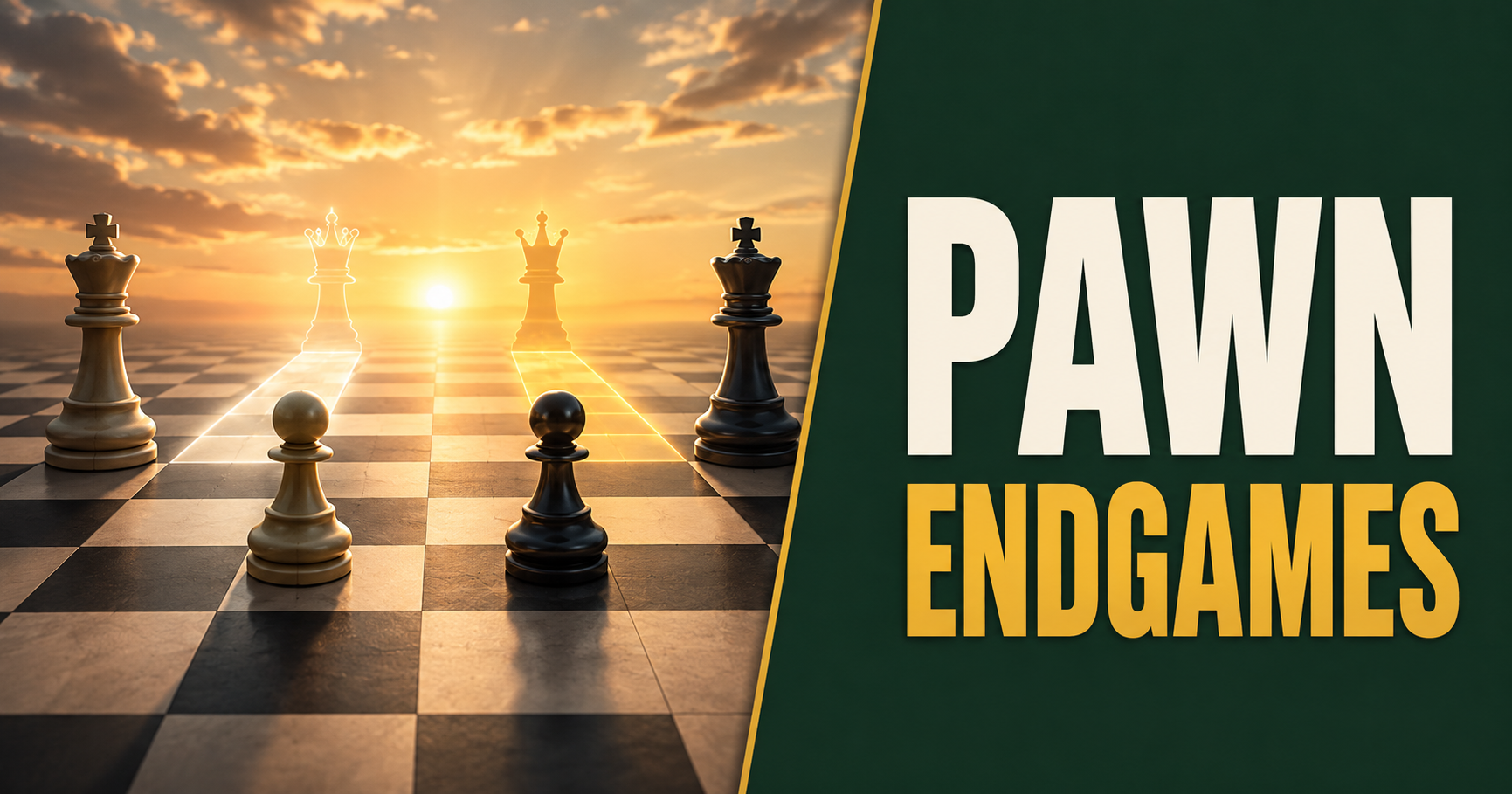
How To Study Pawn Endgames Effectively?
Pawn endgames are the laboratory of chess calculation. 🔬 With no queens or rooks to create distractions, every king move, pawn push, and spare tempo becomes visible—and irreversible.
📘 Studying pawn endgames effectively is not about memorizing hundreds of positions. It is about mastering a small set of mechanisms, calculating to a clear endpoint, and learning how one square changes the result.
Begin With The Rule Of The Square
The rule of the square tells you whether a king can catch an unsupported passed pawn without calculating every move. Imagine a square extending from the pawn to its promotion rank; if the king can enter it on its move, the pawn can usually be caught.
📐 Practice this until recognition is instant. It saves calculation time and gives you a reliable first filter in pawn races.
Master Opposition
Opposition controls which king must yield. Direct, distant, and diagonal opposition are different geometric expressions of the same idea: gaining access to key squares while denying the opponent.
👑 The Complete Endgame Course provides the essential framework for understanding these king battles.
Learn Key Squares, Not Just Moves
A pawn’s key squares are the squares its king must reach to force promotion. Their location changes with the pawn’s rank, so learn the pattern rather than one memorized sequence.
🗝️ Set up the same pawn on different files and ranks, switch the side to move, and predict the result before moving the pieces.
Calculate Pawn Races To The End
Counting moves is only the beginning. Promotion may come with check, the new queen may stop the other pawn, or a king may capture with tempo.
🏁 Write the sequence until the position is unquestionably resolved. The Calculation & Evaluation Technique course strengthens the accurate visualization these races demand.
Study Breakthrough Patterns
A pawn breakthrough sacrifices one or more pawns to create an unstoppable passer. Connected pawns can force the opponent to choose which file to abandon.
💥 Learn classic three-versus-three breakthrough patterns, then vary the pawn placement. The pattern matters, but exact calculation decides whether the sacrifice works.
Value Reserve Tempi
An unmoved pawn may provide a waiting move that transfers the obligation to the opponent. Pushing it too early can lose the opposition or destroy a future zugzwang.
⏳ During analysis, mark every safe pawn move that can be saved. These reserve tempi often explain why two nearly identical endings have different results.
Use Triangulation And Zugzwang
Triangulation changes whose turn it is while preserving the important features of the position. Zugzwang then forces the opponent to abandon a defensive square or weaken a pawn.
🔺 The Advanced Endgame Course develops these move-order ideas in more demanding positions.
Compare Candidate Pawn Moves
Pawn moves cannot be reversed, so generate alternatives before touching one. Compare king moves, captures, immediate pushes, and waiting moves.
⚖️ For each candidate, check the opponent’s most forcing response. A visually attractive passed pawn may be less important than preventing the enemy king from penetrating.
Connect Theory To Your Own Games
After every game that reaches an ending, simplify the position to its pawn core. Ask what the result would be without the remaining pieces and whether an exchange would help.
🧠 The Endgame Mastery course helps bridge foundational patterns and practical conversion decisions.
A Pawn-Endgame Study Checklist
- Can I apply the rule of the square?
- Where are the pawn’s key squares?
- Who has the opposition?
- Does either side have a breakthrough?
- Which reserve tempi remain?
- Can a king triangulate?
- Does promotion come with check?
- What changes if the side to move is switched?
✅ Answer each question before moving the pieces. Prediction is what turns a solved example into reusable skill.
How To Build A Weekly Pawn-Endgame Routine
Spend one session on a single theme, such as opposition or breakthroughs. Solve five positions, play them from both sides, and explain the winning or drawing idea aloud.
🗓️ At the end of the week, mix the themes so the mechanism is no longer announced. Keep the positions you misjudge in a review set and revisit them after several days.
Final Thoughts
To study pawn endgames effectively, combine core patterns with exact calculation and active recall. Small changes in tempo, king position, and promotion geometry deserve careful attention.
✨ Mastering these stripped-down positions improves far more than endings—it sharpens your calculation, evaluation, and respect for every pawn move.

You may also like
How to Study a Chess Course: 5 Easy Steps
How To Play Gambit Positions In Chess?