
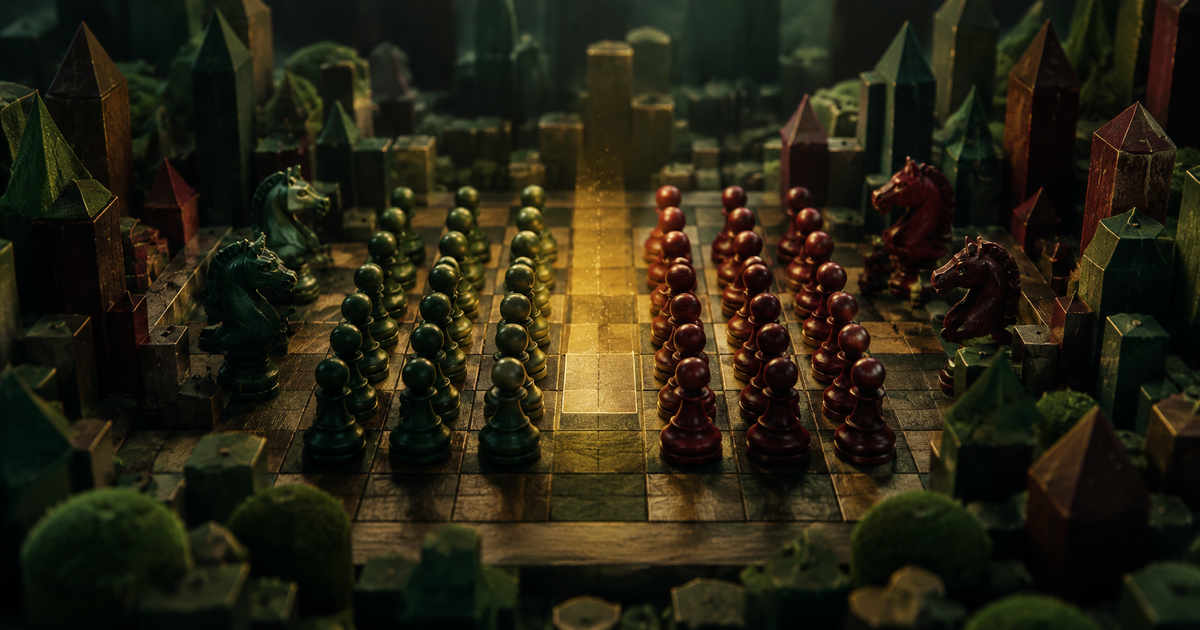
Closed Chess Positions: 8 Powerful Planning Principles
Closed chess positions contain locked pawn chains and limited open lines. Because immediate contact is reduced, plans often unfold through slow piece maneuvers, preparation of pawn breaks, and play on opposite wings. 🔒 The absence of open lines does not mean the position is quiet; it means the tactics are being prepared behind the structure.
The main strategic question is which pawn break can change the position in your favor. 🧭 Piece placement, space, and king location should all be evaluated in relation to that future break.
Table of Contents
Read The Direction Of Pawn Chains
A pawn chain points toward the side where space is gained, while its base often becomes a target. The structure can suggest which wing offers natural attacking room.
➡️ Use the chain as a clue, not a law. Concrete breaks and king safety may justify play on the opposite side.
Identify Every Possible Pawn Break
List your breaks and the opponent’s before choosing a maneuver. Determine which pieces support them, which exchanges follow, and whose position improves when lines open.
💥 A break is a transformation of the position. Prepare it only if the resulting open structure favors your pieces.
Improve The Worst Piece
Closed chess positions often provide time for rerouting. Knights can take long paths toward outposts, bishops can switch diagonals, and rooks can move behind the wing where a file will open.
🔧 Ask which piece will have no role after your intended pawn break. Improve that piece before committing the structure.
Use Space Without Overextending
A space advantage restricts the opponent and allows your pieces to maneuver more freely. But advanced pawns can become targets if the structure opens at the wrong moment.
📏 Keep enough control behind the pawn chain. Space is valuable when it supports piece activity, not when it merely occupies squares.
Create Outposts Behind The Chain
Locked pawns often leave stable squares that enemy pawns cannot challenge. A knight on such an outpost can attack the chain’s base or support a break.
♞ Prepare the route patiently and prevent the opponent from exchanging the outpost piece with a bishop or knight.
Choose The Right Wing For The King
A closed center may allow delayed castling or king placement on an unusual wing, but the position can open suddenly. Calculate the opponent’s fastest pawn break before deciding.
👑 Put the king where your own planned expansion will not remove its shield.
Prepare For The Position To Open
The strategic phase ends when a pawn break creates contact. At that moment, loose pieces, tactical alignments, and king exposure become urgent.
🚦Before executing the break, perform a tactical scan as if the position were already open.
A blueprint for closed chess positions
Take a closed middlegame and build a plan backward from the pawn break you want to play.
- List all pawn breaks for both sides.
- Choose the resulting structure that favors you.
- Mark the ideal square for every piece after the break.
- Find the slowest piece route and begin with it.
- Calculate the opponent’s attempt to break first.
🗺️ The blueprint gives every maneuver a destination and a reason.
Quick Checklist
- Where do the pawn chains point?
- What breaks exist for both sides?
- Which piece is worst placed?
- Where are the permanent outposts?
- Is the king safe after the structure opens?
- Do my pieces favor the resulting open lines?
Common Mistakes
The usual mistake is maneuvering without a pawn-break destination. Pieces may improve visually but end up on the wrong side when the structure changes.
❌ Another error is assuming there is unlimited time. The opponent is also preparing a break, and one wing may open before your long maneuver is complete.
Closed chess positions FAQ
Are knights always better than bishops?
No. Knights can use stable outposts, but a bishop may defend important squares or become powerful after a pawn break. Judge the piece by its current role and the structure you expect next. A blocked bishop is not automatically a piece to exchange.
When should I stop maneuvering and calculate?
Calculate whenever either player can create pawn contact, invade a weak square, or force an exchange. Closed chess positions still contain tactics. Before pushing a pawn, compare the lines that open for both sides and check whether your intended recapture is forced.
How can I practice choosing a plan?
Take three positions from your own games and write two candidate breaks for each side. Choose a useful preparatory move, then test the opponent’s quickest counterplay. Review the position with the Lichess analysis board after writing your explanation. Save the plan that survives the strongest reply, not just the engine’s first move.
Should I attack on the side my pawn chain points?
That is a helpful starting clue, not an obligation. In closed chess positions, an exposed king or a faster opposing break can change the correct wing. Compare timing and piece access before starting a pawn advance.
Continue Your Training
For detailed work on pawn chains, strategic maneuvers, space, and choosing the correct break, explore Middlegame Planning.
Final Thoughts
Closed chess positions reward purposeful patience. Read the chains, compare pawn breaks, reroute the worst piece, use space carefully, and prepare tactically for the moment the position opens.
🌟 Slow chess becomes powerful when every maneuver serves a specific structural change.

You may also like

How to Study a Chess Course: 5 Easy Steps

Gambit Positions in Chess: 5 Keys to Strong Compensation