
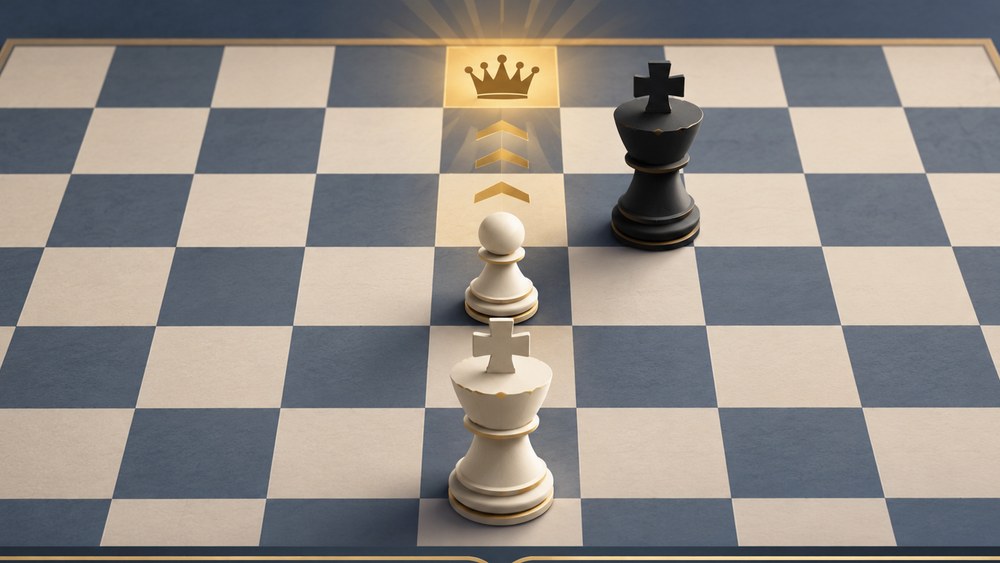
How To Win A Chess Endgame With An Extra Pawn?
➕ How To Win A Chess Endgame With An Extra Pawn requires patience because the extra pawn is an asset, not an automatic victory. The winning method is usually to improve the king, create a passed pawn, and force the defender to protect two weaknesses.
An extra pawn gives you something to work with, not permission to stop calculating. In an endgame with an extra pawn, first reduce counterplay, improve your pieces and identify the favourable pawn structure you are trying to reach.
➕ An endgame with an extra pawn: build the conversion
An extra pawn matters when it can advance or create an entry square. If all pawns remain on one wing, the defender may build a fortress or exchange everything. Keeping pawns on both wings stretches the defense.
Do not rush. Improve every piece, restrict counterplay, and only then change the pawn structure. Technical wins are often decided by the last unnecessary pawn move.
🔍 When Should You Look For It?
- Your king can become more active
- The extra pawn can create a passer
- Pawns exist on both wings
- The opponent lacks active counterplay
- A favorable exchange simplifies without removing all winning chances
These signs do not replace calculation, but they tell you when the position deserves extra attention. The more of them that appear together, the more likely the theme is to affect the best move.
🧭 A Step-By-Step Plan
- Stop counterplay: Secure your king and pawns before advancing anything.
- Centralize the king: Use the king to support entry squares and pawn breaks.
- Improve the worst piece: A passive rook or bishop can make the extra pawn irrelevant.
- Create a passed pawn: Use the majority to produce a threat that ties down the defender.
- Open a second front: Switch wings once the opponent’s pieces are committed.
Work through the steps in order until the process becomes natural. In a practical game, you may complete the scan in seconds because the relevant relationships are already familiar.
♟️ A Practical Example
In a rook ending with four pawns against three on one wing, the position may be drawable. If you also keep a queenside pawn, the defending king and rook must divide their attention. Advancing that outside passer at the correct moment can create the entry needed on the other side.
Notice that the correct decision comes from the position’s demands rather than a slogan. Good chess principles guide your search, while concrete calculation confirms the move.
❌ Common Mistakes
- Exchanging too many pawns
- Pushing the extra pawn before the king is ready
- Allowing active checks from behind
- Assuming simplification is always favorable when ahead
The most dangerous mistake is using a correct idea in the wrong position. Always compare the strategic plan with immediate tactical details before committing.
🎯 A Training Method That Works
Start from basic four-versus-three and five-versus-four endings with rooks or minor pieces. Play against strong engine defense and save every failed conversion. Analyze where counterplay appeared and which pawn move reduced your winning chances.
Keep the exercises short enough to repeat consistently. Regular focused sessions create stronger pattern recognition than one long session followed by several weeks without practice.
✅ Quick Checklist
- Stop counterplay
- Centralize the king
- Improve the worst piece
- Create a passed pawn
- Open a second front
Use this checklist during training first. With repetition, it becomes a fast internal scan that supports better decisions without consuming too much time.
♟️ Coach’s Practical Test
Start from an endgame where you are one pawn ahead but the defender is active. Write a three-stage plan: restrict counterplay, improve the king, and create a passed pawn. For each stage, identify the opponent’s most annoying resource.
Now test one unnecessary pawn move and observe which square becomes weak. This demonstrates why patient conversion matters. The extra pawn is valuable, but the winning method usually depends on piece activity and the ability to prevent a transition into a known drawing setup.
♟️ Test an endgame with an extra pawn before simplifying
Choose one of your own extra-pawn endings and identify the defender’s most useful move. It might activate the king, exchange your outside passer or start checking from behind. Your first task is to decide whether you must stop that idea before improving your position.
Compare a pawn advance with a king move. After the pawn advance, which squares are permanently weakened? After the king move, can the opponent create counterplay? The best move is not automatically the slower one, but every irreversible change deserves a concrete reason.
Next, imagine exchanging the remaining rooks or bishops. Do not stop at ‘I am still a pawn ahead.’ Locate both kings, count the pawn races and check whether the defender can reach a blockade. A favourable-looking exchange may remove the very piece that made your extra pawn dangerous.
Finally, switch sides and defend the position. Trying the defender’s resources reveals whether your winning plan depends on cooperation. Save one position where the pawn advance worked and one where improving a piece first was more accurate.
💬 Questions about an endgame with an extra pawn
Does an extra pawn always win?
No. Piece activity, king position, pawn structure and available exchanges all matter. Some positions have a drawing mechanism that the extra pawn cannot overcome. Distinguish improving your practical chances from proving a forced win.
Should I exchange pieces or pawns?
Calculate the resulting position instead of applying a universal rule. Exchanging an active enemy piece can help, while exchanging the last useful pawn can remove your winning chances. The location of the remaining material is as important as the count.
When should I push the passed pawn?
When the advance creates a useful threat without allowing the defender a better blockade or counterattack. Sometimes the passer should tie down a piece while your king works elsewhere. A pawn does not have to advance every move to be valuable.
What is a useful training target?
Repeat the same type of ending from both sides and explain the decisive transition. Aim to identify the correct plan and the defender’s best resource, rather than merely winning once against an opponent who made an early mistake.
Deepen the calculation with pawn-race exercises and same-coloured bishop endings. The Lichess practice section offers additional endgame positions for testing basic techniques.
Final Thoughts
Convert an extra pawn by limiting counterplay, improving the king, and creating two problems. The advantage wins only when your pieces help the pawn become active.
🌟 Improvement comes from recognizing the right moment, following a clear process, and reviewing the result honestly. Apply the idea in your own games until it becomes part of your natural thinking.

You may also like

Basic Checkmates in Chess: 5 Easy Steps to Confident Wins

How To Practice Blindfold Chess?