Preparing for a specific chess opponent is the process of turning public game information into a practical plan for one game. It includes opening choices, recurring structural preferences, time-management habits, and the kinds of decisions the opponent handles well or …
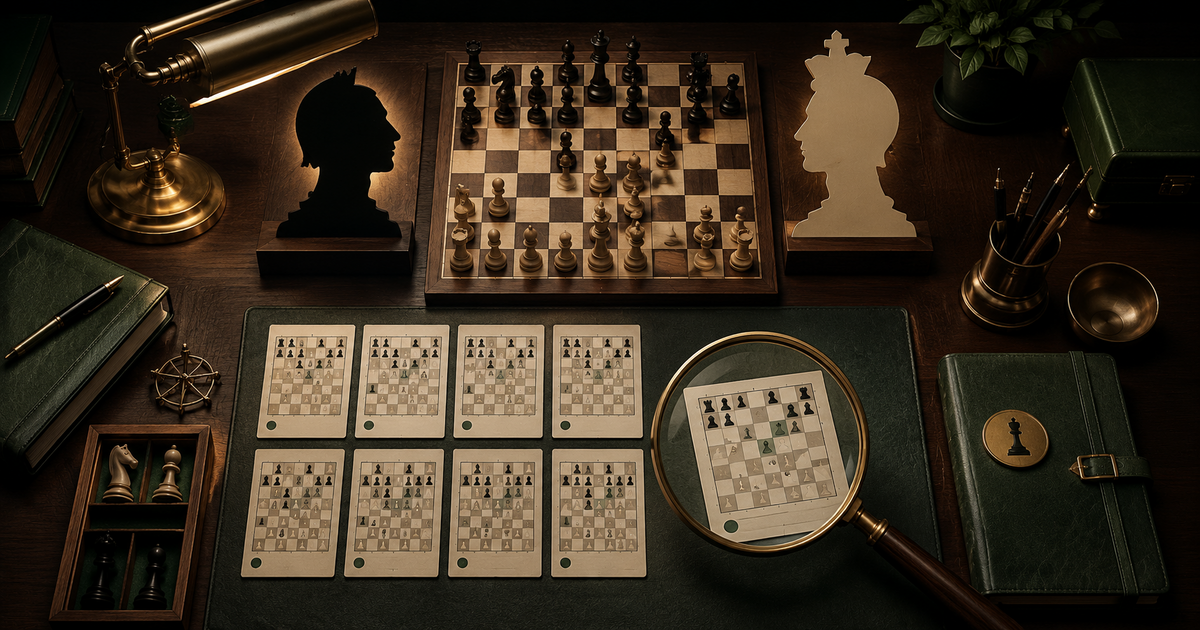
Chess studies are composed positions with a precise task, usually ‘White to play and win’ or ‘White to play and draw.’ Studies concentrate unusual geometry, hidden defenses, stalemate ideas, promotions, and long forcing lines into a small number of pieces. …
Restriction in chess is the art of reducing the opponent’s useful moves before beginning your own active operation. A restricted piece may have legal squares but no productive role; a restricted pawn break may exist but fail tactically. 🔒 The …
Dynamic imbalances in chess arise when the two sides possess different kinds of advantages: material against initiative, bishop pair against structure, rook against minor pieces, space against counterplay, or king safety against development. ⚖️ These positions cannot be judged by …
Open chess positions reward activity, accurate timing, and king safety. When central pawns disappear, files and diagonals connect both sides of the board, so a single tempo can change which side controls the initiative. ⚡ The practical goal is not …
Closed chess positions contain locked pawn chains and limited open lines. Because immediate contact is reduced, plans often unfold through slow piece maneuvers, preparation of pawn breaks, and play on opposite wings. 🔒 The absence of open lines does not …
Chess pattern recognition allows a player to see familiar relationships quickly: a back-rank weakness, a knight outpost, a mating net, a rook behind a passed pawn, or a standard pawn break. 🧠 It reduces the amount of calculation needed because …
A premature attack in chess commits pieces or pawns before the position can support them. The attacker may neglect development, leave the centre unstable, or expose their own king while rushing to create threats. ⚠️ The correct punishment is usually …
Model games turn opening moves into useful knowledge by connecting them to typical pawn breaks, piece routes, exchanges, attacks, and endgames. 📚 One complete game can explain a variation more clearly than dozens of isolated engine lines. The best model …