
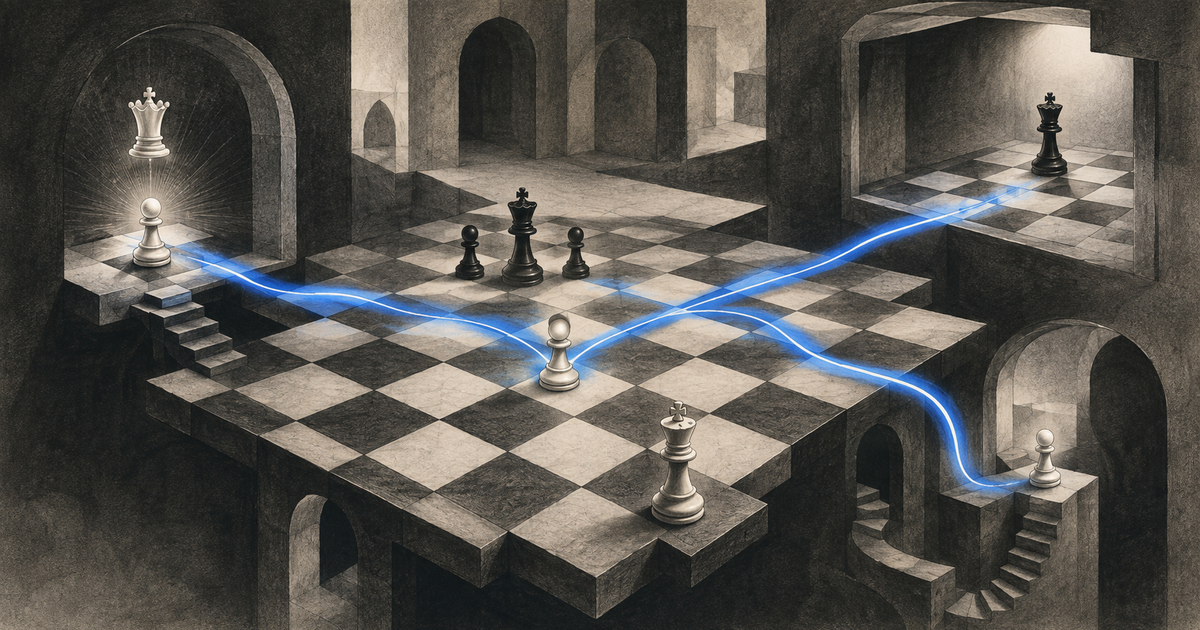
Chess Studies: 8 Powerful Steps to Solve Accurately
Chess studies are composed positions with a precise task, usually ‘White to play and win’ or ‘White to play and draw.’ Studies concentrate unusual geometry, hidden defenses, stalemate ideas, promotions, and long forcing lines into a small number of pieces. 🧩 They are excellent calculation training when solved with the right method.
The purpose is not to guess the composer’s trick. 🧠 It is to build a complete tree, understand the opponent’s best defense, and recognize why natural moves fail.
Table of Contents
Chess studies: clarify the exact task before calculating
A winning study requires a forced win against every defense. A drawing study requires a strategy that holds against every winning attempt. Finding one attractive main line is insufficient in either case.
🎯 Read whose move it is, check for promotion possibilities, and note whether the position could contain stalemate or underpromotion themes.
Inventory Forcing Moves And Threats
List checks, captures, promotions, and direct threats for both sides. With few pieces, long-range moves and quiet zugzwang ideas are also common.
🔍 Do not discard an impossible-looking move before checking its tactical point. Studies are designed to challenge ordinary assumptions.
Find The Main Defensive Idea
Instead of asking only how White wins, ask how Black tries to escape. The defense may involve counterpromotion, stalemate, sacrifice, a checking sequence, or a hidden fortress.
🛡️ Once the defensive mechanism is clear, the first move often becomes easier to understand.
Calculate Branches To A Verifiable End
Do not stop because a line looks winning. Continue until you reach checkmate, a known theoretical ending, unavoidable promotion, repetition, or a clearly established material result.
🧮 Every branch must end with a reason, not a feeling.
Use Elimination Without Guessing
Analyze natural moves first and record the exact defense that refutes them. The failures reveal which feature the solution must change.
🚫 Elimination is valuable when the refutation is understood. Rejecting moves because they ‘do not look composed’ teaches nothing.
Track Geometry With Square Names
Long bishop diagonals, knight routes, queen checks, and promotion squares are easier to hold when named. Write short variations if the line exceeds your visual memory.
📐 Reconstruct the position after each critical branch to prevent pieces from drifting in your imagination.
Study The Artistic Point After Solving
After revealing the solution, explain the central idea in your own words and compare it with the failed natural line. Then replay the best defense, not only the beautiful main line.
✨ The study becomes memorable when you understand the contrast the composer created.
A forty-minute session for solving chess studies
Use one high-quality study and divide the session into deliberate stages.
- Spend five minutes inventorying material, checks, and special motifs.
- Spend ten minutes finding Black’s strongest defensive resources.
- Spend fifteen minutes calculating candidate first moves.
- Spend five minutes writing your final proof tree.
- Spend five minutes comparing with the solution and naming the artistic point.
⏳ One deeply solved study can be better training than many quickly guessed positions.
Quick Checklist
- What exactly must be proved?
- What are the forcing resources for both sides?
- What is the defender’s main idea?
- Does every variation reach a verifiable result?
- Why do the natural moves fail?
- Can I explain the solution without replaying it?
Common Mistakes
The main mistake is hunting for an attractive first move without building the opponent’s defense. This turns calculation into guessing.
❌ Another error is checking the solution as soon as one branch becomes difficult. Stay with the position long enough to discover the source of the difficulty; that is where the training value lies.
Chess studies FAQ
Can I move the pieces while solving?
Choose the training goal first. For visualization, keep the pieces fixed and write your calculated line. For learning a difficult endgame mechanism, moving the pieces during review can help. Separate the solving phase from the review phase so you know which branches you actually calculated.
When should I use an engine?
Use it after a serious independent attempt and after reading the composer’s solution. The Lichess analysis board can help you test a missed defensive resource. Do not treat a shallow evaluation as proof of a long study; the point may lie beyond the displayed variation.
Which chess studies should I start with?
Begin with positions where you understand the basic ending and can follow the solution. Increase complexity when your written analysis includes the best defence, the key alternative, and a clear final result. Difficult chess studies are useful only when you can explain what you learned afterward.
Keep a short review note naming the missed idea, such as stalemate, a quiet move, or an unexpected promotion. Revisit the position later without its theme label to test whether the idea is now part of your calculation routine.
Continue Your Training
To strengthen deep visualization, candidate selection, and accurate evaluation of long forcing lines, study the Calculation & Evaluation Technique.
Final Thoughts
Solve chess studies by proving, not guessing. Clarify the task, identify the defensive mechanism, calculate every branch to a known result, and learn from the contrast between the solution and natural failures.
🌟 The beauty of a study is not only in its final move. It is in the disciplined reasoning that makes the move necessary.
Tag:Chess Studies

You may also like

How to Study a Chess Course: 5 Easy Steps

Gambit Positions in Chess: 5 Keys to Strong Compensation