How To Create Counterplay In Worse Chess Positions?
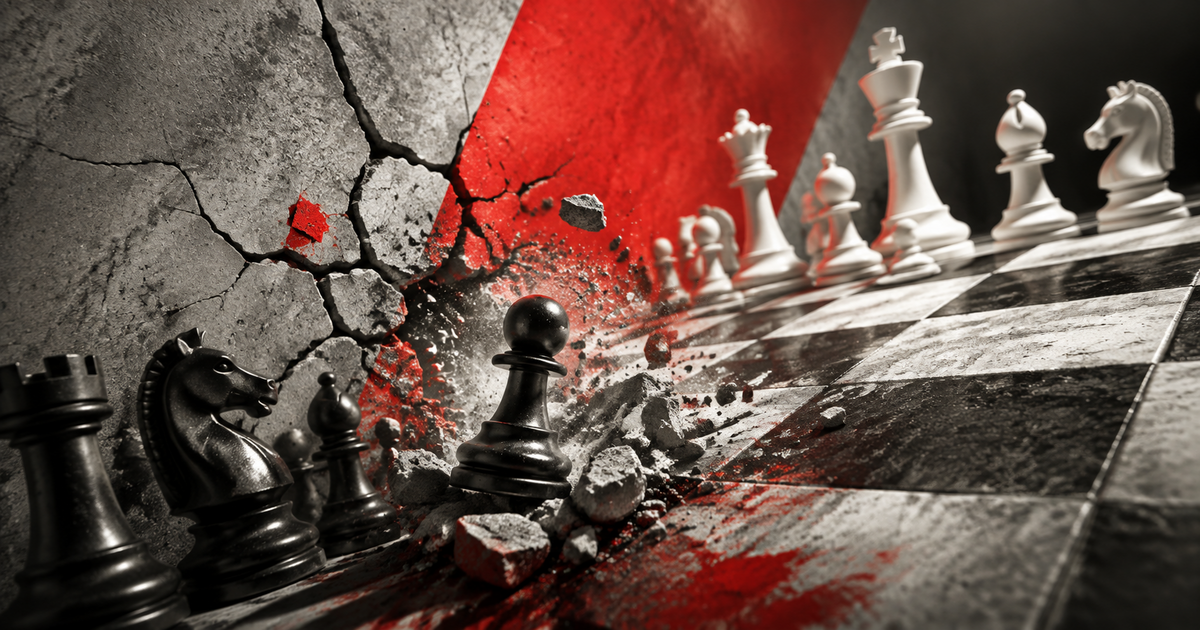
A worse position does not have to become a passive position. Counterplay gives the opponent a problem that must be solved, reducing the time and freedom available to improve their advantage. 🔥 The aim is not to pretend the evaluation is equal; it is to make the path to victory difficult and concrete.
Effective counterplay grows from the position’s remaining active features: a pawn break, an exposed king, a passed pawn, a loose piece, or control of one useful line. 🧭 Your task is to identify the feature that can become urgent before the opponent removes it.
Stop Defending Every Weakness
When several weaknesses exist, trying to protect all of them may tie every piece to passive squares. Decide which target can be abandoned in exchange for activity elsewhere.
⚖️ Material is only one resource. Giving up a pawn can be correct if it activates the queen and rooks or creates threats against the king.
Find The Break That Changes The Structure
A pawn break can open a file, release a bishop, create a passed pawn, or force the stronger side to calculate. Even a break that loses a pawn may improve the practical position.
💥 Calculate breaks before making slow defensive moves. The opponent may soon blockade the pawn or exchange the piece that supports it.
Attack The Base Of The Advantage
Ask what makes the opponent’s advantage stable. It may be a protected passed pawn, a dominant knight, control of an open file, or a safe king. Counterplay should challenge that foundation rather than a random pawn.
🎯 If the base disappears, the entire winning plan may need to be rebuilt.
Keep Queens When The King Is A Target
Queen exchanges often simplify the stronger side’s task, but avoiding them is useful only if you can create real threats. A queen without active squares merely delays the same endgame.
👑 Look for perpetual-check patterns, weak color complexes, and queen routes that force the king away from safety.
Create A Passed Pawn With Tempo
A distant passed pawn can distract pieces from the main battle. Its value comes from the moves the opponent must spend blockading or capturing it.
🚀 Advance when the tempo opens activity for another piece. Pushing a pawn that can be stopped without inconvenience does not create counterplay.
Increase The Number Of Decisions
The stronger side prefers a position with one clear plan. Introduce alternatives, tactical branches, and threats on different parts of the board when the risk is justified.
🌪️ Practical resistance improves when each move demands a fresh calculation. The objective evaluation may remain worse while the human difficulty rises.
Know When To Return To Defense
Counterplay is not permission to ignore direct threats. Once the opponent neutralizes your active idea, reassess and defend the most urgent point.
🛡️ The best defenders alternate between activity and consolidation. Continuing a failed attack can turn a difficult position into a lost one.
The Three-Resource Search
Take positions from losses where you felt forced to defend and pause before the position collapsed.
- Find one pawn break that changes the structure.
- Find one piece activity that creates a threat.
- Find one material concession that gains time or initiative.
- Calculate the opponent’s cleanest answer to each resource.
- Choose the line that creates the greatest practical difficulty.
🔎 Even when none of the resources equalizes, the exercise develops active defensive vision.
Quick Checklist
- Which weakness can I afford to abandon?
- What pawn break is still available?
- What supports the opponent’s advantage?
- Can I threaten the king or create a passed pawn?
- Does my move force a decision?
- When must I return to direct defense?
Common Mistakes
Desperation is not counterplay. Random sacrifices and unsupported pawn pushes may create visual activity while making the opponent’s conversion easier.
❌ The opposite error is waiting for the opponent to become careless. Counterplay should be created while your active resources still exist, not after every line has been closed.
Continue Your Training
For deeper training in active defense, practical resistance, sacrifices, and finding resources under pressure, study The Art Of Defense.
Final Thoughts
Counterplay turns a worse position into a contest of problems. Abandon nonessential weaknesses, use the available break, challenge the base of the advantage, and force the opponent to calculate.
🌟 Good defense is not only the ability to hold. It is the ability to make the stronger side earn every step forward.
Tag:Chess Defense, Counterplay

You may also like
How to Study a Chess Course: 5 Easy Steps
How To Play Gambit Positions In Chess?