Before trading your good bishop, identify which surviving piece benefits and which duty becomes harder. Compare usable gains with the coverage you surrender.


Before trading your good bishop, identify which surviving piece benefits and which duty becomes harder. Compare usable gains with the coverage you surrender.

Find where an advanced pawn front has become too costly to hold, then compare consolidation, exchanges and active concessions without assuming every pawn can be saved.

Learn seven tests for middlegame zugzwang, from defensive duties and pawn reserves to the difference between genuine compulsion and ordinary pressure.
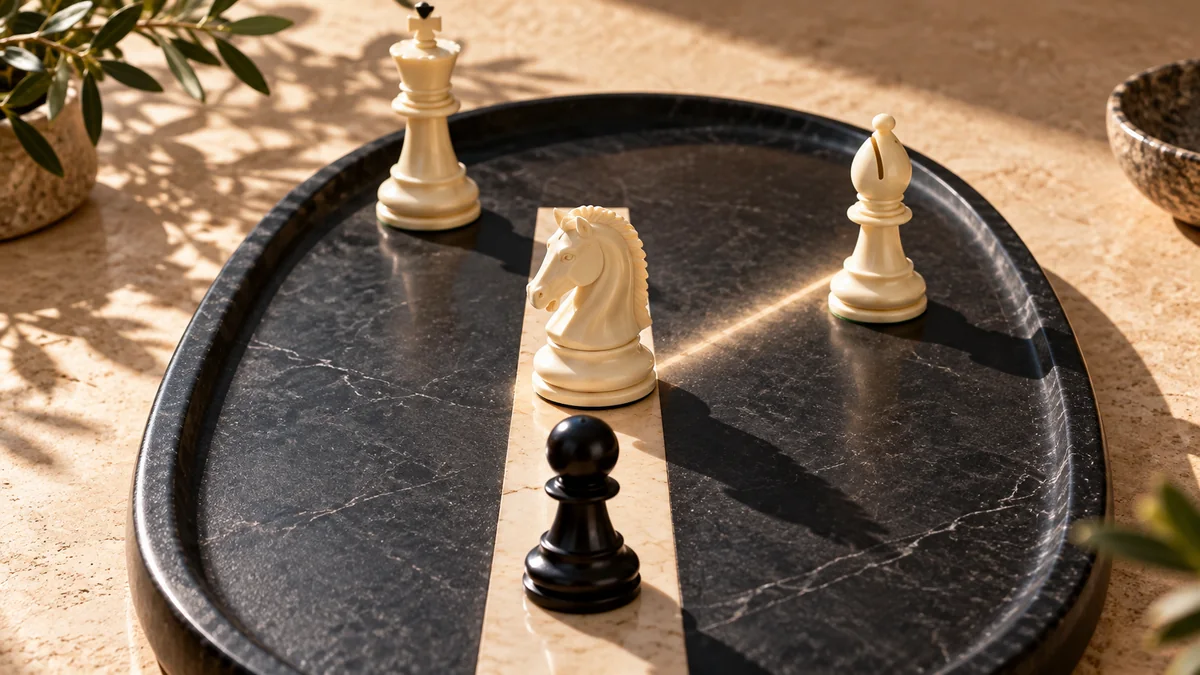
Choose between a knight’s occupied blockade square and a bishop’s interception diagonal by checking protection, pawn captures and the cost of staying.

Your well-posted knight may be worth keeping or trading. Compare its remaining influence with the concrete return and the work your surviving pieces must do.

Make knight rerouting in closed positions safer by testing the journey, not just its destination. Check lost duties, pawn breaks and useful stopping squares.

Learn how to clear a square or line without creating a new problem. Assign both pieces useful jobs and test what happens during the handover.
Not a member yet? Register now
Are you a member? Login now