How To Use Tactical Motifs In Positional Play?
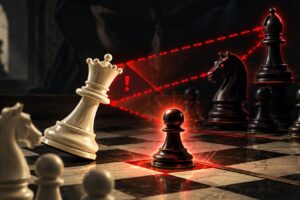
Tactics and strategy are not separate subjects. A positional advantage becomes valuable when it creates a tactical possibility, and a tactical motif often succeeds because the pieces were positioned better first. ⚡ Strong players improve their position while quietly increasing the number of threats available.
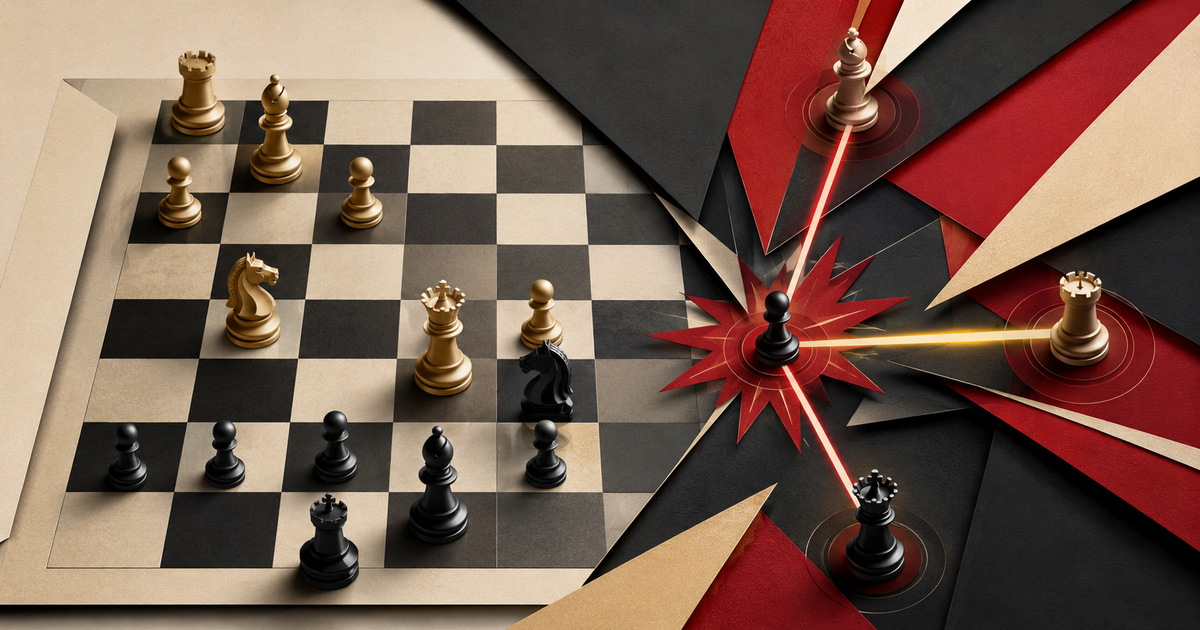
Instead of waiting for a puzzle-like combination, learn to recognize tactical motifs as strategic tools. 🔧 A pin can restrict a pawn break, an overload can improve a piece, and a discovered attack can determine which file you should occupy.
Treat Loose Pieces As Positional Targets
An undefended piece may not be tactically lost today, yet it limits the opponent’s freedom. Every move that creates a threat against it gains tempo or forces another piece into a defensive role.
🎯 Before choosing a plan, mark every loose or once-defended piece. These pieces often reveal the side of the board where active play will be easiest.
Use Pins To Restrict Pawn Moves
A pin is more than a chance to win material. Pinning a knight to the queen may stop a central pawn break, prevent a defender from reaching a strong square, or allow you to improve without being challenged.
📌 Ask what the pinned piece would do if it were free. Your positional plan should exploit the missing function, not merely attack the piece again.
Create Overloads Before You Attack
A defender becomes overloaded when it must protect two important points. You can often create this condition with a quiet move that introduces a second weakness rather than with an immediate sacrifice.
⚖️ Improve the least active piece toward a second target. The defender may be forced to abandon the first target before any combination begins.
Build X-Ray Pressure On Files And Diagonals
Rooks, bishops, and queens can influence a square through an intervening piece. This x-ray pressure changes the tactical value of exchanges and may make a seemingly protected piece vulnerable after one recapture.
🔦 When pieces line up, calculate what happens if the middle piece moves or is exchanged. The line itself can justify doubling rooks or repositioning a bishop.
Use Deflection As A Planning Tool
If one defender holds the entire position together, your plan can focus on drawing it away. A pawn advance, exchange offer, or attack on another wing may deflect the key piece without a direct combination.
🧲 The important question is not only how to attack a weakness, but which defender must be removed for that attack to work.
Recognize Tactical Insurance
Sometimes a tactical resource allows an otherwise risky positional move. You may place a rook on an open file because a back-rank motif prevents the opponent from taking a pawn, or advance a wing pawn because a discovered attack protects the king indirectly.
🛡️ Calculate the resource precisely. Tactical insurance works only while the underlying motif remains valid.
Convert The Motif Into A Lasting Gain
Not every tactical opportunity should end in material. The best result may be a dominant outpost, a favorable exchange, a ruined pawn structure, or permanent control of an open file.
♜ Compare the immediate gain with the positional result. A small combination that leaves your pieces active can be stronger than winning a pawn and losing the initiative.
Motif-To-Plan Training
Take an annotated strategic game and pause before every major improvement move.
- Locate loose pieces, pins, overloads, and x-ray alignments.
- Predict which motif could support a positional plan.
- Choose one quiet move that increases the motif’s power.
- Compare your idea with the game continuation.
- Write the long-term gain created by the tactic.
🔁 This drill teaches you to see combinations developing several moves before they become forcing.
Quick Checklist
- Which pieces are loose or overloaded?
- Are any pieces aligned on a file, rank, or diagonal?
- Can a pin restrict a useful defensive move?
- Can a second target deflect the main defender?
- What positional gain remains after the tactic ends?
Common Mistakes
A common mistake is forcing a motif that is visually present but tactically unsound. Alignment is a clue, not a combination. Calculate the opponent’s simplest defense.
❌ The opposite mistake is solving tactics only from puzzle positions. If every exercise announces that a winning move exists, you never practice deciding whether the position is tactical at all.
Continue Your Training
For a structured approach to connecting calculation with accurate positional evaluation, use the Calculation & Evaluation Technique.
Final Thoughts
Tactical motifs give strategic plans force. Use loose pieces, pins, overloads, deflections, and x-rays to choose where your pieces belong before the combination is visible.
🌟 When tactics become part of your positional vision, quiet moves feel more purposeful—and your advantages become much harder to neutralize.

You may also like
How to Study a Chess Course: 5 Easy Steps
How To Play Gambit Positions In Chess?