How To Improve Board Awareness In Chess?
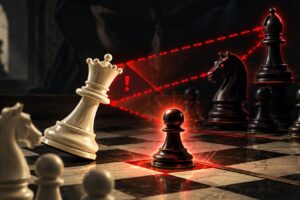
Board awareness is the ability to notice relevant information before it becomes a problem: an undefended piece, a long diagonal, a hidden retreat, a pawn break, or a change on the opposite wing. 👀 Many blunders are not calculation failures; they begin because the player never registered the feature that mattered.
You can train awareness separately from deep analysis. 🔍 The goal is to make a complete scan faster and more reliable, so your calculation begins with an accurate picture of the board.
Scan The Whole Board After Every Move
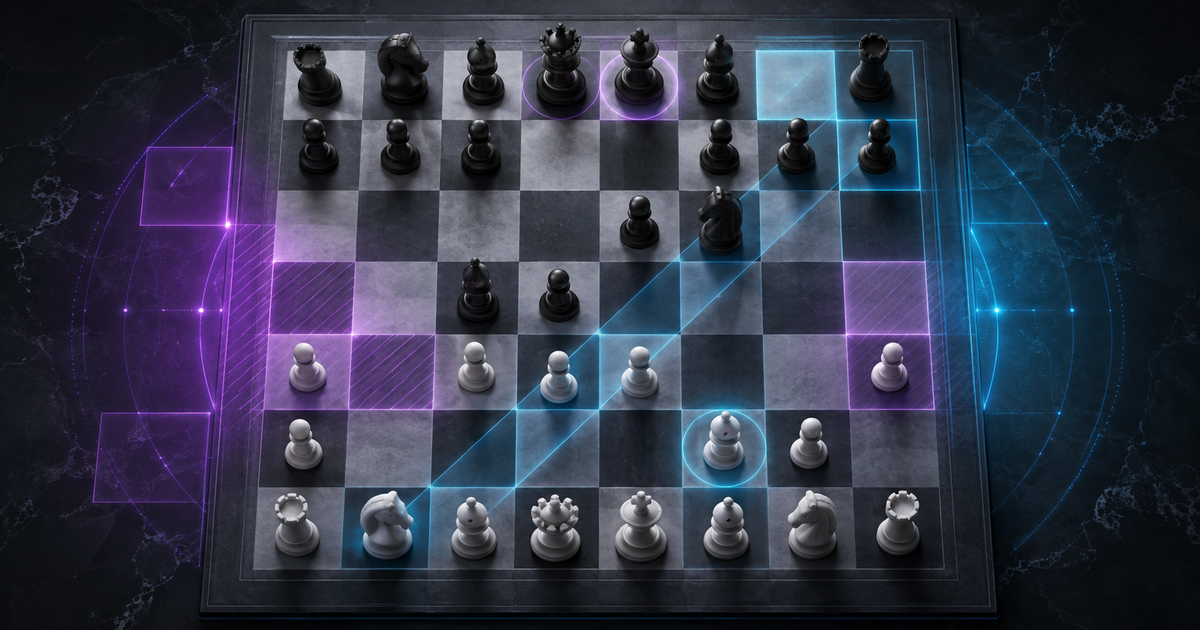
Train your eyes to travel through all four quadrants instead of remaining near the last move. A queenside pawn move can uncover a bishop toward the kingside, and a central exchange can open a rook on the edge.
🧭 Use a consistent scan path—clockwise, rank by rank, or from each king outward. Consistency matters more than the exact route.
Track Lines That Changed
Every move occupies one square and vacates another. The vacated square may open a file, rank, or diagonal, while the destination may block a defender or attack a new target.
🔦 Ask two questions: what line opened, and what line closed? This simple habit reveals discoveries and x-rays before they become tactical surprises.
Count Loose And Once-Defended Pieces
Pieces defended exactly once can become tactically vulnerable if the defender is pinned, overloaded, or deflected. Pawns deserve the same attention, especially those near the king.
⚠️ Make a mental inventory before choosing a plan. Loose pieces often determine which candidate moves deserve calculation.
Notice The Opponent’s Quiet Threats
Not every threat attacks material immediately. A quiet move may prepare a pawn break, improve a queen route, remove a defender, or create a mating net two moves later.
🧠 Translate the opponent’s move into a sentence: ‘They want …e5,’ ‘They cleared the seventh rank,’ or ‘They are freeing the bishop.’ If you cannot name the idea, look again.
Recheck The Far Side Before Committing
A move that looks strong locally may lose to a resource on the far side of the board. Long-range pieces make this especially dangerous in open positions.
↗️ Before a sacrifice, pawn push, or king move, inspect every enemy queen, rook, and bishop line from its current square to your target area.
Use Coordinates To Strengthen Visual Accuracy
Knowing square names quickly helps you hold locations in working memory. It also makes calculation notes, verbal explanations, and opening review more precise.
🔤 Practice naming random squares by color, neighboring squares, and knight connections. This is not glamorous training, but it improves the map your calculation uses.
Reduce Visual Noise
When every piece feels equally important, awareness becomes overloaded. Group information into categories: king safety, loose material, active lines, pawn breaks, and critical squares.
🗂️ Chunking allows you to see a position as a small number of relationships rather than thirty-two separate objects.
The Ten-Second Snapshot Drill
Show yourself a position for ten seconds, hide it, and answer targeted questions without moving pieces.
- Where are both kings and queens?
- Which pieces are undefended?
- Which files and diagonals are open?
- What was the most forcing move for either side?
- Reconstruct the pawn structure before viewing the position again.
⏱️ Begin with simple positions and increase complexity only when the answers are consistently accurate.
The Awareness Scan
- What changed after the last move?
- Which line opened or closed?
- What is loose or defended only once?
- What is the opponent preparing?
- Is there a resource on the opposite side of the board?
Common Mistakes
A common mistake is trying to calculate more deeply while the initial board picture is incomplete. Deeper analysis built on a missed defender produces confident errors.
❌ Do not turn the scan into a slow ritual that consumes the clock. Practice it deliberately off the board until the categories become quick and automatic.
Continue Your Training
To combine accurate board scanning with disciplined candidate selection and calculation, use the Calculation & Evaluation Technique.
Final Thoughts
Board awareness improves when your eyes and questions follow a repeatable route. Scan the full board, track changed lines, inventory loose pieces, and translate quiet moves into plans.
🌟 You do not need to see everything at once. You need a process that reliably brings the important information into focus before you decide.

You may also like
How to Study a Chess Course: 5 Easy Steps

How To Play Gambit Positions In Chess?