
Zwischenzug in Chess: 4 Powerful Move-Order Tactics
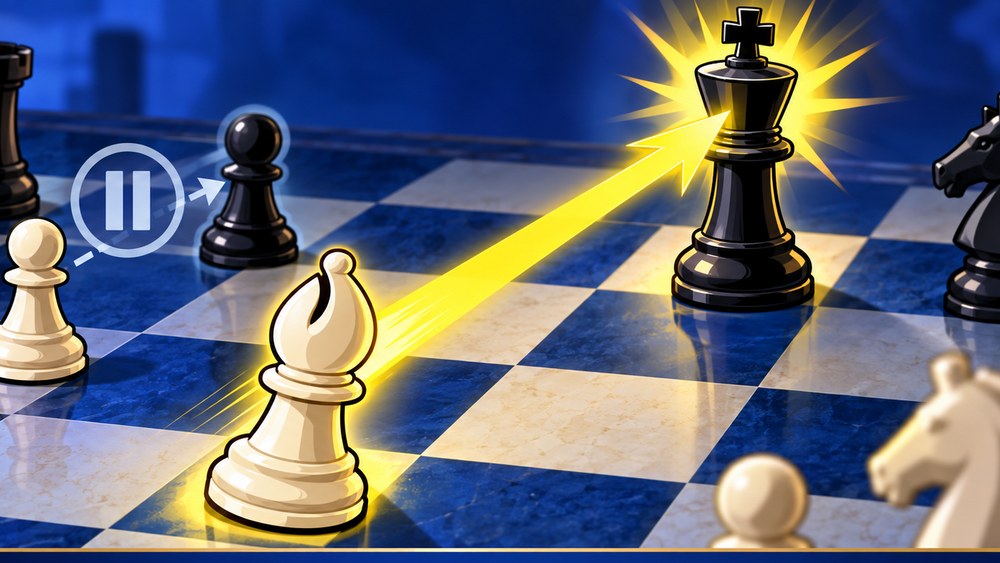
Zwischenzug in chess means an in-between move: you interrupt an expected sequence with a more urgent action before returning to the original task. Instead of recapturing automatically, you might give check, threaten mate or attack a more valuable piece.
The useful habit is simple: after a capture, treat the board as a new position. The move that looked forced one turn ago may no longer be your best choice. This guide explains four types of zwischenzug and how to separate a real tactic from an attractive distraction.
Table of Contents
Table of Contents
🧠 What makes a zwischenzug work?
An exchange creates an expectation: one side captures and the other side recaptures. Zwischenzug breaks that expectation by introducing a demand that matters more than restoring the material immediately.
For the idea to work, the inserted move must improve the final outcome. It may force the king onto a worse square, remove a defender, gain material or change which piece will make the eventual recapture. Merely playing a surprising move is not enough.
There is a cost to delaying a recapture. The piece you intended to take may escape, receive protection or make another capture. Your calculation must show why the benefit of the interruption is worth that risk.
Look for the motif when a capture opens a file or diagonal, exposes a king, or leaves a queen or rook undefended. These are changes you can identify before calculating a long variation.
♟️ Four types of zwischenzug in chess
1. An intermediate check
A check demands an answer, which makes it a natural first candidate. It can move the king away from a defender, force an interposition or place the king on a square where a later capture becomes stronger.
Calculate all legal ways to answer the check: a king move, a capture of the checking piece, or a block. A checking move is forcing, but it does not necessarily force the particular king move you hoped for.
After the reply, check the original recapture again. Is the target still there? Did the blocking move protect it? Can you restore the material without exposing your own king? The interruption and the return must both work.
2. An attack on the queen or another valuable piece
Attacking the queen can create time for an improved exchange. A developing move that attacks the queen may also place your piece on a better square before you complete the original recapture.
Do not assume that the queen must make a quiet retreat. Look for a queen capture with check, an attack on your queen, or a stronger threat elsewhere. When both sides have pieces under attack, compare the complete sequence rather than the value of one target.
3. A mating threat
An immediate mating threat can take priority over a recapture. The defender may have to create an escape square, trade an attacker or move a piece away from another defensive duty.
Verify that the threat really is mate. Count the king’s escape squares and check whether the threatening piece can be captured. Then inspect the defender’s checks: a countercheck may change the order in which threats must be answered.
This type of zwischenzug often connects with a weak back rank. A rook tied to preventing mate may be unable to complete an otherwise natural exchange.
4. A stronger capture or removal of a defender
Sometimes another capture is more urgent than the expected one. Removing a defender first can change which recapture is available, or leave a second target exposed after the exchange finishes.
Count both sides’ material at the end of the line. Winning a rook while losing a queen is not a successful combination, and taking a defender may be pointless if the intended target can escape with check.
The related idea of an overloaded piece helps you locate candidates. Ask whether one defender is responsible for both the original exchange and a more urgent threat.
🔍 Compare the ordinary line with the zwischenzug line
Start with the normal recapture and calculate until the exchanges settle. Record the material balance, king safety and piece activity. This is your baseline, not an inferior move by definition.
Next, insert your candidate zwischenzug and give the opponent the strongest reply you can find. Continue until you reach a similarly stable position. Only then compare the results.
For example, an intermediate check might push the enemy king onto a square where a later capture comes with another check. That can change the result. But if the defender can block the first check and protect the original target at the same time, your intended improvement may disappear.
This is a decision model, not a claim that every such check wins. Use an actual board position to verify the geometry. The question is whether the inserted move changes something concrete that remains valuable after the opponent responds.
Reverse the test too. Before starting your own combination, look for the opponent’s zwischenzug. Many calculation errors happen because the attacker assumes the defender will obediently complete an exchange.
🎯 A training routine for spotting intermediate moves
Choose a small set of tactical positions involving captures. Before recapturing, name one available check, one direct threat and one alternative capture. Some positions will have no useful intermediate move; recognising that is part of the exercise.
Write two short lines: the immediate recapture and your best alternative. Do not move the pieces during the first attempt. Afterward, replay both lines on a board and check where your visualisation or evaluation changed.
Use the Lichess practice area for additional tactical exercises, then include positions from your own games. A puzzle label tells you what to search for; an ordinary game does not.
During your next game review, stop before each important recapture. Ask what the previous move changed and whether the opponent had an interruption too. Save just the positions where this question revealed a missed candidate.
Retest those positions later with the answers hidden. Aim to recognise the trigger, such as an opened diagonal or an undefended queen, rather than remembering a move without understanding why it worked.
💬 Common questions about zwischenzug
Does a zwischenzug have to be a check?
No. A check is a useful starting candidate, but an attack on the queen, a mating threat or a stronger capture can also interrupt the sequence. What matters is the resulting position, not the label attached to the move.
Is the immediate recapture usually a mistake?
No. Many recaptures are correct. The purpose of the habit is to notice alternatives, not to reject a sound move because it looks ordinary. Keep the direct line as your baseline and choose the interruption only when it improves the outcome.
How can I use this in blitz without losing time?
Train the scan in slower exercises first. In a game, concentrate on forcing changes: checks, newly opened lines and exposed major pieces. Avoid a long search when the position offers no realistic alternative.
The takeaway: zwischenzug in chess is a move-order skill. Pause before the expected reply, identify a forcing alternative, and calculate far enough to confirm that the interruption actually helps.

You may also like

How to Study a Chess Course: 5 Easy Steps
How To Play Gambit Positions In Chess?