
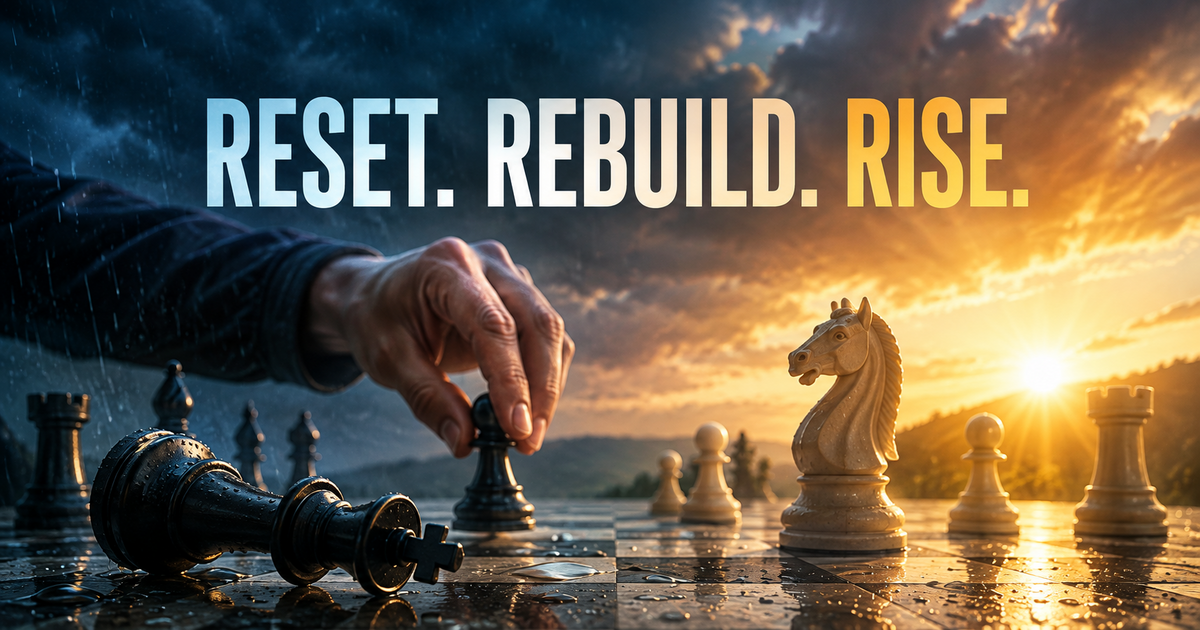
How To Recover After Losing A Chess Game?
Losing a chess game can feel personal. You invested time, energy, preparation, and pride—then one mistake or difficult decision changed the result. 😔 The emotion is real, but it does not have to control the next round.
Recovery is a competitive skill. 💪 Strong tournament players do not avoid disappointment; they process it quickly enough to regain clarity, learn the useful lesson, and return to the board.
Accept The Emotion First
Do not force yourself to feel positive immediately. Frustration, embarrassment, and anger are normal responses. Acknowledge the emotion without turning it into a judgment about your ability.
🌧️ Say, ‘I am disappointed because the game mattered.’ That statement is healthier and more accurate than ‘I always fail’ or ‘I am a terrible player.’
Create Physical Distance
Leave the playing area for a short walk, drink water, and breathe slowly. Physical movement helps interrupt repetitive thoughts and reduces tension.
🚶 Avoid immediately checking social media, ratings, or messages if they intensify the emotion. Give your nervous system time to settle before analysis.
Do Not Analyze While Overheated
Immediate post-game impressions are useful, but emotional analysis often becomes an argument with yourself. Record the critical moments and save deeper work until you can think objectively.
⏸️ If another round begins soon, limit review to what is necessary: opening surprise, time problem, and one major turning point.
Separate The Result From The Process
A loss can contain many strong decisions, while a win can hide serious mistakes. Evaluate whether you followed your thinking process, managed time, and responded to threats.
⚖️ This protects confidence without avoiding responsibility. You can be unhappy with the result while recognizing that most of your play was good.
Find The First Important Error
Players often focus on the final blunder, but the useful lesson may appear earlier. Perhaps you used too much time, accepted a passive structure, or missed a chance to simplify.
🔍 Locate the first decision that made the game significantly harder. Understanding the chain prevents you from treating the final mistake as an isolated accident.
Analyze Without An Engine First
Reconstruct what you calculated and believed at critical moments. Write your candidates, evaluation, emotional state, and clock time. Then identify what information was missing.
📝 Only afterward should you use an engine to verify variations. The Calculation & Evaluation Technique course can help transform vague regret into a precise diagnosis of candidate, calculation, or evaluation errors.
Classify The Loss
- Opening knowledge or unfamiliar structure.
- Tactical oversight or visualization error.
- Strategic misunderstanding or wrong plan.
- Time-management problem.
- Emotional decision or loss of concentration.
- Technical failure in a favorable or equal ending.
🏷️ Classification makes the lesson actionable. ‘I lost because I played badly’ offers no direction; ‘I ignored the opponent’s freeing pawn break’ creates a training target.
Choose One Lesson
A single game may contain many inaccuracies, but trying to repair everything immediately creates overload. Select the lesson with the greatest practical value and write one action.
🎯 For example: ‘Before every pawn break, calculate the opponent’s forcing reply,’ or ‘Review this rook ending during the next training session.’
Reset Before The Next Round
Use a short ritual: walk, eat, hydrate, change the environment, and take several calm breaths. Then define one simple process goal for the next game.
🔄 Every new round begins at 0–0. The Practical Advices During The Tournament course offers methods for tournament routines, recovery, and practical decision-making.
Avoid Revenge Chess
After a loss, players sometimes force attacks, play instantly, or choose a risky opening to ‘win the point back.’ This gives the previous game control over the next one.
🔥 Play active chess when the position justifies it—not because anger demands immediate proof. Return to your normal repertoire and decision process.
Protect Your Confidence
Confidence should come from preparation and habits, not a perfect result streak. Recall difficult games you handled well and evidence of skills you have built.
🌟 A loss does not erase your calculation ability, opening knowledge, or previous progress. It reveals one position that you did not solve well enough that day.
Talk To Yourself Like A Coach
Replace insults with useful instructions. Ask what you would tell a student who lost the same game. You would probably identify the lesson, give perspective, and prepare them for the next challenge.
🗣️ Self-criticism feels serious but often reduces learning. Clear, demanding, respectful feedback produces better correction.
Recover After A Painful Blunder
If one move spoiled a winning game, separate the conversion lesson from the emotional pain. Identify why the blunder occurred: relaxation, speed, tunnel vision, or missed threat.
🚨 Build a specific safeguard, such as a final checks-captures-threats scan. The Advantage To Victory course develops the practical discipline needed to convert favorable positions.
Recover After Being Outplayed
Being outplayed can damage confidence because no single mistake explains the result. Study the opponent’s plan and identify the moment where your position became passive or your pieces lost coordination.
🧭 This type of loss often provides a valuable model game. The opponent showed you a plan that can become part of your own strategic library.
Build A Post-Loss Routine
- Take 10–20 minutes away from the board.
- Record critical moments without judging yourself.
- Classify the main cause of the loss.
- Choose one lesson and one future action.
- Reset physically and define the next-round process goal.
📋 Repeating the same routine reduces emotional uncertainty. You always know what to do next, even when the result hurts.
When To Take A Longer Break
If several losses produce persistent anger, exhaustion, or fear of playing, a short break may be useful. Continue light study, exercise, and sleep while reducing competitive volume.
🌿 A break is not surrender. It allows motivation and attention to recover so training becomes productive again.
Common Recovery Mistakes
Common mistakes include checking the engine immediately, arguing with the result, blaming luck, replaying the final move repeatedly, and changing the entire repertoire overnight.
❌ Another mistake is refusing to look at the game. Delay analysis until calm, but return to it while the thoughts remain clear enough to reconstruct.
Final Thoughts
To recover after losing a chess game, accept the emotion, create distance, analyze constructively, and take one useful lesson forward. Protect the next game from the previous result.
🏁 Resilience does not mean that losing stops hurting. It means the loss becomes information—and your next decision is once again yours.

You may also like
How to Study a Chess Course: 5 Easy Steps

How To Play Gambit Positions In Chess?