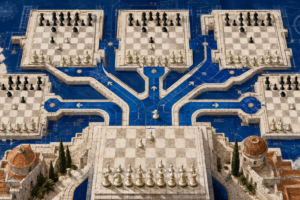

How To Choose Which Side To Castle In Chess?
👑 How To Choose Which Side To Castle In Chess depends on pawn shelter, open lines, and the direction of each side’s attack. Castling quickly is often good, but castling into an existing pawn storm can be worse than keeping the king flexible for one more move.
Compare the attacks that can arrive, not just the pawns already in front of your king. Deciding which side to castle requires a look at open files, central breaks and how quickly each player can bring pieces into the attack.
👑 Which side to castle: compare safety and time
Kingside castling is usually faster because only two pieces must move. Queenside castling may connect the rook with the center and support an attack, but the king often needs an extra move toward b1 or b8.
Evaluate the future, not only the current safety. A wing with intact pawns can become dangerous if the opponent has a ready-made pawn majority and open files.
🔍 When Should You Look For It?
- One wing has an intact pawn shelter
- The opponent’s pieces already point toward a side
- A central pawn break may open the king
- Queenside castling requires too many preparatory moves
- Opposite-side castling would start a direct race
These signs do not replace calculation, but they tell you when the position deserves extra attention. The more of them that appear together, the more likely the theme is to affect the best move.
🧭 A Step-By-Step Plan
- Inspect both shelters: Count weaknesses and open files on each wing.
- Track attacking pieces: Notice where bishops, queens, and rooks can arrive quickly.
- Check the center: A closed center gives more time; an open center makes delay dangerous.
- Calculate the pawn race: If castling opposite sides, compare which attack lands first.
- Keep flexibility: When safe, delay the decision until the opponent reveals the plan.
Work through the steps in order until the process becomes natural. In a practical game, you may complete the scan in seconds because the relevant relationships are already familiar.
♟️ A Practical Example
A queenside pawn structure may look untouched, but an open c-file and an advanced enemy b-pawn can make long castling dangerous. Kingside castling may be safer even with one weakened pawn if the opponent lacks pieces near that wing.
Notice that the correct decision comes from the position’s demands rather than a slogan. Good chess principles guide your search, while concrete calculation confirms the move.
❌ Common Mistakes
- Castling automatically on the side your opening usually uses
- Looking only at pawn structure and ignoring piece routes
- Delaying castling in an open center
- Starting a pawn storm before your own king is secure
The most dangerous mistake is using a correct idea in the wrong position. Always compare the strategic plan with immediate tactical details before committing.
🎯 A Training Method That Works
Review twenty opening positions just before castling. Hide the next move and score kingside, queenside, and staying central for shelter, speed, open files, and opponent activity. This develops a decision process instead of a memorized rule.
Keep the exercises short enough to repeat consistently. Regular focused sessions create stronger pattern recognition than one long session followed by several weeks without practice.
✅ Quick Checklist
- Inspect both shelters
- Track attacking pieces
- Check the center
- Calculate the pawn race
- Keep flexibility
Use this checklist during training first. With repetition, it becomes a fast internal scan that supports better decisions without consuming too much time.
♟️ Coach’s Practical Test
Before castling, score both wings on four factors: pawn shelter, open lines, opponent’s attacking pieces, and the time required to complete development. Then calculate the opponent’s strongest pawn break after kingside castling and after queenside castling.
Include the option of delaying castling for one move, but demand a concrete benefit. The safest side is not always the side with more pawns; it is the side where the opponent has the fewest forcing ways to open lines before your pieces coordinate.
♟️ Test which side to castle before committing
Choose a position from your games where both castling plans were plausible. For each side, write down the opponent’s quickest useful pawn break and the first attacking piece that could reach your king. This is more informative than simply counting the pawns in front of the king.
Before queenside castling, look at the c-file, the central diagonals and any advance that could open lines around c1 or c8. A later king move to b1 or b8 can sometimes improve safety, but it costs a tempo and must itself be safe.
Before kingside castling, inspect the fianchetto squares, existing pawn advances and the opponent’s queen-and-bishop routes. A familiar castled position can still be dangerous when a defender has moved away or the centre can open with tempo.
Now compare staying in the centre for one move. Demand a concrete reason: a useful developing move, a better view of the opponent’s plan, or a forcing operation. Delaying castling is not a plan by itself, especially when the centre can open immediately.
💬 Which side to castle: rules and practical questions
Can I castle out of check or through check?
No. In standard chess, the king’s starting square, crossing square and destination must not be attacked. The king and the chosen rook must not have moved, and the squares between them must be empty. See the FIDE Laws of Chess, Article 3.8.2.
Does an attacked rook prevent castling?
Not by itself. The attacked-square restriction concerns the king. For standard queenside castling, b1 or b8 must be empty, but an attack on that square alone does not prohibit castling because the king does not cross it.
Should I always castle opposite my opponent?
No. Opposite-side castling can permit pawn advances without opening your own king’s shelter, but it can also give the opponent a faster attack. Compare available files, attacking pieces and the time needed to open the position.
Is castling a guarantee of king safety?
No. It changes the king’s location and activates a rook. The resulting position still needs evaluation. Keep checking the opponent’s threats after castling rather than treating the king-safety task as finished.
Continue with playing against a fianchetto setup and recognising the Greek Gift attack to understand how castled positions can be challenged.
Final Thoughts
Choose a castling side by comparing shelter, attacking routes, central tension, and speed. The safest wing is the one the opponent cannot open quickly.
🌟 Improvement comes from recognizing the right moment, following a clear process, and reviewing the result honestly. Apply the idea in your own games until it becomes part of your natural thinking.

You may also like
How To Learn A Chess Opening Through Model Games?
How To Play The London System With A Clear Plan?