Rook endgames appear constantly in practical chess, and tiny inaccuracies can change a win into a draw—or a draw into a loss. 🏰 Their apparent simplicity is deceptive because rook activity, king placement, and checking distance matter on every move. …

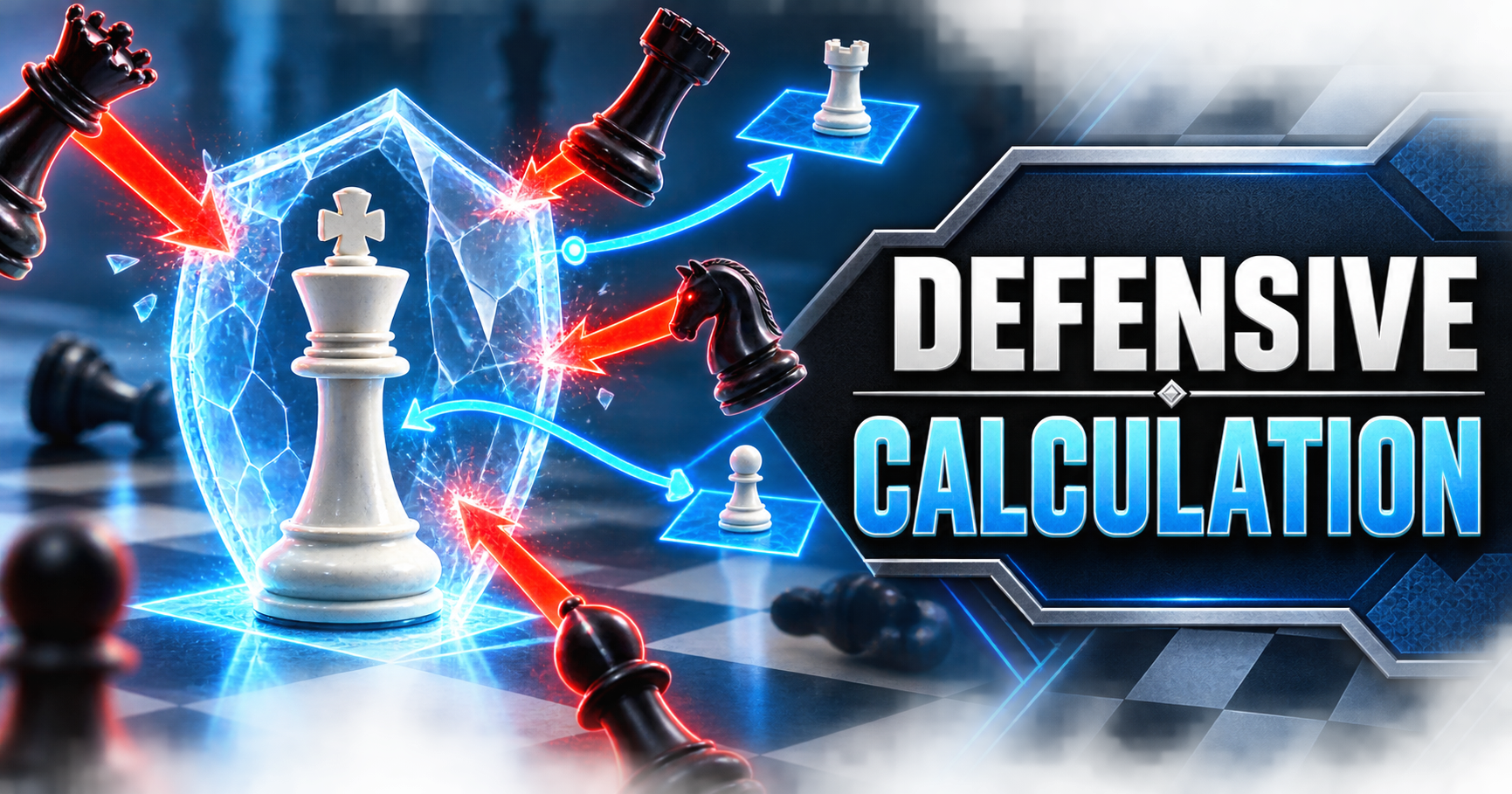
Defensive calculation in chess is not passive survival—it is the skill of finding the opponent’s real threat and choosing the reply that makes their task hardest. 🛡️ Strong defense often begins with one calm, accurate move. ⚡ Reliable defensive calculation …
Zugzwang in chess is the remarkable situation in which having to move becomes a disadvantage. ⏳ The position may appear balanced, yet every legal move gives something away. 🧩 Using zugzwang in chess is most common in endgames, but its …
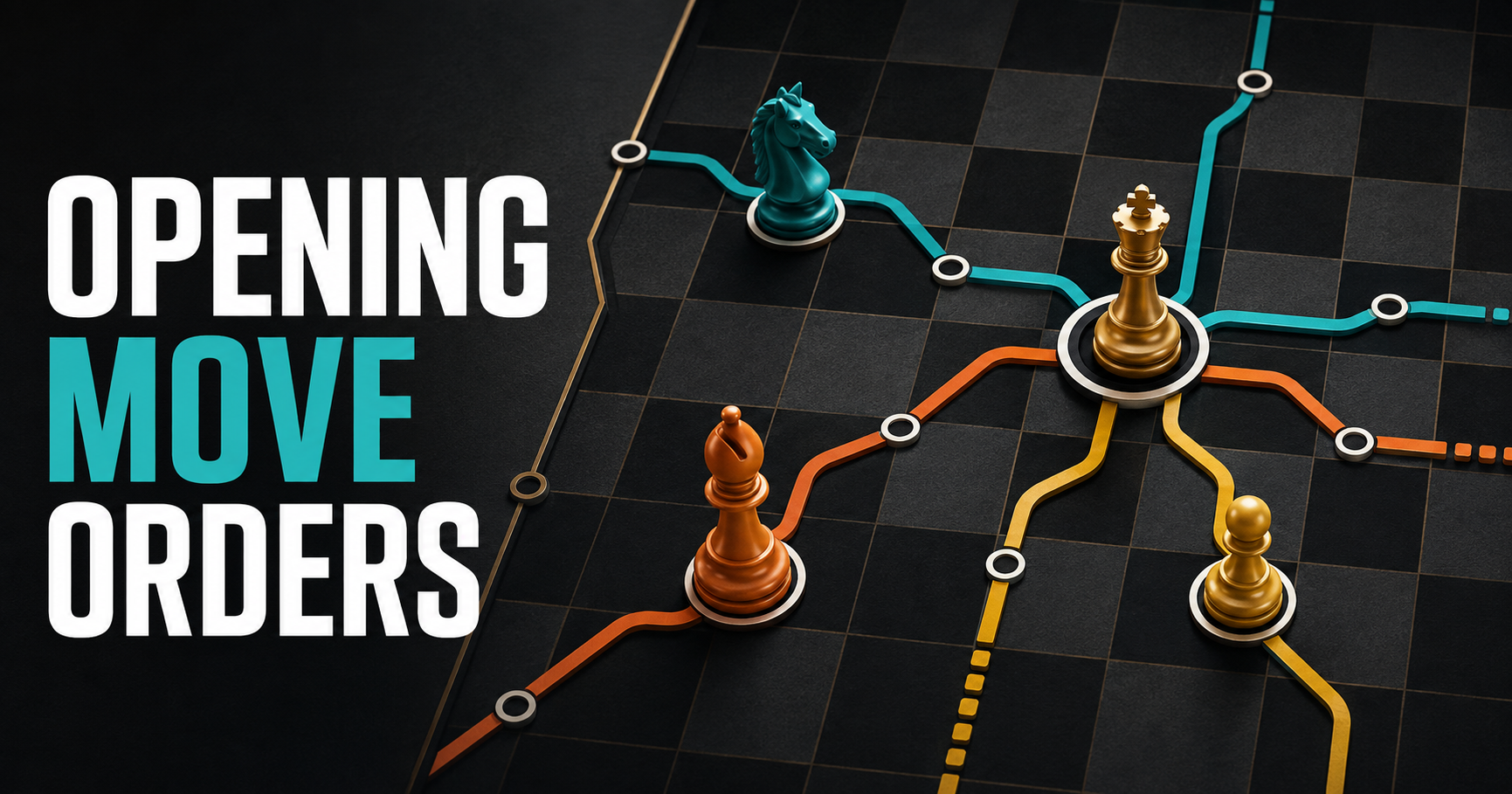
Chess opening move orders can look like harmless details, but one early choice may avoid a sideline, invite a transposition, or reveal your plan too soon. 🔀 Learning why the order matters makes your repertoire far more reliable. 🧭 A …
To punish slow development in chess, you must act before the opponent completes coordination. A lead in development is temporary: every quiet move gives the undeveloped side another chance to bring pieces into the game and secure the king. The …
Opening surprises in chess are designed to move you away from memorized lines and into independent decision-making. The unfamiliar move may be objectively harmless, yet psychologically dangerous because it creates urgency and doubt. The best response is rarely an immediate …
Queenless middlegames are positions in which the queens have been exchanged while enough pieces remain for tactical threats and complex strategic play. Removing the queens changes the priorities, but it does not automatically create an endgame. King activity becomes safer, …
Forcing moves in chess narrow the opponent’s choices. Checks, captures, and direct threats create a calculation corridor in which only a small number of replies deserve serious attention. “Forcing” does not automatically mean “good.” A useless check may waste a …
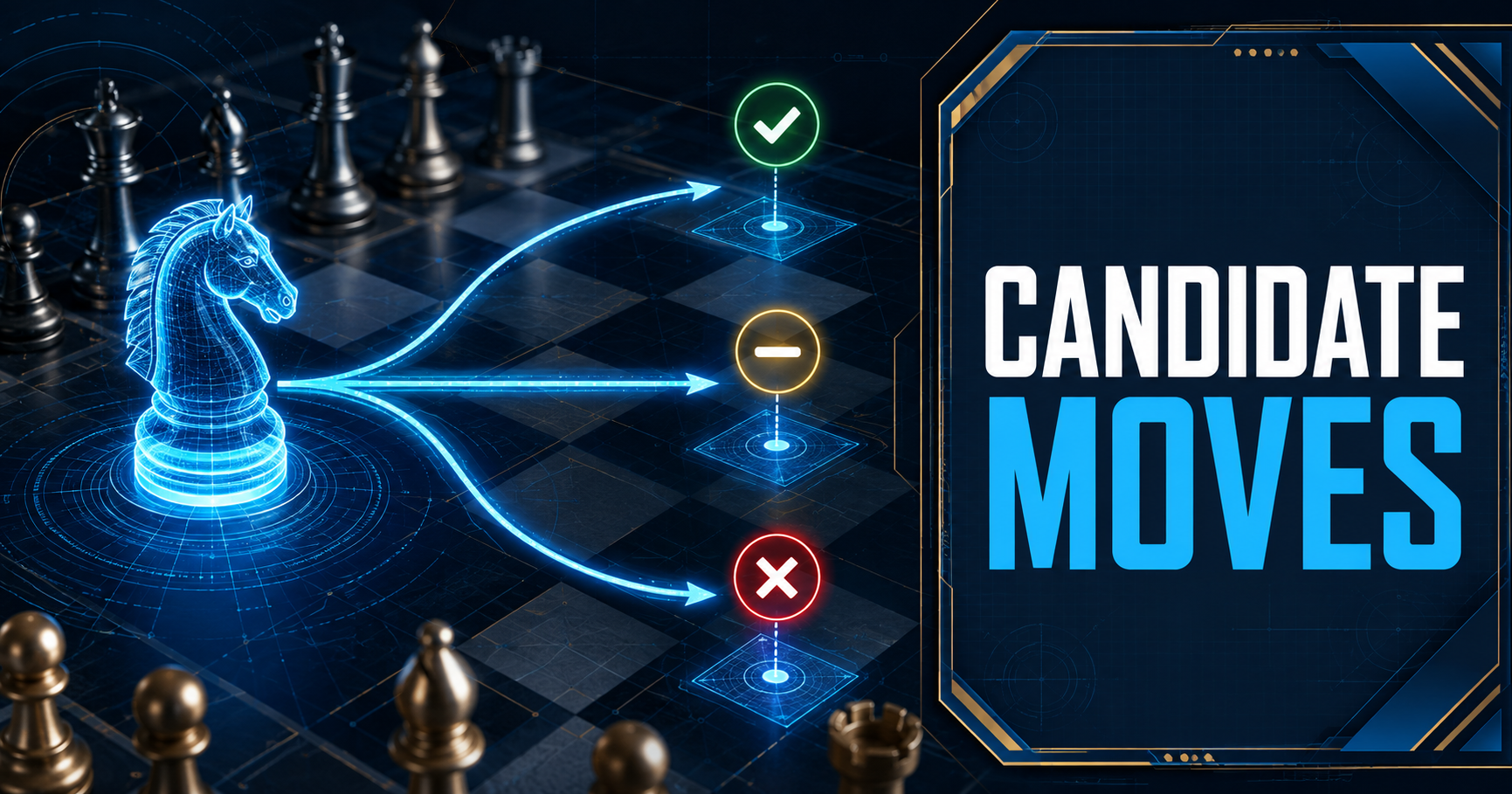
Candidate moves in chess are the small group of options you choose to investigate seriously. If the right move never enters your shortlist, accurate calculation cannot rescue the final decision. Strong selection is a filtering skill. Identify the position’s main …