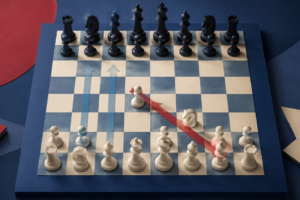

How To Punish Slow Development In Chess?
To punish slow development in chess, you must act before the opponent completes coordination. ⏳ A lead in development is a temporary advantage: every free move brings their army closer to safety.
The goal is not to attack simply because more pieces are developed. ⚡ You must open lines, gain tempi, and create threats that make the development gap matter.
Count Development Honestly
A piece is developed when it contributes to the position, not merely when it leaves the back rank. A misplaced knight may require another move, while an active bishop can influence the center immediately.
📊 Compare useful pieces, king safety, and connected rooks. This tells you whether the lead is real enough to justify dynamic play.
Open The Center
The king is most vulnerable when central files and diagonals open before castling. Pawn breaks and central exchanges can expose that problem.
🔨 Prepare the break with active pieces. Opening the center helps only if your army uses the lines faster than the opponent.
Develop With Tempo
Attack the queen, pin a piece, threaten a fork, or improve a piece while creating a direct problem. Tempo moves widen the development gap.
🚀 Avoid chasing the queen across harmless squares if it helps the opponent reposition. Every tempo must improve your own coordination.
Target The Uncastled King
If the king remains in the center, prevent castling, control escape squares, and bring rooks toward open files. Checks can be useful, but only when they improve the attack.
🔥 The Attacking Mastery course develops the piece coordination and sacrifice patterns needed to exploit unsafe kings.
Consider A Development Sacrifice
Giving up a pawn—or occasionally more—may be justified if it opens the center and keeps the opponent’s king exposed. The compensation must include time, lines, and concrete threats.
⚔️ Calculate the sacrifice to a stable position. The Calculation & Evaluation Technique course helps compare material against activity without guessing.
Do Not Grab Irrelevant Material
Winning a side pawn can waste the exact tempi your advantage depends on. While you collect material, the opponent develops and castles.
🍪 Take material only if it strengthens the attack or remains safe after consolidation. Otherwise, use the lead to create something more urgent.
Bring The Last Piece Into The Game
Many attacks fail because one rook or bishop remains asleep. Before forcing matters, ask which final piece can join with tempo.
🔗 Complete your own development while restricting theirs. A full army can maintain pressure after the first tactical wave ends.
Prevent Consolidation
Watch for the opponent’s freeing move: castling, queen exchange, central closure, or a simplifying trade. Stop it or make it tactically expensive.
🚪 Once the king is safe and pieces coordinate, the development advantage may disappear. The moment before consolidation is often the critical one.
Convert Into A Lasting Advantage
If a direct attack does not win, use the pressure to damage the pawn structure, win the bishop pair, control an open file, or enter a favorable endgame.
🏆 A lead in development should leave a permanent trace. The attack may end, but the concession it forced should remain.
A Development-Lead Checklist
- Which pieces are genuinely active?
- Can I open the center now?
- What move develops with tempo?
- Can the opponent castle or trade queens?
- Is a sacrifice supported by enough pieces?
- Am I wasting time on material?
- What lasting advantage remains if the attack ends?
📋 Use the checklist quickly—the entire point of the advantage is time. Clear questions lead to fast, purposeful decisions.
How To Train Development Attacks
Study short master games and pause before the center opens. Count the active pieces and predict which pawn break makes the lead decisive.
🧪 In your opening practice, play positions where one side starts two tempi behind. This makes the relationship between development, king safety, and open lines unmistakable.
Final Thoughts
To punish slow development in chess, open the center, develop with tempo, restrict castling, and calculate forcing play before the opponent consolidates.
🌟 Development is borrowed time. Spend it on open lines and coordinated threats, or the advantage quietly returns to zero.

You may also like

How To Choose Which Side To Castle In Chess?
How To Learn A Chess Opening Through Model Games?