
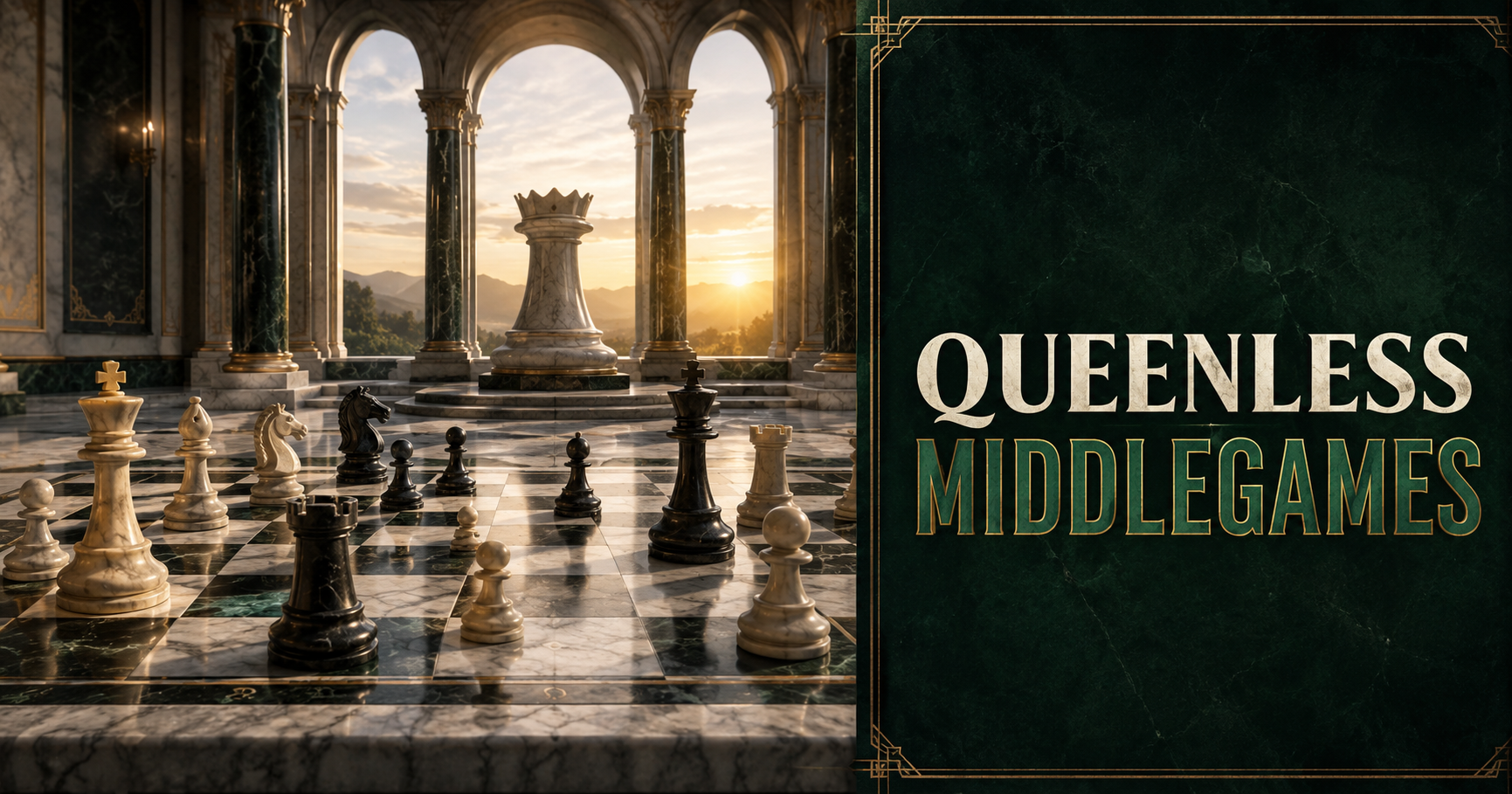
How To Play Queenless Middlegames In Chess?
Queenless middlegames are often misunderstood. The queens are gone, but enough pieces remain for tactics, attacks, and complex plans. ♛ Removing the queens changes the priorities—it does not automatically create an endgame.
King activity becomes safer, piece coordination grows more important, and structural weaknesses receive more attention. 🔄 The player who adjusts first often takes control.
Do Not Relax After The Queen Exchange
Without queens, direct mating attacks are rarer, but tactical threats remain. Rooks, bishops, and knights can still create forks, pins, back-rank ideas, and dangerous passed pawns.
🚨 Recalculate the position immediately after the exchange. The removal of the queens may open files, change recaptures, and leave a piece undefended.
Activate The King Earlier
The king can often approach the center sooner than in a normal middlegame. It may defend pawns, support a break, or prepare for the endgame transition.
👑 Move the king with purpose, not automatically. Check rook checks, minor-piece tactics, and whether the center can suddenly open.
Value Piece Activity Over Cosmetic Safety
A passive rook or trapped bishop can become a serious problem because there is less tactical chaos to hide it. Improve the worst piece and fight for open lines.
♟️ The Master Chess Strategy course develops the piece-evaluation skills needed in these quieter but demanding positions.
Use Open Files And Entry Squares
Rooks often become the most influential pieces after queens leave. Occupy open files, contest the seventh rank, and prevent the opponent from doubling freely.
🚪 Entry squares matter more than possession alone. A rook on an open file needs a concrete route or target to justify its placement.
Prepare Pawn Breaks Carefully
A pawn break can create a passed pawn, activate a bishop, or give a rook an entry file. It can also expose weaknesses that the opponent’s king attacks immediately.
🔨 The Middlegame Planning course connects the break to the piece setup and the resulting structure.
Compare Minor Pieces Precisely
Good-versus-bad bishop, bishop pair, outpost knight, and color-complex questions become central. With fewer tactical threats, a superior minor piece can dominate for many moves.
🔍 Examine pawn placement on both wings and future exchanges. The best minor piece now may become the wrong one in the resulting endgame.
Decide Which Pieces To Exchange
Further simplification should have a purpose: remove the opponent’s best piece, enter a favorable rook ending, or create a winning pawn ending.
⚖️ The Complete Endgame Course helps recognize which transitions are favorable and which apparently simple endings are deceptive.
Create A Passed Pawn
A distant passed pawn can force a rook or king away from the main battle. In queenless positions, it is often a more reliable attacking tool than a direct king hunt.
🏃 Prepare the passer with piece activity and calculate blockades. A passed pawn that cannot advance may simply become another target.
Convert Small Advantages Patiently
Queenless middlegames often reward steady improvements: a better king, stronger rook, fixed pawn, or favorable exchange. Do not force a breakthrough before the position is ready.
🏆 The Advantage To Victory focuses on preserving control while gradually turning these edges into a win.
A Queenless-Middlegame Checklist
- Is the king ready to become active?
- Which piece is currently the least useful?
- Who controls the open files and entry squares?
- What pawn break changes the position favorably?
- Which minor piece suits the pawn structure?
- What endgame follows the next exchange?
- Can either side create a dangerous passed pawn?
📋 Use the checklist after every major simplification. The absence of queens makes long-term consequences clearer—and harder to reverse.
How To Practice Queenless Middlegames
Select master games where queens were exchanged before move twenty. Pause after the exchange and write a fresh evaluation as if the game had just begun.
🧪 Compare your own plan with the game. Pay special attention to king activation, rook placement, and the exact moment the position became a true endgame.
Final Thoughts
To play queenless middlegames, stay tactically alert, activate the king, improve the pieces, and evaluate every transition into a simpler position.
🌟 Queenless does not mean lifeless. These positions reward precise strategy, and one active piece can outweigh several small structural advantages.

You may also like
How to Study a Chess Course: 5 Easy Steps

How To Play Gambit Positions In Chess?