Forcing moves in chess narrow the opponent’s choices. Checks, captures, and direct threats create a corridor in which only a few replies are possible. ⚔️ That makes them the backbone of tactical calculation. Yet “forcing” does not mean “good.” A …

Forcing moves in chess narrow the opponent’s choices. Checks, captures, and direct threats create a corridor in which only a few replies are possible. ⚔️ That makes them the backbone of tactical calculation. Yet “forcing” does not mean “good.” A …
Candidate moves in chess are the small group of options you choose to investigate seriously. 🔍 If the right move never enters your shortlist, even perfect calculation cannot save the decision. Strong move selection is a filtering skill. You want …
A pawn break in chess is the moment a quiet structure changes its character. 🔨 One pawn move can open a file, activate a bishop, create a passed pawn, or expose a king. Because pawns cannot move backward, the timing …
The principle of two weaknesses explains why one target is often not enough to win. A defender can organize every piece around a single weakness; a second target forces that structure to stretch. 🎯 The idea sounds simple, but the …
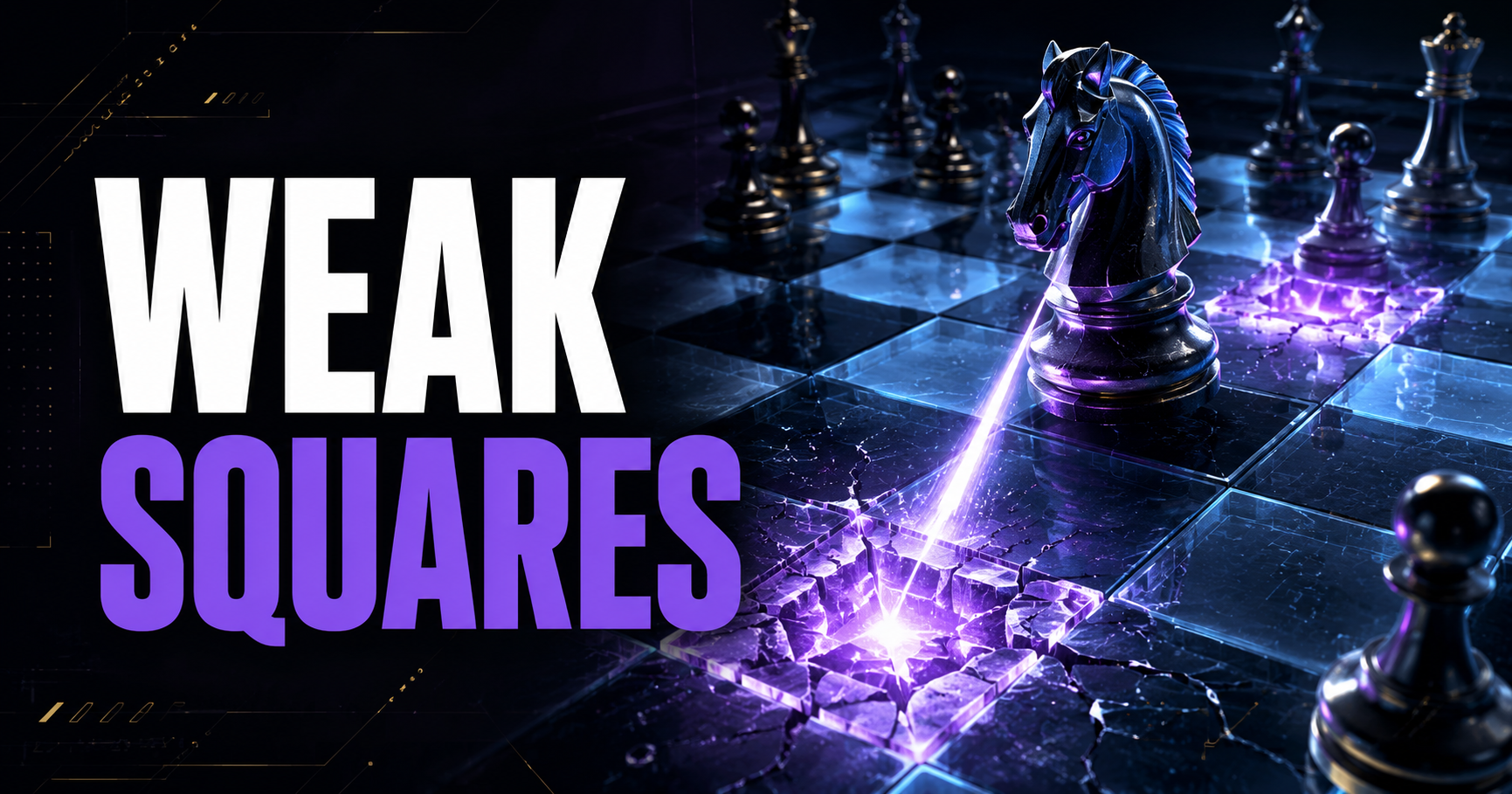
Weak squares in chess are not simply empty squares. They are squares that cannot be defended easily—especially by pawns—and can become permanent homes, entry points, or anchors for an attack. 🎯 A weak square matters only when a piece can …
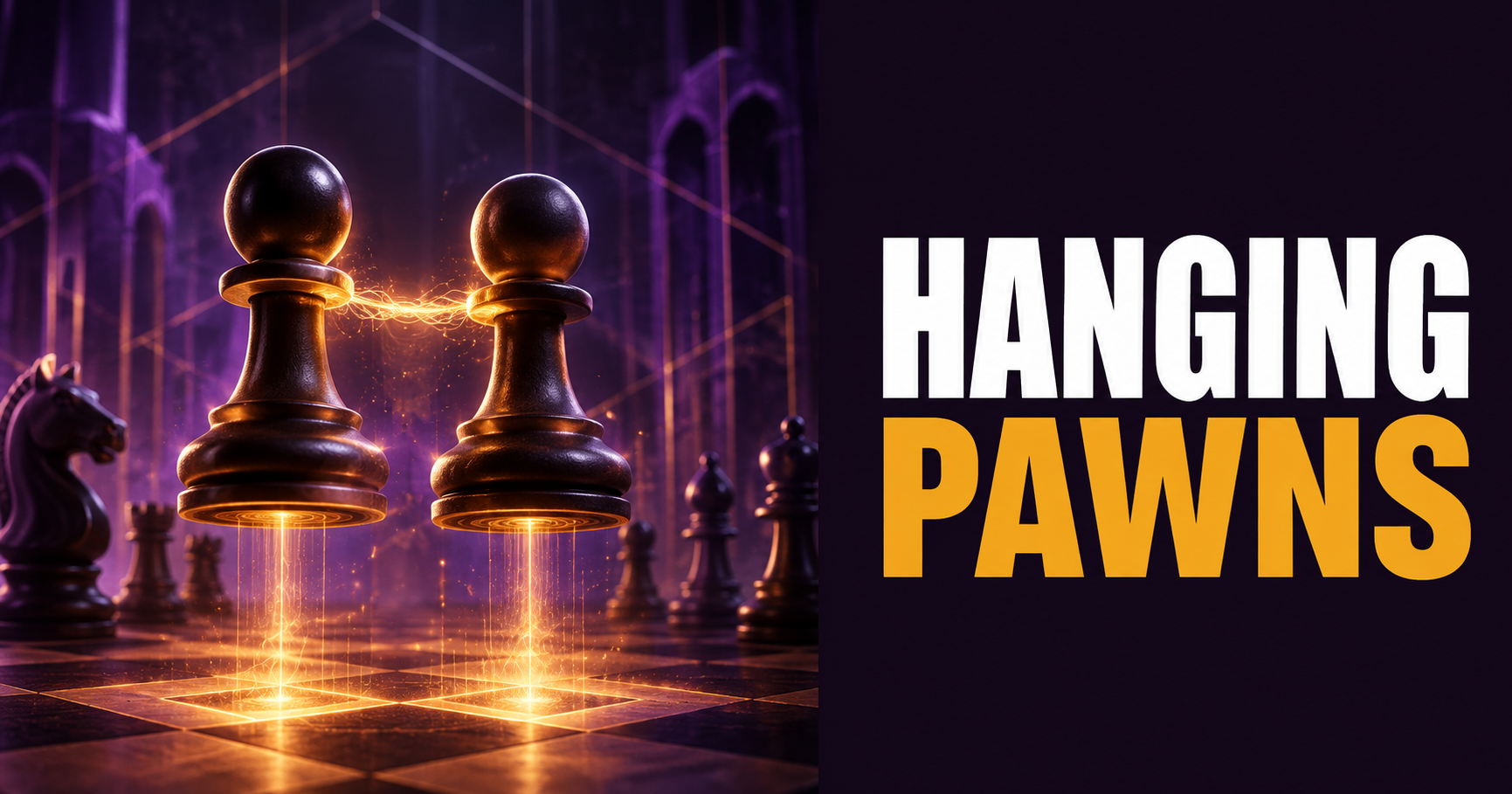
Hanging pawns in chess are two connected pawns—usually on the c- and d-files—with no neighboring pawns to support them. 🪢 They can control important squares and give you space, but they can also become fixed targets. Think of hanging pawns …
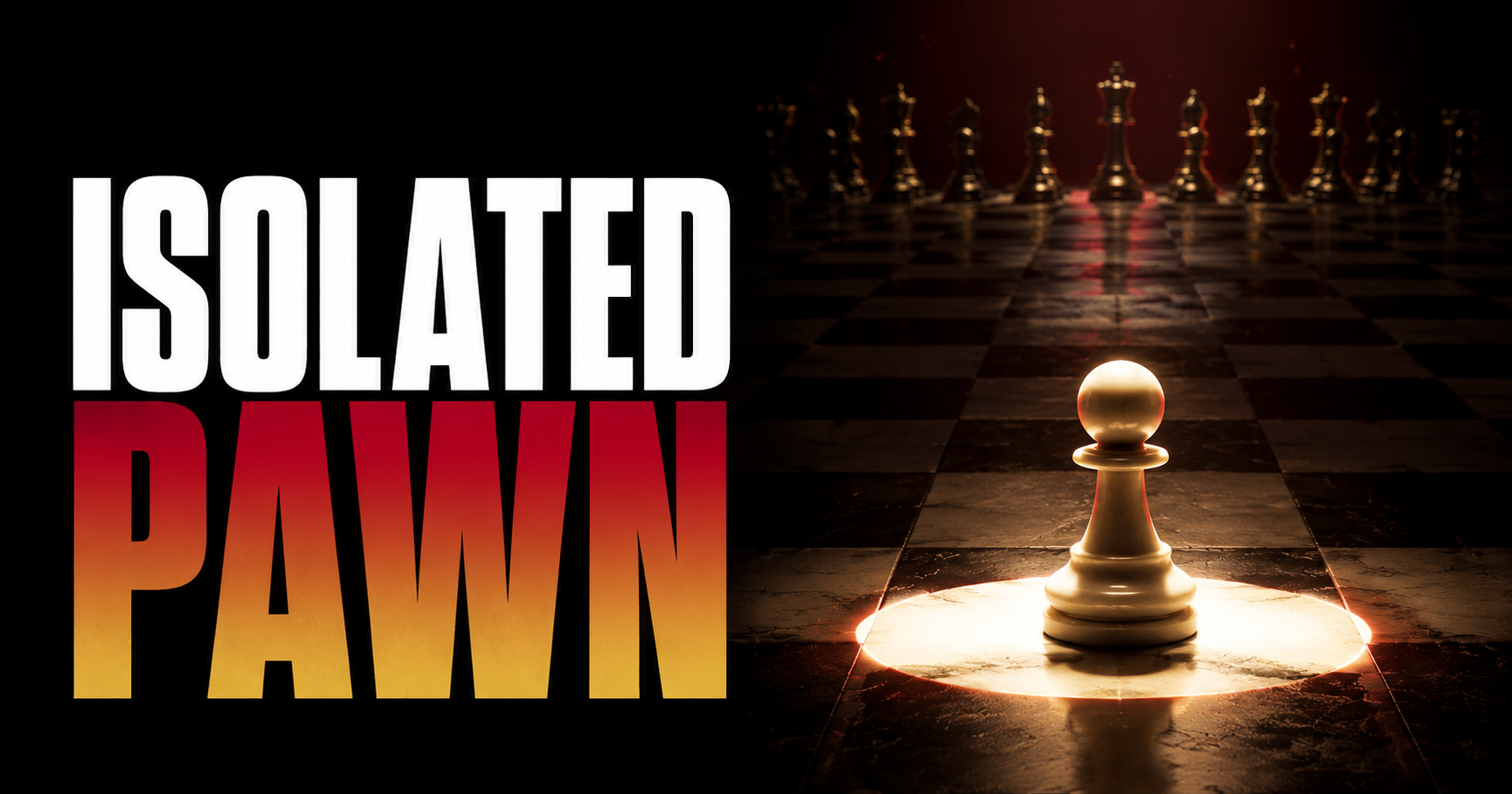
The isolated queen’s pawn is one of chess’s most fascinating contradictions: it is a weakness and an attacking engine at the same time. ⚡ It cannot be protected by another pawn, yet it gives space, open lines, and active squares. …
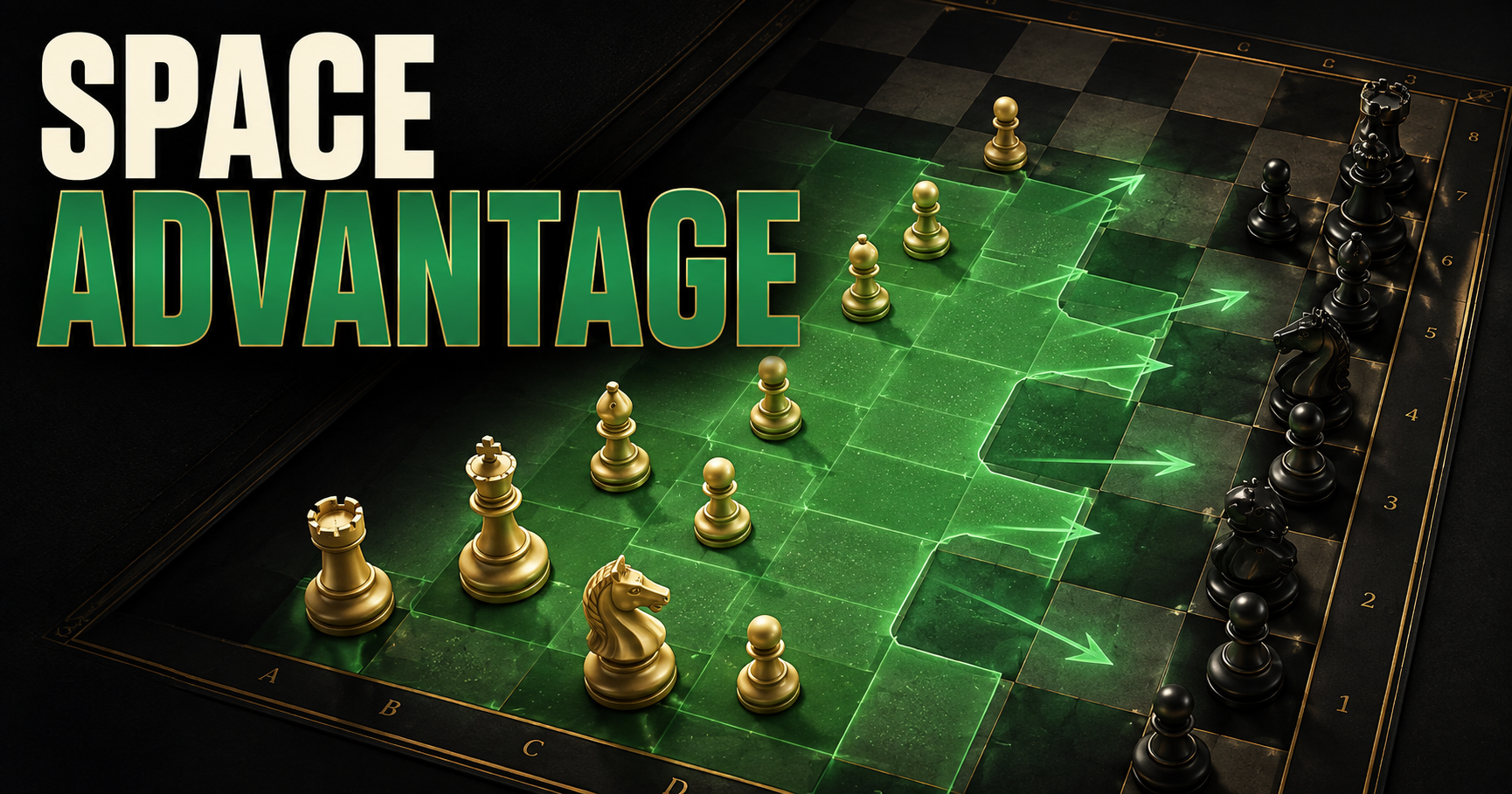
A space advantage in chess gives your pieces more room and leaves the opponent fewer comfortable squares. 🗺️ It can make a position feel easy—but space is potential, not a result. If you do nothing with it, the opponent may …
Piece coordination in chess is the difference between owning five active-looking pieces and having one army. 🎼 A knight, bishop, rook, and queen may each stand well, yet accomplish almost nothing if they attack different targets or block one another. …
Not a member yet? Register now
Are you a member? Login now