
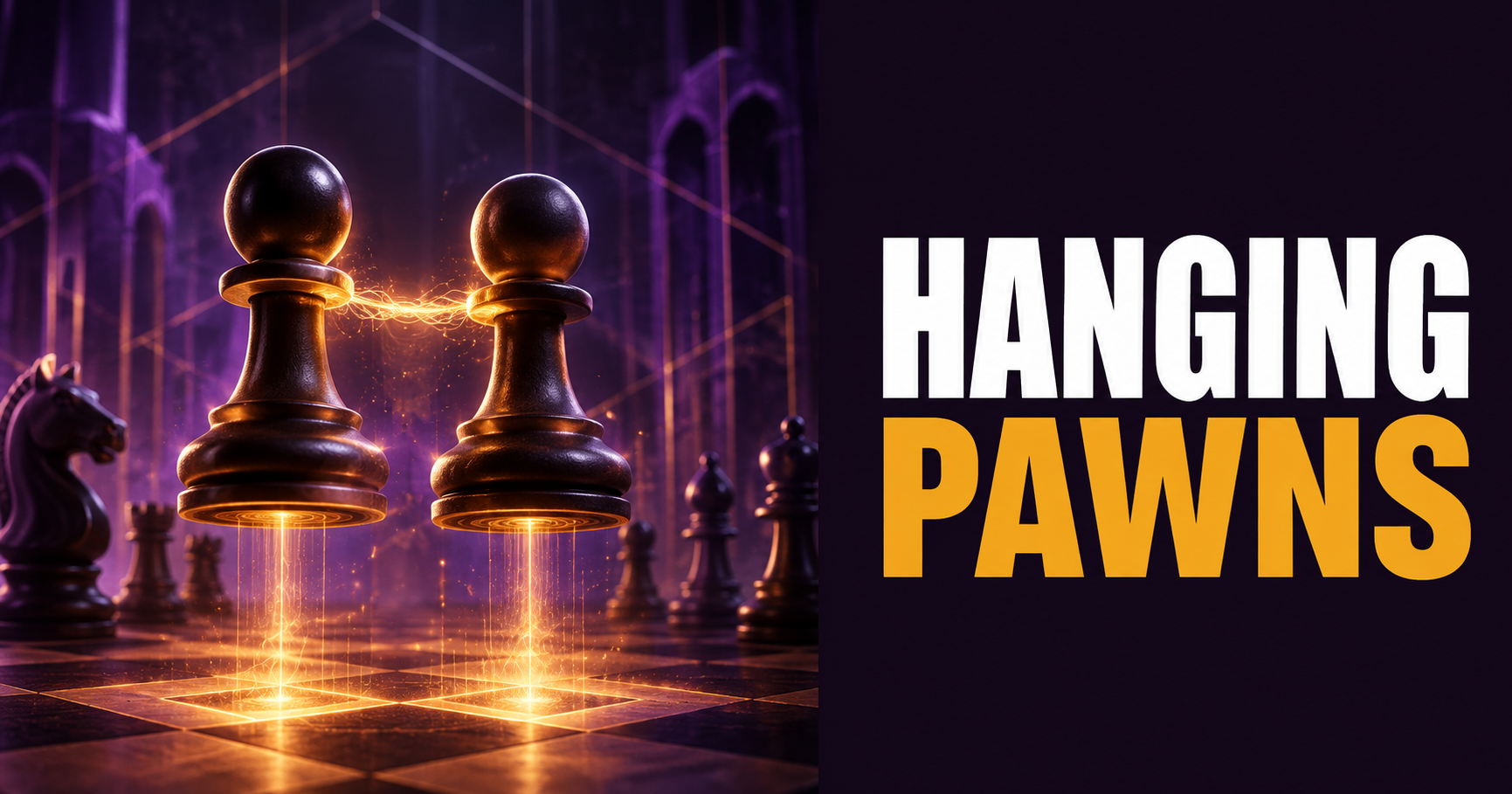
How To Play With Hanging Pawns In Chess?
Hanging pawns in chess are two connected pawns—usually on the c- and d-files—with no neighboring pawns to support them. 🪢 They can control important squares and give you space, but they can also become fixed targets.
Think of hanging pawns as a spring-loaded structure. ⚡ Their strength lies in movement and activity. If they are blockaded, the energy disappears and only the weaknesses remain.
Recognize The Structure’s Dynamic Nature
Hanging pawns support each other and control central squares, giving your pieces room to operate. They may also advance to open lines or create a passed pawn.
🎭 The evaluation can change quickly. One active move can turn the pawns into an attacking force, while one passive exchange can leave both pawns exposed.
Place Pieces On Active Squares
Knights often belong on central outposts supported by the pawns, bishops aim toward the enemy king, and rooks stand behind the pawn that may advance.
♟️ The Master Chess Strategy course explains how pawn structures assign jobs to every piece.
Prepare The Correct Pawn Advance
The central choice is often whether to push the c-pawn or the d-pawn. One advance may gain space, attack a piece, create a passed pawn, or open a file.
🔨 Never push automatically. Calculate the captures, the new weak squares, and which pieces will use the opened lines.
Prevent A Stable Blockade
If the opponent fixes both pawns and occupies the squares in front of them, your position may become difficult. Challenge blockaders before they settle.
🛑 Use exchanges, pins, tactical threats, or a timely advance. The goal is to keep at least one pawn mobile and preserve active piece play.
Use The Space To Build An Attack
The pawns often give your pieces extra central squares and can support a kingside initiative. A bishop may point at h7, a knight may jump forward, and the queen can join quickly.
🔥 The Attacking Mastery course develops the coordination required to turn central space into concrete threats.
Choose Exchanges Carefully
Trading the opponent’s best blockader can improve your structure, but exchanging too many active pieces may leave the pawns undefended and easy to attack.
⚖️ Compare the end position, not the material alone. Keep the pieces that create threats and remove the pieces that make the blockade stable.
Transform The Pawn Structure
Hanging pawns can become an isolated pawn, a protected passed pawn, or a healthier pawn chain. A transformation is successful when your remaining pieces benefit from the new lines.
🔄 The Middlegame Planning course helps identify when a structural change supports the broader plan.
Watch The Endgame Transition
As pieces disappear, hanging pawns often lose their attacking support. The opponent’s king and rooks may target them from several directions.
🏁 If simplification is unavoidable, seek activity: create a passed pawn, activate the king, or exchange one weakness before the defender doubles pressure.
Convert Activity Before It Expires
The structure gives you a temporary initiative, not unlimited time. Improve every piece, create a threat, and open the position while your space matters.
🏆 The Advantage To Victory course teaches how to transform dynamic advantages into lasting gains.
A Hanging-Pawns Checklist
- Which pawn advance is more useful?
- Can the opponent establish a blockade?
- Which pieces should remain to support activity?
- What file or diagonal opens after the break?
- Can I create a passed pawn?
- Am I drifting into a passive endgame?
- Which defender or blockader should I exchange?
📋 Recheck these questions whenever the structure changes. Hanging pawns demand flexible plans rather than one fixed recipe.
How To Practice Hanging-Pawn Positions
Study model games from openings that produce the structure and pause before every pawn move. Predict which pawn advances and what tactical point supports it.
🧪 Review the same games from the defender’s side. When you understand the ideal blockade, you will recognize exactly what your opponent is trying to build.
Final Thoughts
To play with hanging pawns in chess, keep the pieces active, prevent a blockade, and prepare a pawn advance that opens useful lines.
✨ Hanging pawns are strongest while they can move. Use their space and energy before the opponent turns them into stationary targets.

You may also like
How to Study a Chess Course: 5 Easy Steps
How To Play Gambit Positions In Chess?