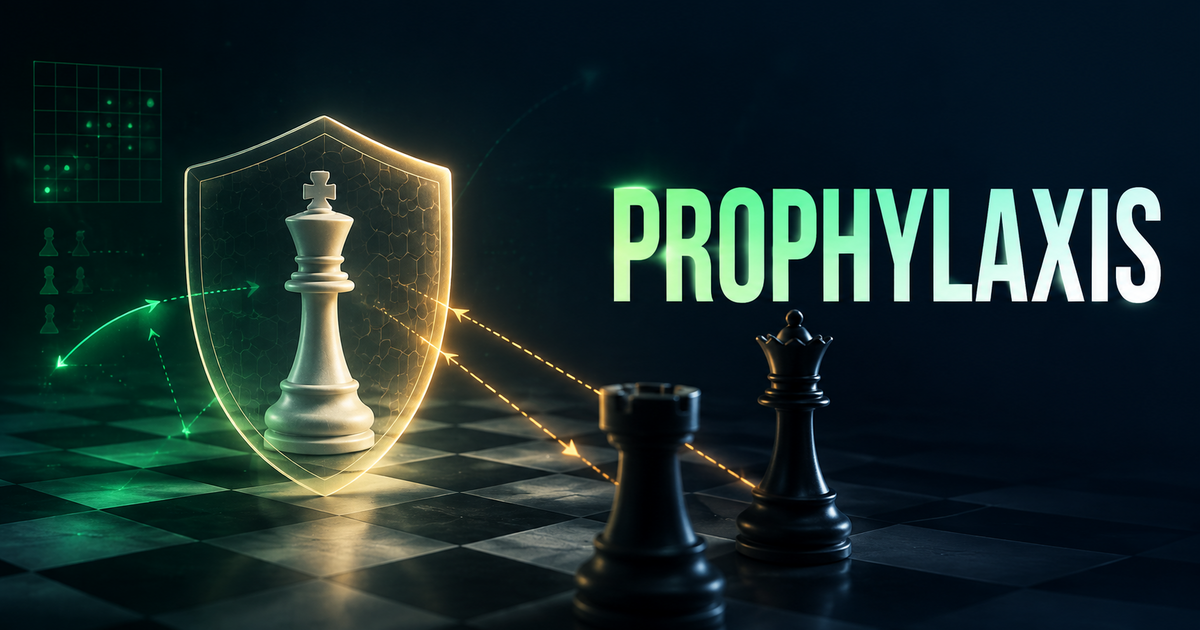
Prophylaxis is the art of asking what your opponent wants and responding before their idea becomes dangerous. 🛡️ It is not passive chess. The best prophylactic moves restrict the opponent while improving your own position. Many players notice direct threats …
Chess intuition is the ability to sense which moves and ideas deserve attention before you calculate everything. 🧠 It helps you recognize danger, locate promising squares, and narrow a complicated position to a few serious candidates. Intuition is not a …
Pawn structures are the skeleton of a chess position. They determine which files can open, where pieces belong, which weaknesses may become permanent, and on which side of the board each player should act. 🧱 When you understand the structure, …
Getting a winning position is only half the job. Converting it requires accuracy, patience, and emotional control—often when you already feel the point should be yours. 🏁 Many advantages disappear because the leading player relaxes, rushes, or searches for a …
Facing a much stronger chess player can make the board feel different before the first move. Their rating, title, or reputation may tempt you to become passive, force complications, or assume every move hides something brilliant. 💪 The best response …
To choose a strong move, you first need to understand what the position is asking for. That begins with evaluation: a clear comparison of both sides’ strengths, weaknesses, and immediate possibilities. 🔎 Without it, calculation becomes random because you do …
Tactics decide games at every level. A strong plan can be ruined by one fork, while a difficult position can be saved by a well-timed combination. ⚡ Improving chess tactics means more than solving random puzzles—it requires pattern recognition, accurate …
Grandmaster games contain complete lessons in opening ideas, planning, calculation, defense, and endgame technique. Yet simply clicking through the moves rarely produces lasting improvement. 📖 The real value appears when you pause, predict, question, and compare your thinking with the …
A successful chess tournament begins before the first pairings are announced. Preparation shapes your confidence, energy, opening choices, and ability to recover after difficult rounds. 🏆 You cannot control every result, but you can arrive ready to make good decisions …