How To Study Grandmaster Chess Games Effectively?
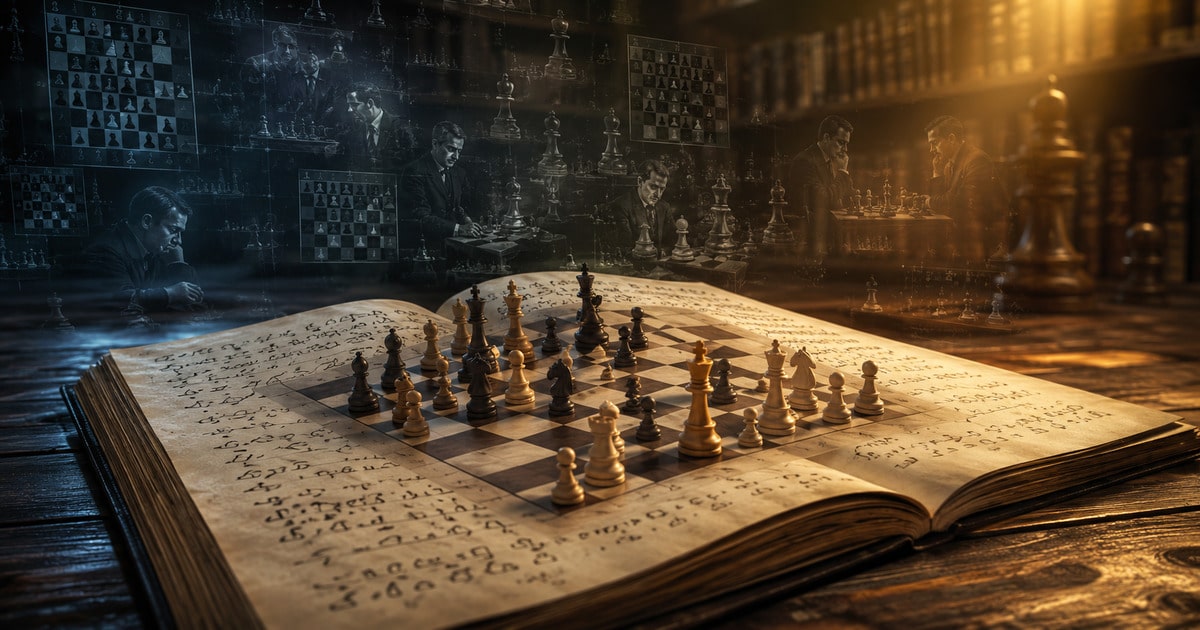
Grandmaster games contain complete lessons in opening ideas, planning, calculation, defense, and endgame technique. Yet simply clicking through the moves rarely produces lasting improvement. 📖 The real value appears when you pause, predict, question, and compare your thinking with the decisions made in the game.
You do not need to understand every variation. Your goal is to extract a small number of reusable ideas: why a piece belonged on a certain square, what made a pawn break possible, how the stronger side limited counterplay, or when the character of the position changed.
Why Study Grandmaster Games?
Puzzles show isolated moments, while complete games reveal how those moments are created. You see an opening structure develop into a middlegame plan, a small advantage become pressure, and pressure finally turn into a tactical or technical result.
Model games also build pattern recognition. 🧠 When you repeatedly see a minority attack, an isolated queen’s pawn position, or a rook entering on the seventh rank, the underlying plan becomes easier to recognize in your own games.
Choose Games That Match Your Goals
Select games for a reason. If you are learning an opening, study model games in its typical pawn structures. If you struggle with defense, choose examples where a strong player neutralized an initiative. If endgame conversion is the problem, focus on games with instructive transitions.
Start with clear, well-annotated games rather than the most complicated masterpieces. 🎯 A simple strategic example that you fully understand is more useful than a brilliant game whose critical decisions remain mysterious.
Study Without An Engine First
Play through the opening until you reach a position that feels important, then hide the next move. Write down your evaluation, the opponent’s threat, your candidate moves, and the plan you would choose. Spend several minutes thinking as if the position came from your own game.
This creates a baseline for learning. If you consult the engine immediately, you see an answer without discovering your question. ✋ Your own attempt reveals whether the difficulty came from evaluation, candidate generation, calculation, or unfamiliar strategy.
Use The Guess-The-Move Method
At each meaningful position, predict the grandmaster’s move. You can award yourself points, but the explanation matters more than the score. Ask why your move was attractive and what feature the played move addressed better.
Do not guess every automatic recapture or forced move. Pause at genuine decisions: exchanges, pawn breaks, changes of plan, and moments when several reasonable candidates exist. 🔍 Twenty carefully studied moves can teach more than an entire game viewed at full speed.
Identify The Opening’s Main Story
After the opening, summarize what each side achieved. Who gained space? Which pawn break is thematic? What are the best and worst pieces? Where do the kings belong? Avoid turning the session into pure move memorization.
If the game uses your repertoire, add only the most useful position and explanation to your notes. A compact file of plans and recurring mistakes is easier to review than hundreds of copied engine lines.
Pause At Every Irreversible Decision
Pawn moves, exchanges, sacrifices, and king commitments permanently change the position. Before revealing the next move, consider what the grandmaster may be giving up and what they hope to gain. ♟️ Strong strategic decisions often make sense only when you see both sides of the trade.
For example, exchanging a good bishop may appear strange until it removes a critical defender or creates a favorable pawn ending. Studying the decision as a balance of benefits and costs makes the idea transferable.
Track The Worst-Placed Piece
At several moments in the game, identify each side’s least effective piece. Then observe how the grandmaster improves it—or whether they act elsewhere because improvement is too slow. This simple lens reveals many quiet moves that are otherwise easy to overlook.
🔧 A rook lift, knight reroute, or king move may prepare the position long before a visible attack begins. The Master Chess Strategy course can help you recognize how piece placement, pawn structure, and strategic priorities combine into a plan.
Find The Critical Moment
Most games contain a small number of moments where the evaluation or plan changes significantly. Mark where the opening ended, where a new weakness appeared, where a tactical sequence began, and where the outcome became difficult to reverse.
Then ask what clues were available before the critical move. 🚦 Was a piece undefended? Was a pawn break finally prepared? Did one side run out of useful moves? Learning to notice the signals is more valuable than admiring the move afterward.
Compare Your Calculation
When the game becomes tactical, calculate the forcing variations before reading the notes. Record the line you trusted and describe the final position. After revealing the move, compare not only the moves but also the branches you considered.
If you missed the solution, diagnose the reason. Did you fail to generate the candidate, stop the line too early, overlook the opponent’s best defense, or mis-evaluate the end position? ⚡ Specific feedback turns one missed combination into a useful training lesson.
Use Annotations And Engines In The Right Order
Read human annotations after your own analysis. A strong author explains plans, alternatives, and practical considerations that an engine score alone cannot provide. Next, use the engine to verify concrete variations and discover tactical resources.
Do not investigate every small numerical change. Focus on positions connected to your questions. An engine is excellent at showing what works; your task is to explain why the move is understandable and how you might find it in a future game.
Study The Endgame Even If The Game Ends Early
If a player resigns, continue the position until you understand the winning method. Strong players often stop because a clear technical process is available, not because checkmate is immediate. Reconstruct that process.
Ask which pieces should be exchanged, where the king belongs, and what counterplay must be prevented. 👑 For deeper work on technique and essential theoretical positions, the Complete Endgame Course can turn these examples into a systematic endgame foundation.
Create A One-Page Game Summary
- Opening structure and each side’s main plan.
- Three critical positions with your original candidates.
- One tactical pattern or calculation lesson.
- One strategic idea you can reuse.
- The key reason the game was won or lost.
A short summary forces you to separate the central lesson from background detail. 📝 Review the page a few days later and reconstruct the game’s story without replaying every move.
Study Players With A Consistent Style
Choose a grandmaster whose openings or positional preferences resemble the games you want to play. Studying a collection from the same player exposes recurring decisions and makes patterns easier to connect.
The two-part Legends On The Board P1 and Legends On The Board P2 series provide guided access to great players and their ideas, helping classic games become practical lessons rather than distant history.
A 45-Minute Study Routine
- Spend 5 minutes reviewing the players, opening, and game context.
- Spend 25 minutes using guess-the-move at critical positions.
- Spend 10 minutes reading annotations and checking key lines.
- Spend 5 minutes writing a concise lesson and one action point.
Stop before your concentration disappears. ⏳ One deeply studied game per week can build more understanding than dozens of passively watched videos, especially when you revisit the positions later.
Common Study Mistakes
Common mistakes include choosing games that are too complex, moving too quickly, consulting the engine first, and copying variations without explanations. Players also collect many model games but never review the lessons.
Avoid judging your guesses only as right or wrong. ✅ A different move may still be strong if your reasoning is sound. The useful comparison is between the quality of your process and the demands of the position.
Final Thoughts
To study grandmaster chess games effectively, become an active participant. Predict moves, explain plans, calculate at critical moments, and summarize what you learned in your own words.
🌟 Grandmasters will not always choose your move, and that is precisely where the lesson begins. Each thoughtful comparison expands your library of patterns and gives you stronger questions to ask in your own games.

You may also like
How to Study a Chess Course: 5 Easy Steps
How To Play Gambit Positions In Chess?