
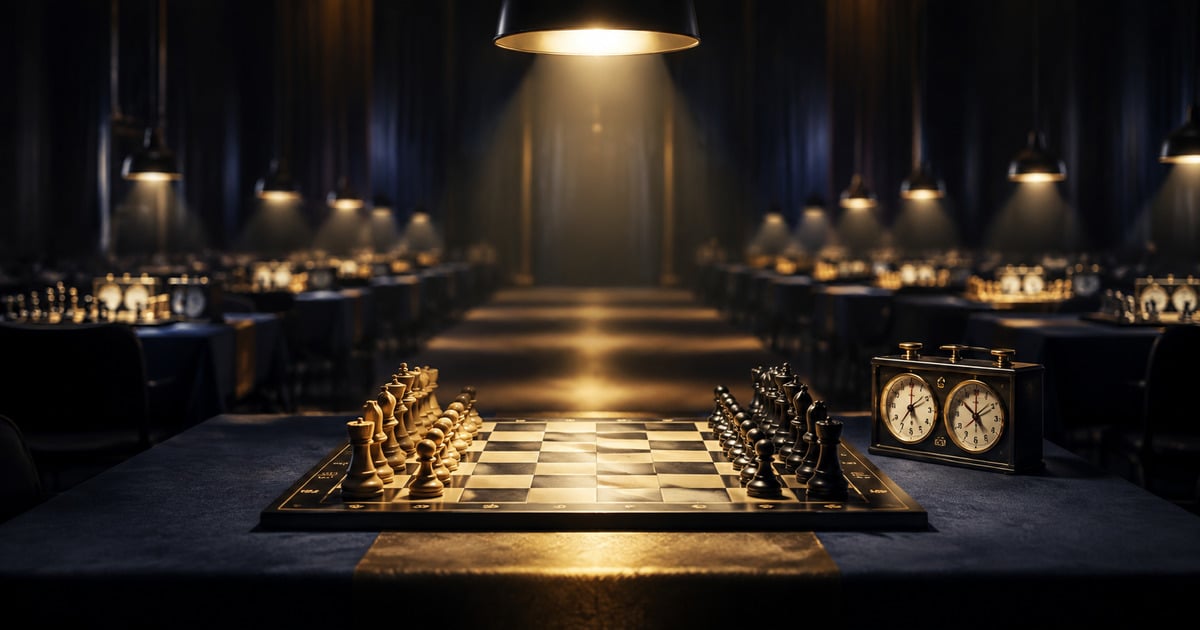
How To Prepare For A Chess Tournament?
A successful chess tournament begins before the first pairings are announced. Preparation shapes your confidence, energy, opening choices, and ability to recover after difficult rounds. 🏆 You cannot control every result, but you can arrive ready to make good decisions game after game.
Tournament preparation should be focused, not frantic. The final days are not the time to rebuild your entire repertoire or solve hundreds of exhausting puzzles. A clear plan helps you sharpen important skills, organize practical details, and preserve enough mental energy for the competition itself.
Set A Clear Goal For The Event
Choose goals that you can influence. A rating target may motivate you, but it depends on pairings and short-term results. Process goals are more reliable: use your time well, perform a blunder check before every move, fight in every position, and review each game before the next round.
Write down two or three priorities. 🎯 A long list creates pressure and becomes impossible to remember at the board. Your goals should guide attention, not turn every move into a test of your self-worth.
Build A Preparation Timeline
If possible, begin structured preparation three to six weeks before the event. Use the early phase for skill work and repertoire repair, the middle phase for practice games, and the final week for consolidation, confidence, and rest.
- Three to six weeks out: identify weaknesses and train them consistently.
- Two weeks out: play realistic practice games and review opening files.
- Final week: reduce volume, revise key ideas, and stabilize your routine.
- Day before: rest, organize logistics, and avoid heavy study.
A timeline prevents last-minute overload. 📅 It also gives you enough time to notice whether your preparation is working and adjust before tournament pressure arrives.
Review Your Recent Games
Analyze your last ten to twenty serious games and group the mistakes. Are you leaving the opening without a plan? Missing forcing moves? Mishandling time? Losing equal endgames? Patterns reveal where preparation will produce the greatest return.
Do the analysis yourself before using an engine. Explain the decision that went wrong, not only the move. 📝 A recurring thinking error—such as ignoring the opponent’s threat—is more important than one isolated tactical miss.
Refresh Your Opening Repertoire
Review the lines you are most likely to encounter, but prioritize understanding. Know the typical pawn structures, plans, tactical themes, and move-order traps. If your memory stops, this knowledge allows you to continue playing logical chess.
Create a short emergency file for each color: your main setup, responses to common sidelines, and a few positions you must remember exactly. 📚 Do not add a completely new opening unless there is enough time to test it in practice games.
Train Calculation Under Tournament Conditions
Choose demanding positions and solve them with a clock, a board, and written variations. Spend an amount of time that resembles a real critical decision—perhaps ten to twenty minutes. Then compare your candidates, calculation, and evaluation with the solution.
The purpose is not to solve the maximum number of puzzles. It is to rehearse your thinking process under realistic pressure. The Calculation & Evaluation Technique course can help you organize this work around candidate moves, disciplined calculation, and final evaluation.
Play Serious Practice Games
Play at least a few games at or near the tournament time control. Sit at a board if the event is over the board, record the moves, and avoid distractions. Practice the entire routine: preparation, clock management, concentration, and post-game reflection.
A practice game exposes problems that study alone cannot reveal. ♟️ You may know an opening well but use too much time, or calculate accurately for one hour and then lose focus. Treat these discoveries as useful information, not bad results.
Prepare Your Endgames
Review essential positions that can save or win points: basic king-and-pawn endings, rook activity, opposition, converting an extra pawn, and common defensive setups. Tournament games often reach endgames when both players are tired and short on time.
Focus on positions you can realistically encounter. 🔑 Reliable fundamentals are more valuable than rare studies during final preparation. If this phase is a recurring weakness, the Complete Endgame Course provides a systematic path from essential theory to practical technique.
Study Your Opponents Efficiently
When pairings are available, check the opponent’s recent games, opening preferences, typical structures, and style. Look for stable tendencies rather than trying to predict one exact line. Prepare a position you understand and would be comfortable playing.
Limit opponent preparation to a reasonable window. 🔍 Hours of database work can drain energy and create false confidence. Always have a simple fallback plan in case your opponent deviates on move three.
Practice A Pre-Game Routine
Create a repeatable routine that signals your mind to focus. Arrive early, check the board and clock, use the restroom, drink water, and take a few slow breaths. Review only a small preparation note rather than scrolling through dozens of variations.
The routine should make you calmer, not more stimulated. 🌿 If you feel nervous, accept the sensation as normal competitive energy. Return attention to controllable actions: posture, breathing, the opponent’s last move, and your thinking process.
Plan Food, Sleep, And Movement
Mental performance depends on physical basics. Keep your sleep schedule consistent in the week before the event, choose familiar meals, and carry water plus a simple snack. Avoid experimenting with extreme diets or excessive caffeine.
Between rounds, walk briefly and get fresh air when possible. 🚶 Light movement reduces tension and helps your attention reset. The objective is steady energy across the entire tournament, not a short burst followed by a crash.
Organize The Practical Details
Confirm the venue, travel time, round schedule, registration requirements, and equipment rules. Pack anything you may need: identification, pens, water, a light layer of clothing, medication, and an approved snack.
Arriving late or discovering a preventable problem consumes emotional energy. ✅ Handle logistics early so the tournament hall feels like a place to play chess rather than solve administrative emergencies.
What To Do The Day Before
Use the final day for light review and recovery. Glance through your opening summaries, solve a few easy tactical positions, and stop while you still feel fresh. Prepare your bag and route, then do something relaxing.
Avoid an all-night study session. 🛌 One additional opening line is unlikely to decide the event, while poor sleep can affect every round. Trust the work you have already completed.
How To Handle Each Round
During the game, focus on the position rather than expectations. Check the opponent’s threats, manage the clock, and perform a final safety scan before committing. After the game, record a few immediate notes while your thoughts are fresh.
For detailed practical guidance on decision-making, routines, and competitive situations, explore Practical Advices During The Tournament. The strongest preparation continues through the event by helping you manage each round intelligently.
Recover Between Games
Do not conduct a three-hour emotional autopsy immediately after a loss. Identify the key moment, save deeper analysis for later, and restore your energy. After a win, avoid overconfidence and follow the same recovery routine.
Every round begins at 0–0. 🔄 Eat, hydrate, walk, and create a clean mental boundary. Resilience is a tournament skill, and it can be practiced just like calculation.
Common Tournament Preparation Mistakes
The biggest mistakes are studying too much at the last minute, changing openings without testing them, ignoring sleep, and measuring success only by rating points. Players also prepare deeply for opponents while neglecting their own recurring errors.
Another trap is trying to feel completely confident before the event. Confidence often appears after you begin taking useful actions. 💪 A reliable routine is more dependable than waiting for the perfect mood.
A Simple Final-Week Plan
- Days 7–5: review openings and solve two serious calculation positions daily.
- Days 4–3: play one practice game and review essential endgames.
- Day 2: revise concise notes and handle all logistics.
- Day 1: light tactics, a short walk, and an early night.
- Tournament day: eat normally, arrive early, and follow your routine.
Final Thoughts
To prepare for a chess tournament, combine focused chess work with practical organization and recovery. Repair the most important weaknesses, refresh your repertoire, simulate real games, and protect your energy.
🏁 Once the tournament starts, release the outcome and commit to the next good decision. Preparation does not guarantee a perfect event, but it gives your best chess a much better chance to appear when it matters.

You may also like
How to Study a Chess Course: 5 Easy Steps
How To Play Gambit Positions In Chess?