
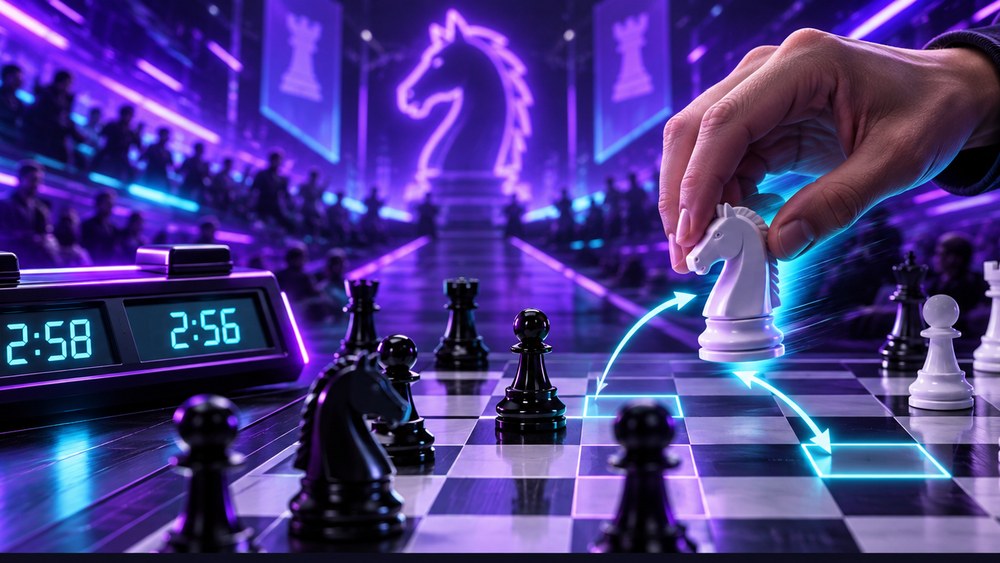
How To Improve At Blitz Chess?
⚡ How To Improve At Blitz Chess is about making reliable decisions quickly, not moving instantly. Pattern recognition, opening familiarity, and simple tactical discipline matter more than calculating long variations on every move.
Play quickly where you understand the position, not where you hope nothing is happening. Improving at blitz chess means recognising tactical danger early, knowing your opening plans, and reviewing the mistakes that repeat from one session to the next.
⚡ Blitz chess: build fast, dependable decisions
Blitz rewards players who recognize structures and know their plans. A narrow, well-understood repertoire saves time and reduces early mistakes. Short calculations must focus on forcing moves and immediate safety.
Clock skill is part of the game, but speed cannot rescue bad positions forever. Create easy decisions for yourself and difficult ones for the opponent.
🔍 When Should You Look For It?
- You lose on time with winning positions
- Opening choices consume too much time
- One-move blunders decide many games
- You move quickly in critical tactical positions
- Your repertoire produces unfamiliar structures
These signs do not replace calculation, but they tell you when the position deserves extra attention. The more of them that appear together, the more likely the theme is to affect the best move.
🧭 A Step-By-Step Plan
- Simplify the repertoire: Use openings whose plans and pawn structures you understand.
- Scan forcing moves: Check the opponent’s checks, captures, and threats before every move.
- Use the clock unevenly: Move quickly in familiar positions and pause for tactical decisions.
- Create practical pressure: Active pieces and clear threats force the opponent to spend time.
- Review repeated mistakes: Group losses by opening, tactic, clock, or endgame problem.
Work through the steps in order until the process becomes natural. In a practical game, you may complete the scan in seconds because the relevant relationships are already familiar.
♟️ A Practical Example
With thirty seconds left, the objectively best move may require a long calculation. A safe move that keeps all pieces protected and gives the opponent a difficult choice can be the better practical decision.
Notice that the correct decision comes from the position’s demands rather than a slogan. Good chess principles guide your search, while concrete calculation confirms the move.
❌ Common Mistakes
- Premoving in positions with tactical alternatives
- Playing too many unrelated openings
- Trying to calculate like a classical game
- Blaming every loss on the clock instead of the earlier decisions
The most dangerous mistake is using a correct idea in the wrong position. Always compare the strategic plan with immediate tactical details before committing.
🎯 A Training Method That Works
Play focused sets of five blitz games with one training goal, such as zero one-move blunders or reaching move fifteen with half your time. Review the games immediately and record recurring patterns rather than analyzing every variation.
Keep the exercises short enough to repeat consistently. Regular focused sessions create stronger pattern recognition than one long session followed by several weeks without practice.
✅ Quick Checklist
- Simplify the repertoire
- Scan forcing moves
- Use the clock unevenly
- Create practical pressure
- Review repeated mistakes
Use this checklist during training first. With repetition, it becomes a fast internal scan that supports better decisions without consuming too much time.
♟️ Coach’s Practical Test
Play a short blitz session with one rule: spend extra time only at genuine decision points—checks, captures, threats, pawn breaks, or irreversible exchanges. Between games, mark the first move where you played automatically and the position changed sharply.
Review no more than two moments per game. Create a replacement cue such as “scan checks” or “improve the worst piece,” then test it in the next session. Blitz skill grows from fast, dependable habits, not from trying to calculate every branch as deeply as in classical chess.
🎯 A focused five-game blitz chess session
Choose one goal before starting: for example, check the opponent’s forcing replies before every capture. Keep your usual openings and time control so that you are testing the new habit rather than changing everything at once.
After each game, save one turning point. Was your move wrong because you missed a check, forgot an undefended piece, or spent too much time choosing between similar plans? Write one sentence. Review the moves with an engine only after the game has finished and after recording your own explanation.
At the end of five games, look for a repeated cause. If three losses began with the same unfamiliar pawn structure, study its plans. If the openings were fine but you repeatedly missed a one-move threat, another opening line will not solve the immediate problem.
Suppose you have twenty seconds left in a complicated position. Do not ask which move produces the most spectacular attack. First check whether your king is in immediate danger and whether a piece is hanging. Then compare a forcing option with a move that keeps your position coordinated. Practical simplicity is useful only when the simpler move is tactically sound.
💬 Blitz chess training questions
Should I always premove a recapture?
No. A recapture that appears forced may be interrupted by a check or another stronger move. Use premoves selectively in positions where the opponent’s alternatives do not change what you intend to do. Saving a fraction of a second is not worth blindly accepting a tactical risk.
Is an increment useful for training?
An increment gives you some additional time after each move, but you still need to manage the starting clock. Choose a format that lets you practise your intended habit. There is no need to switch formats after every disappointing session.
Should every blitz loss receive a full analysis?
Start with one or two instructive moments, then analyse more deeply when the same problem recurs. A short review you actually complete is more useful than promising a long investigation and immediately starting another game.
Build the safety scan with themed tactical exercises. For related training, read about avoiding opening traps and spotting an in-between move.
Final Thoughts
Improve at blitz through familiar structures, fast threat scans, and practical clock use. Reliable moves under pressure matter more than occasional brilliance.
🌟 Improvement comes from recognizing the right moment, following a clear process, and reviewing the result honestly. Apply the idea in your own games until it becomes part of your natural thinking.

You may also like
Basic Checkmates in Chess: 5 Easy Steps to Confident Wins

How To Practice Blindfold Chess?