
How To Play Opposite-Side Castling Positions?
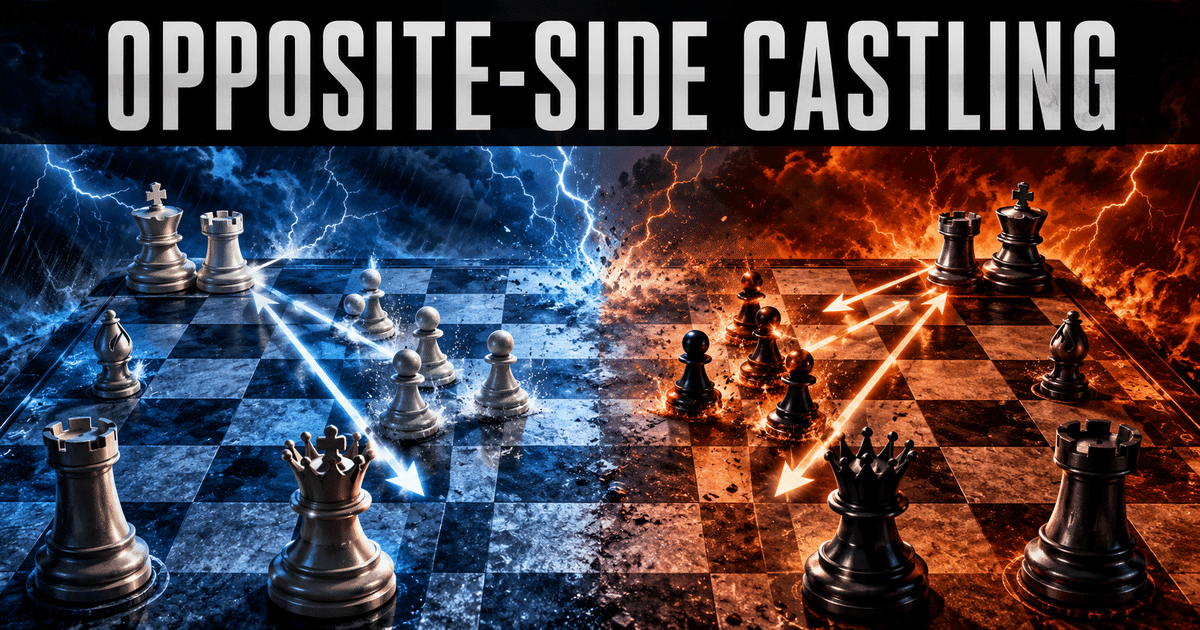
Opposite-side castling creates some of the most exciting positions in chess. Both kings live on different wings, so each player can advance pawns toward the enemy king without exposing their own shelter in the same way. 🔥 The result is often a direct race.
These positions reward speed, but not blind aggression. ⚡ The center, move order, piece coordination, and defensive resources determine which attack arrives first.
Why Opposite-Side Castling Is So Sharp
When kings castle on opposite wings, normal positional moves can carry tactical consequences. A pawn push may gain space, open a file, attack a defender, and threaten mate.
🏁 Every tempo matters because the opponent is conducting a similar operation. You must compare attacks rather than evaluate your plan in isolation.
Evaluate The Center First
Before launching a pawn storm, check whether the center is open, closed, or unstable. An open center can expose either king and make central development more urgent than wing play.
🧱 A closed or controlled center usually supports a flank race. If the center can open with tempo, calculate that break before moving pawns away from your king.
Count The Tempi
Estimate how many moves each side needs to create a real threat. Include pawn advances, piece transfers, file opening, and defensive moves. The first visible pawn push does not always represent the faster attack.
⏱️ Calculate the race concretely. A sacrifice that opens a file immediately may be faster than three natural pawn moves.
Choose The Correct Pawn Break
Identify which pawn can contact the enemy shelter and what exchange opens the most useful line. Typical ideas include h-pawn and g-pawn storms, f-pawn breaks, or sacrifices to remove a key defender.
🔨 Push with purpose. A pawn that advances without opening a line may become a target or give the opponent a useful blockading square.
Lead With The Right Pawn
The outside pawn can open a rook file, while an inner pawn may challenge the king’s shield directly. The correct choice depends on the opponent’s pawn formation and your available pieces.
🎯 Before moving, picture the likely captures. Which file opens? Which rook uses it? Can the opponent close the wing or sacrifice a pawn to slow you down?
Bring Pieces Before Sacrificing
A pawn storm creates lines, but pieces deliver the attack. Position the queen, rooks, bishops, and knights so they can use the files and squares that will open.
🚀 A sacrifice without enough attackers may simply lose material. The Attacking Mastery course develops the coordination, sacrifices, and king-attack patterns needed in these sharp positions.
Use The Center To Slow The Attack
A central break can interrupt an opponent’s pawn storm by opening lines toward their king or forcing pieces to defend. Sometimes the best wing defense is immediate action in the center.
💥 Compare urgency. If the central break creates checks or attacks the queen, it may gain the exact tempi required to win the race.
Keep The King’s Escape Squares
Do not move every pawn without considering escape routes. A small luft square or a piece that controls an entry point can prevent a mating net.
👑 King safety is concrete. An apparently exposed king may survive if the attacking files are closed, while a king behind three pawns can be vulnerable to one sacrifice.
Exchange Key Attackers
If the opponent’s attack is faster, exchange the queen, the most dangerous bishop, or a rook controlling the open file. Removing one key piece can collapse the entire attack.
🛡️ Do not exchange automatically when you are attacking faster. Selective trades should preserve your threats and remove the opponent’s counterplay.
Calculate Forcing Lines Deeply
Checks, captures, sacrifices, and direct threats dominate opposite-side castling positions. Generate forcing candidates for both players and calculate to a stable final position.
🧠 The Calculation & Evaluation Technique course helps organize sharp variations, compare candidates, and avoid stopping after the first attractive line.
Recognize Common Sacrifices
Typical themes include sacrificing a bishop on a pawn near the king, giving a rook for a defender, opening a file with a pawn sacrifice, and deflecting the queen from defense.
⚔️ Patterns generate candidates, but differences matter. Count attackers, defenders, escape squares, and the opponent’s forcing counterplay before committing.
Do Not Ignore Defensive Moves
One accurate defensive move can win an attacking race. A king step, queen exchange, blockading pawn, or defender transfer may neutralize threats while preserving your own attack.
🔒 The The Art Of Defense course develops active defensive methods and counterplay in dangerous positions.
Know When To Switch Plans
If the opponent closes your wing or exchanges key attackers, do not continue pushing automatically. Reassess the center, weak pawns, and possible endgame.
🔄 Opposite-side castling creates an attacking expectation, but the position can transform. A favorable queen exchange or central breakthrough may become the new priority.
A Practical Race Checklist
- Is the center stable enough for a wing attack?
- Which side creates a forcing threat first?
- What pawn break opens the useful file?
- Are enough pieces ready to join?
- What is the opponent’s strongest central or wing counterplay?
- Which attacker or defender should be exchanged?
- Does my king have an escape square?
📋 Use the checklist before every major pawn push. It prevents the excitement of the race from replacing calculation.
How To Practice Opposite-Side Castling
Collect model games from openings you play and pause before each pawn advance. Predict the break, the piece setup, and the opponent’s defensive resource.
📚 Replay the positions from both sides. Learning only the attack creates blind spots; understanding the defense makes your own attacks more accurate.
Common Opposite-Side Castling Mistakes
Common errors include pushing pawns before developing pieces, ignoring the center, sacrificing without enough attackers, and assuming the first attack must win.
🚨 Another mistake is calculating only your forcing moves. The opponent’s checks can completely reverse the race.
Final Thoughts
To play opposite-side castling positions, evaluate the center, count tempi, prepare the correct pawn break, coordinate the pieces, and calculate both attacks with equal seriousness.
🏆 Speed matters—but coordinated speed matters more. When your pawns open the right lines and your pieces are ready to enter, the attack becomes both exciting and sound.

You may also like

How to Study a Chess Course: 5 Easy Steps

How To Play Gambit Positions In Chess?