How To Play Positions With A Backward Pawn?
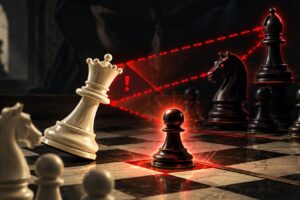
♟️ How To Play Positions With A Backward Pawn requires separating a static weakness from a dynamic opportunity. A backward pawn can be difficult to advance and may sit on an open file, but it can also support useful squares and give nearby pieces clear defensive roles.
The goal is to turn the idea into a practical decision process you can use during real games. The sections below explain what to notice, how to act, and how to train the skill deliberately.
What Does This Idea Mean?
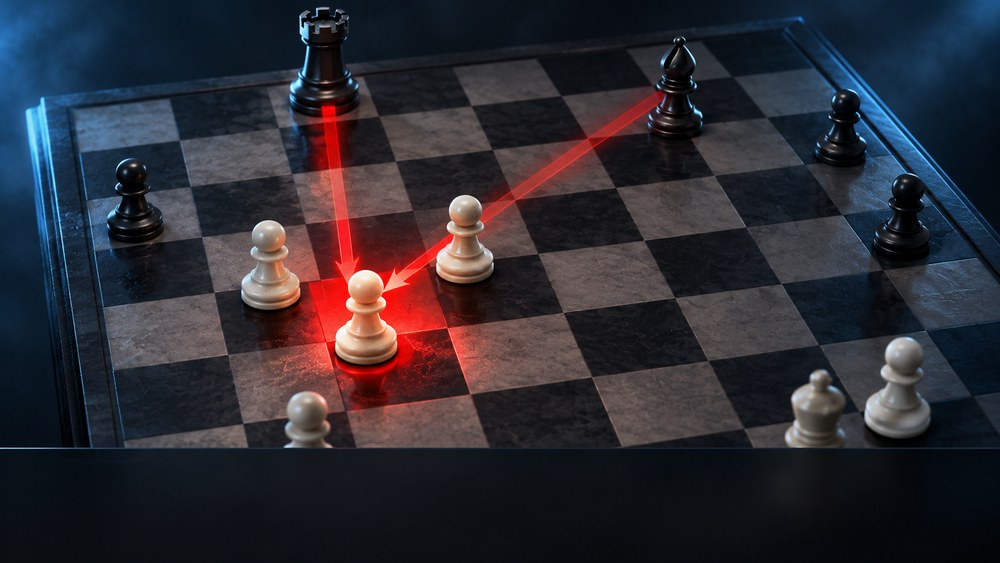
A pawn is backward when neighboring pawns have advanced beyond it and cannot protect its advance. The square directly in front of it often becomes an outpost for the opponent. The weakness matters most when the pawn is fixed and easy to attack.
Do not defend the pawn forever with passive pieces. Your strategic task is to prepare its advance, exchange the blockader, create play on the opposite wing, or transform the structure before pressure becomes permanent.
🔍 When Should You Look For It?
- The pawn cannot advance safely in one move
- The square in front of it is controlled by enemy pieces
- An opposing rook can attack it on a semi-open file
- Your pieces are tied to its defense
- A pawn break could remove or advance the weakness
These signs do not replace calculation, but they tell you when the position deserves extra attention. The more of them that appear together, the more likely the theme is to affect the best move.
🧭 A Step-By-Step Plan
- Challenge the blockading square: Exchange or drive away the piece sitting in front of the pawn.
- Prepare the freeing break: Use pieces and neighboring pawns to make the backward pawn’s advance tactically sound.
- Create active counterplay: Attack a second area so the opponent cannot concentrate every piece on one weakness.
- Trade the right pieces: Exchange an enemy blockader or attacking rook, not your own active defenders.
- Accept a structural transformation: A temporary isolated pawn or exchanged pawn may be preferable to permanent passivity.
Work through the steps in order until the process becomes natural. In a practical game, you may complete the scan in seconds because the relevant relationships are already familiar.
♟️ A Practical Example
In many Sicilian structures, Black’s backward d6-pawn looks weak while the d5-square is sensitive. Black often survives by controlling d5, preparing …d5, or attacking on the queenside. If White spends too much time piling up on d6, active moves on the c-file can change the evaluation completely.
Notice that the correct decision comes from the position’s demands rather than a slogan. Good chess principles guide your search, while concrete calculation confirms the move.
❌ Common Mistakes
- Calling every backward pawn a losing weakness
- Placing several major pieces behind the pawn without seeking activity
- Pushing the pawn before controlling its destination square
- Trading active pieces and entering a purely defensive endgame
The most dangerous mistake is using a correct idea in the wrong position. Always compare the strategic plan with immediate tactical details before committing.
🎯 A Training Method That Works
Collect five master games featuring a backward d-pawn. Pause before every structural decision and predict whether the defender will advance, exchange, or keep the pawn. Record which pieces successfully challenge the blockader. The repeated pattern will make these positions far less mysterious.
Keep the exercises short enough to repeat consistently. Regular focused sessions create stronger pattern recognition than one long session followed by several weeks without practice.
✅ Quick Checklist
- Challenge the blockading square
- Prepare the freeing break
- Create active counterplay
- Trade the right pieces
- Accept a structural transformation
Use this checklist during training first. With repetition, it becomes a fast internal scan that supports better decisions without consuming too much time.
♟️ Coach’s Practical Test
Choose a position with a backward pawn on a half-open file. Mark the pawn’s main defender, the square directly in front of it, and the opponent’s most useful blockade square. Then compare three plans: defend the pawn, advance it with a prepared break, or sacrifice it for activity.
Do not choose by appearance alone. Calculate one concrete line for each plan and score the resulting piece activity. The best plan often solves the surrounding squares before it solves the pawn itself.
Continue Your Training
Develop this skill through structured lessons and practical examples in the Modern Chess Academy Course Library.
Final Thoughts
A backward pawn becomes dangerous when it is fixed and your army is passive. Fight for the square in front of it, prepare a freeing break, and create counterplay before the opponent builds pressure.
🌟 Improvement comes from recognizing the right moment, following a clear process, and reviewing the result honestly. Apply the idea in your own games until it becomes part of your natural thinking.

You may also like
How to Study a Chess Course: 5 Easy Steps
How To Play Gambit Positions In Chess?