🛡️ A worse position is not necessarily a lost position. When something goes wrong, many players either become too passive or start forcing desperate tactics. Strong defense is more practical: understand the immediate danger, improve your coordination, and keep giving …
♟️ Learning how to make a plan in chess turns a normal middlegame into a series of purposeful decisions. After development and castling, start by reading the pawn structure, comparing your pieces, and checking what your opponent wants. When there …
♟️ Learning how to attack the king in chess starts with a position check, not a pawn push. Before you sacrifice, compare king safety, attackers and defenders, open lines, and the opponent’s counterplay. A sound attack is usually built by …
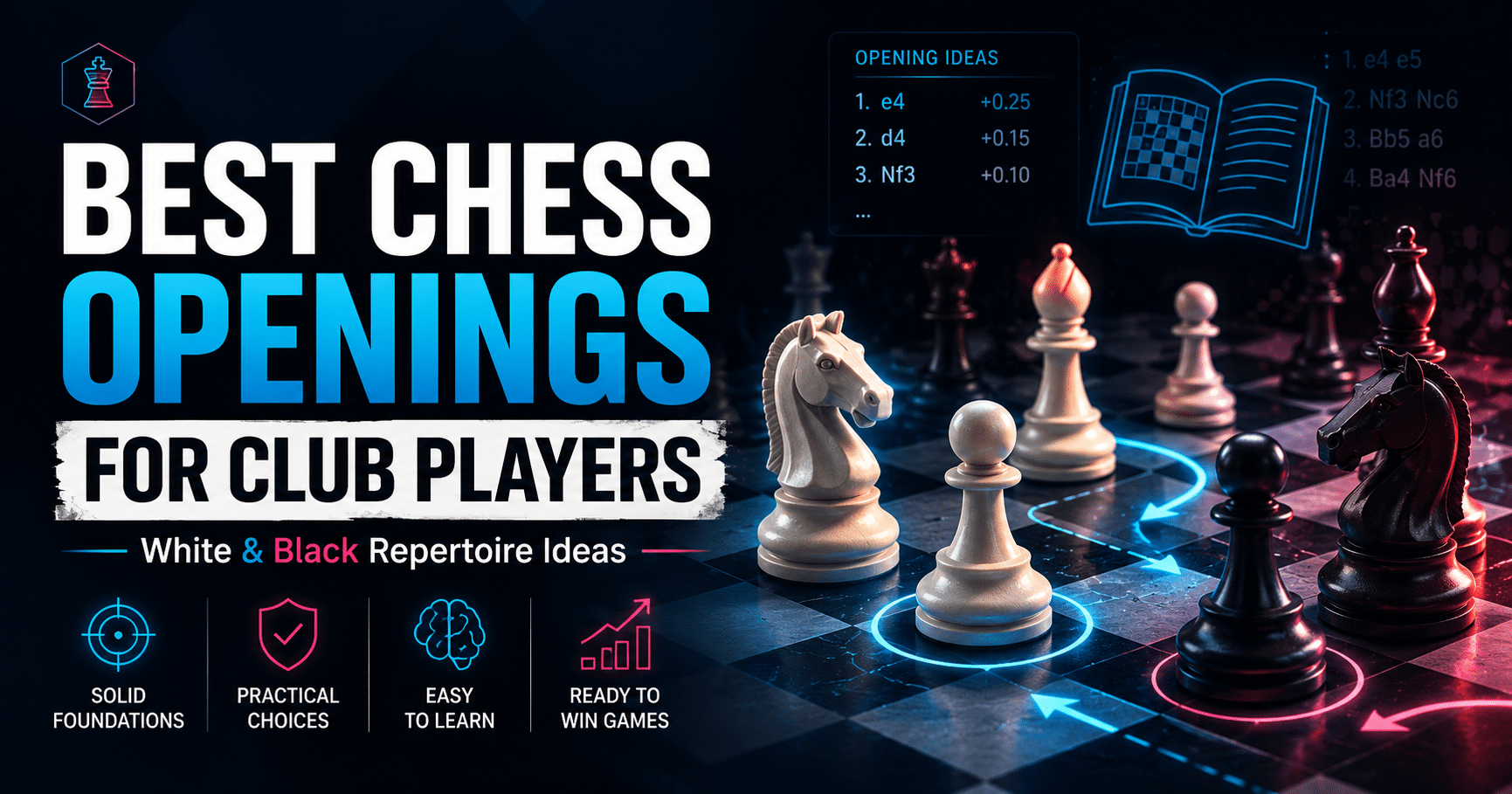
♟️ Choosing the best chess openings for club players is not about memorizing the sharpest engine lines. For most players, the best chess openings for club players are those that give clear plans, comfortable development, understandable pawn structures, and practical …
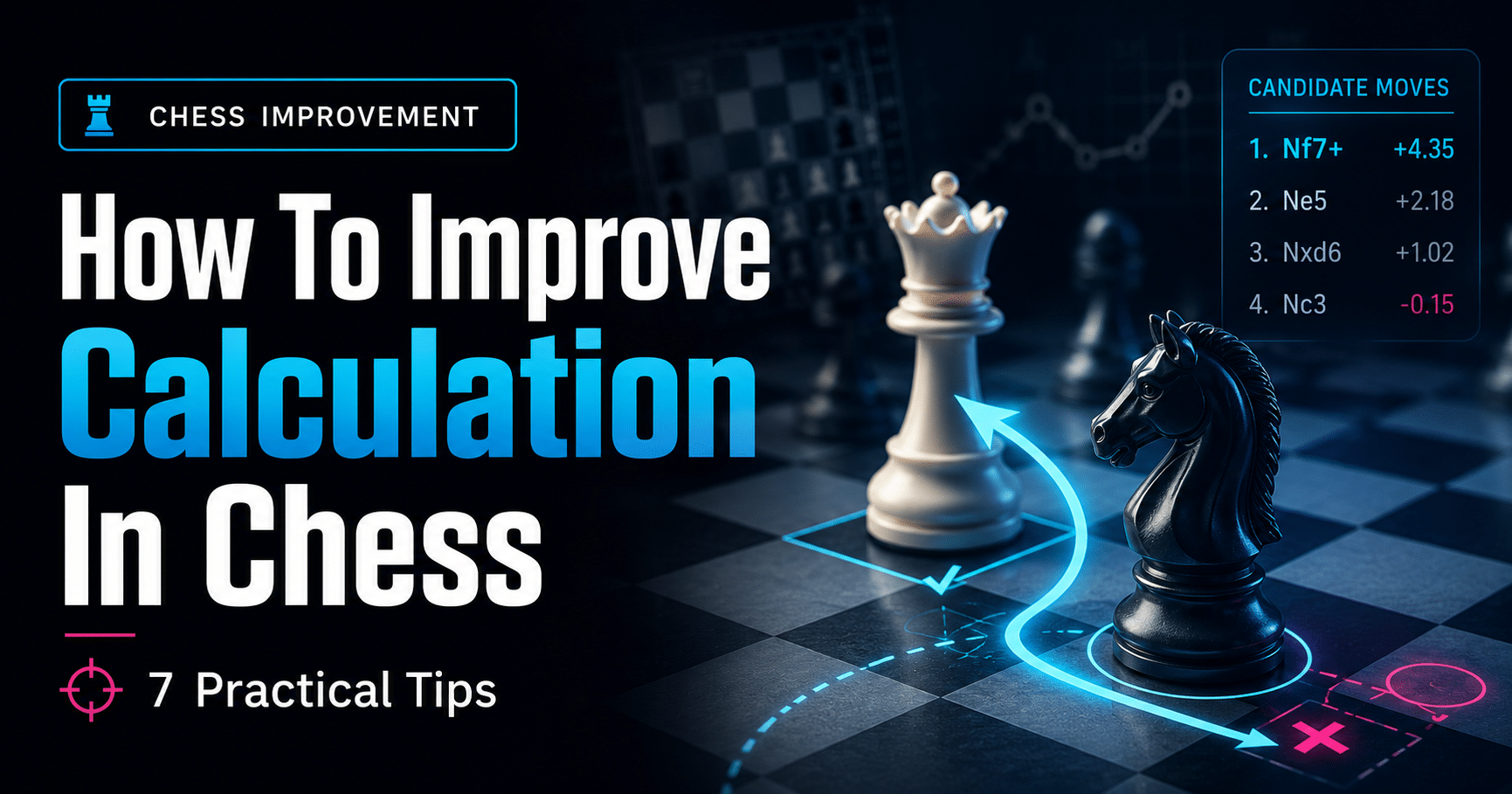
♟️ Many players ask how to improve calculation in chess, but the answer is not just “solve more puzzles.” Tactics are important, but learning how to improve calculation in chess requires more than finding a one-move trick. You need a …
♟️ Chess players blunder winning positions for predictable reasons. The advantage changes the task: instead of creating chances, you must control counterplay, improve your pieces, and convert patiently. One careless move, missed tactic, or wrong exchange can erase hours of …
An opposing pawn break can become dangerous before any pawn moves. Identify the missing preparation, price your restraint and compare allowing a prepared exchange.
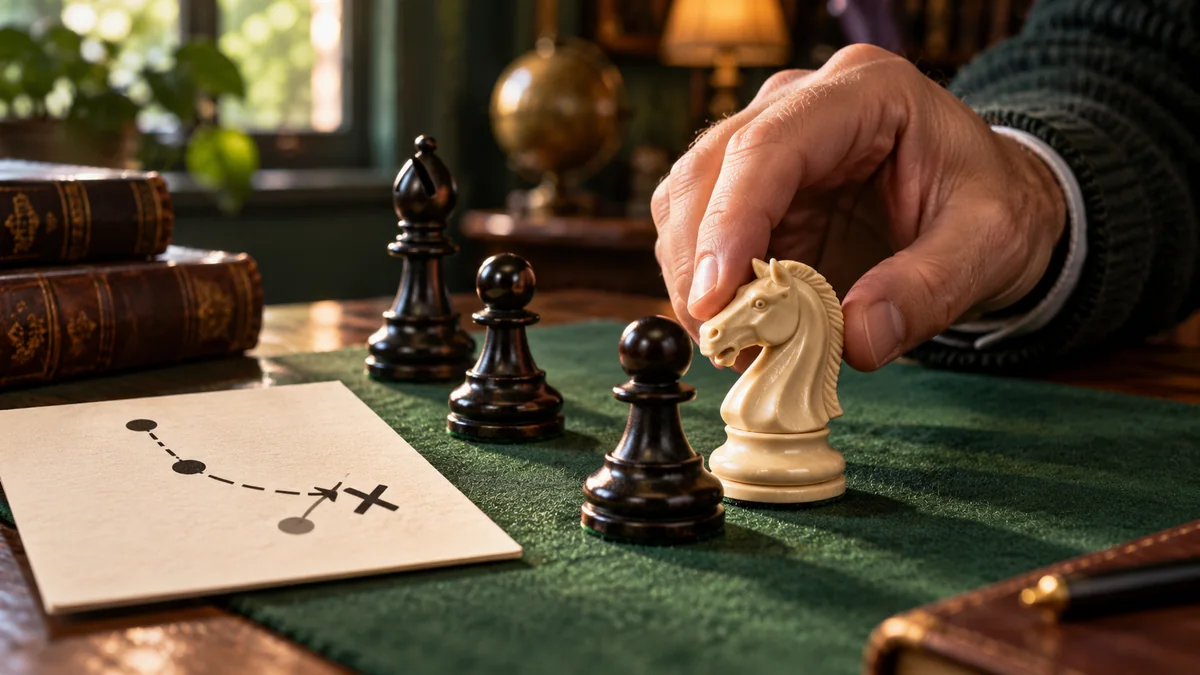
Plan a king march by testing its destination, exposed transit squares and changing pawn barriers, while allowing the opponent every turn of the journey.
Judge a wide-board minor-piece ending by who must travel, which duties can be combined and what happens to the unattended pawns during a transfer.