
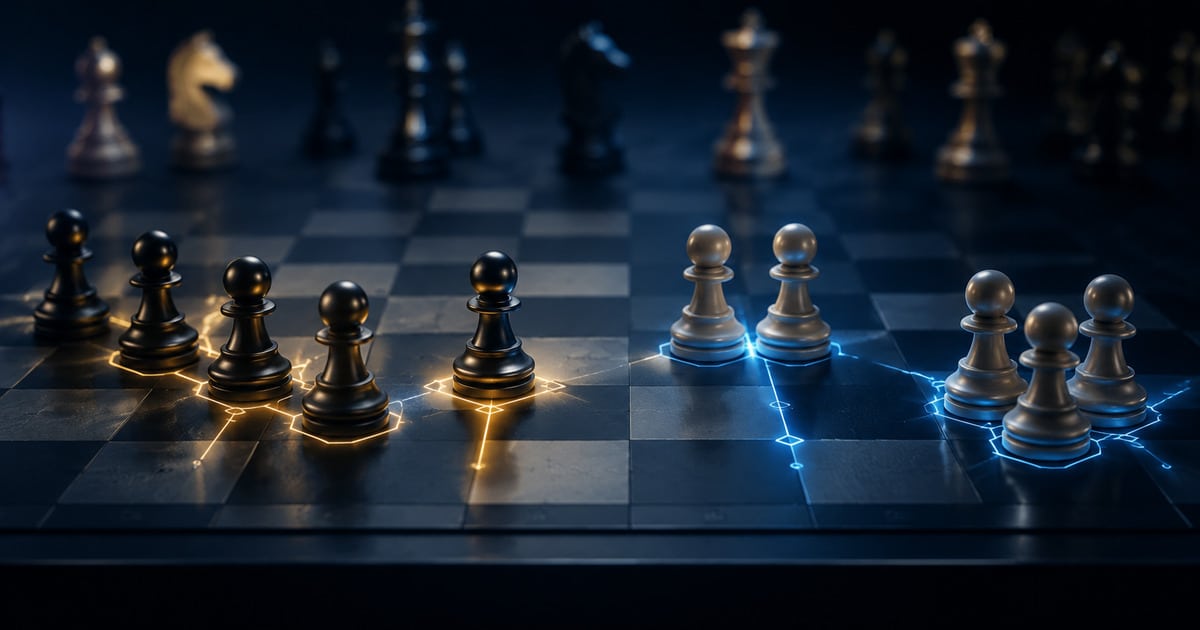
How To Understand Pawn Structures In Chess?
Pawn structures are the skeleton of a chess position. They determine which files can open, where pieces belong, which weaknesses may become permanent, and on which side of the board each player should act. 🧱 When you understand the structure, finding a plan becomes far less mysterious.
You do not need to memorize every possible pawn formation. Begin by reading the current structure: locate the pawn chains, breaks, weak pawns, strong squares, and likely endgame features. These clues connect the position to practical decisions.
Why Pawn Structures Matter
Pieces can change direction quickly; pawns usually cannot. Every pawn move leaves some squares behind and changes lines for the pieces. That permanence gives the structure its strategic importance.
A good pawn structure is not simply one without doubled or isolated pawns. ⚖️ A structural weakness may be acceptable if it provides activity, open files, central control, or a strong outpost. Always compare what the structure gives with what it concedes.
Start With The Pawn Chains
Identify connected pawns and the direction each chain points. The base of a chain is often a natural target because it supports the pawns ahead. The leading pawn may gain space but can become difficult to defend.
As a general guide, attack in the direction your pawn chain points while challenging the opponent’s base. ➡️ This is not an automatic rule, but it helps reveal where your space and piece activity can be used.
Find The Pawn Breaks
A pawn break is a pawn move intended to challenge the opponent’s structure and open lines. Ask which breaks are available now, which need preparation, and which side benefits if files or diagonals open.
The break is often the central strategic question. 🔨 If you can achieve it under favorable conditions, passive pieces gain activity and weaknesses appear. If the opponent’s break is dangerous, you may need to prevent, delay, or meet it with a counter-break.
Understand Tension Before Resolving It
When two pawns attack each other, you may capture, advance, or maintain the tension. Capturing clarifies the structure but can release the opponent’s pieces. Advancing gains space but may close lines and leave weak squares.
Keeping tension preserves options and can make the opponent uncomfortable. ⏳ Before resolving it, calculate how the recapture changes files, diagonals, outposts, and the best squares for each piece.
Open, Closed, And Semi-Open Centers
In open centers, piece activity, development, and king safety become urgent. Bishops and rooks gain range, while slow maneuvers may be punished. In closed centers, space and pawn breaks matter more, and knights often find stable outposts.
Semi-open centers contain fixed features alongside active possibilities. ♟️ One file may be open while another wing remains locked. Your plan should reflect the actual lines available, not a broad label applied without examination.
Isolated Pawns
An isolated pawn has no friendly pawn on an adjacent file. It may be a long-term weakness because another pawn cannot protect it, especially in an endgame. Yet it can also provide space, open files, and active piece play.
The side with the isolated pawn often seeks activity and a timely advance before pieces are exchanged. The defending side usually blockades, trades active pieces, and attacks the pawn. 🎯 Evaluate whether the pawn is weak now or only potentially weak later.
Doubled Pawns
Doubled pawns can be hard to advance and may create fixed targets, but they also open files and control useful squares. A doubled pawn near the center can support important outposts or strengthen a key color complex.
Do not reject an exchange simply because it doubles your pawns. 🔍 Compare the resulting activity, bishop lines, rook files, and endgame. Structural labels are starting points for analysis, not verdicts.
Backward Pawns
A backward pawn cannot safely advance and lacks support from neighboring pawns. It becomes especially vulnerable on an open or half-open file. The square directly in front of it may serve as a valuable outpost.
Attack the pawn only when your pieces can do so without losing activity elsewhere. 🧭 If you own the backward pawn, seek the freeing advance, exchange the blockader, or create counterplay on another part of the board.
Passed Pawns
A passed pawn has no opposing pawn blocking it or controlling its path on adjacent files. Its value increases as it advances, especially when supported by active pieces or another connected passer.
Passed pawns can distract the opponent even when they do not queen. 🚀 Push them when the advance gains something concrete; otherwise, improve the supporting pieces first. Rooks generally belong behind passed pawns, whether supporting your own or restraining the opponent’s.
Hanging Pawns
Hanging pawns are connected pawns, usually on adjacent central files, with no friendly pawns beside them. They control space and can support active pieces, but may become targets if fixed or blockaded.
The side with hanging pawns often prepares an advance that creates activity or a passed pawn. The opponent aims to restrain them and force a weakness. 🔗 Timing is everything: active before the break, vulnerable after the position becomes static.
Pawn Majorities And Minority Attacks
A pawn majority can create a passed pawn if advanced under favorable conditions. Count the pawns on each wing and evaluate whose king or pieces can support them. In endgames, a distant majority may distract the enemy king.
A minority attack uses fewer pawns to challenge a larger pawn group, often creating a backward or isolated target. ♙ The objective is usually not to win a pawn immediately but to create a lasting weakness for the pieces to attack.
Weak Squares And Color Complexes
Every pawn move changes the squares it controls. A weak square cannot be protected by a pawn and may become an outpost. Several weak squares of the same color can create a vulnerable color complex, especially around a king.
Place a piece on an outpost only if it has a useful role and cannot be exchanged easily. 🎨 Also consider which bishop remains. A dark-squared weakness matters far more when the opponent possesses the dark-squared bishop.
Let The Structure Guide Piece Placement
Knights prefer stable central squares and closed positions. Bishops need useful diagonals and targets on both wings. Rooks belong on open and half-open files, while queens work best after the minor pieces establish control.
Ask which pawn break your pieces should support and which enemy break they must restrain. 🔧 The Master Chess Strategy course develops this connection between structure, piece placement, and practical planning.
Read The Structure Step By Step
- Locate the pawn chains, islands, and fixed pawns.
- Mark isolated, doubled, backward, and passed pawns.
- Identify weak squares created by pawn moves.
- List the available pawn breaks for both sides.
- Decide which pieces benefit if the position opens or closes.
- Choose a plan that prepares your break or restricts the opponent’s.
Repeat the scan after every pawn exchange or major advance. 🔄 The structure’s strategic meaning can change instantly when a file opens or a weakness disappears.
Study Typical Structures Through Model Games
Choose structures that appear in your opening repertoire and collect several clear model games. Study where the pieces went, which pawn break was prepared, which exchanges helped, and what endgame arose.
Focus on recurring relationships rather than memorizing every move. 📚 When the same structure appears through a different move order, you will still recognize the plan.
Practice With Structure-Only Positions
Set up a middlegame, remove the pieces temporarily, and study only the pawns. Predict the open lines, strong squares, breaks, and likely wings of play. Then restore the pieces and decide which ones are well or poorly placed.
This exercise separates the long-term map from tactical noise. 🗺️ Add calculation afterward to verify whether the strategic plan is tactically possible.
Pawn Structures In The Endgame
As pieces disappear, structural features become more important. Passed pawns, majorities, pawn islands, and king access may decide the game. A weakness that was easy to defend in the middlegame can become a permanent endgame target.
Before exchanging into an ending, calculate the king routes and pawn races. For systematic work on these transitions, the Complete Endgame Course connects essential theory with practical pawn-structure decisions.
Common Pawn-Structure Mistakes
Common mistakes include labeling every doubled pawn as bad, attacking a weakness that cannot be reached, advancing the passed pawn too soon, and executing a pawn break before the pieces are ready. Players also copy a standard plan without checking tactical differences.
Avoid making pawn moves simply because no piece move is obvious. ✋ Since pawn moves are irreversible, they should answer a clear positional or tactical need.
Final Thoughts
To understand pawn structures in chess, study chains, weaknesses, breaks, space, and the lines that may open. Then connect those features to piece placement and concrete calculation.
🧠 The pawns tell the position’s long-term story, but they do not play alone. Read the structure, prepare the right transformation, and your plans will become more logical, more consistent, and much easier to execute.

You may also like

How to Study a Chess Course: 5 Easy Steps
How To Play Gambit Positions In Chess?