
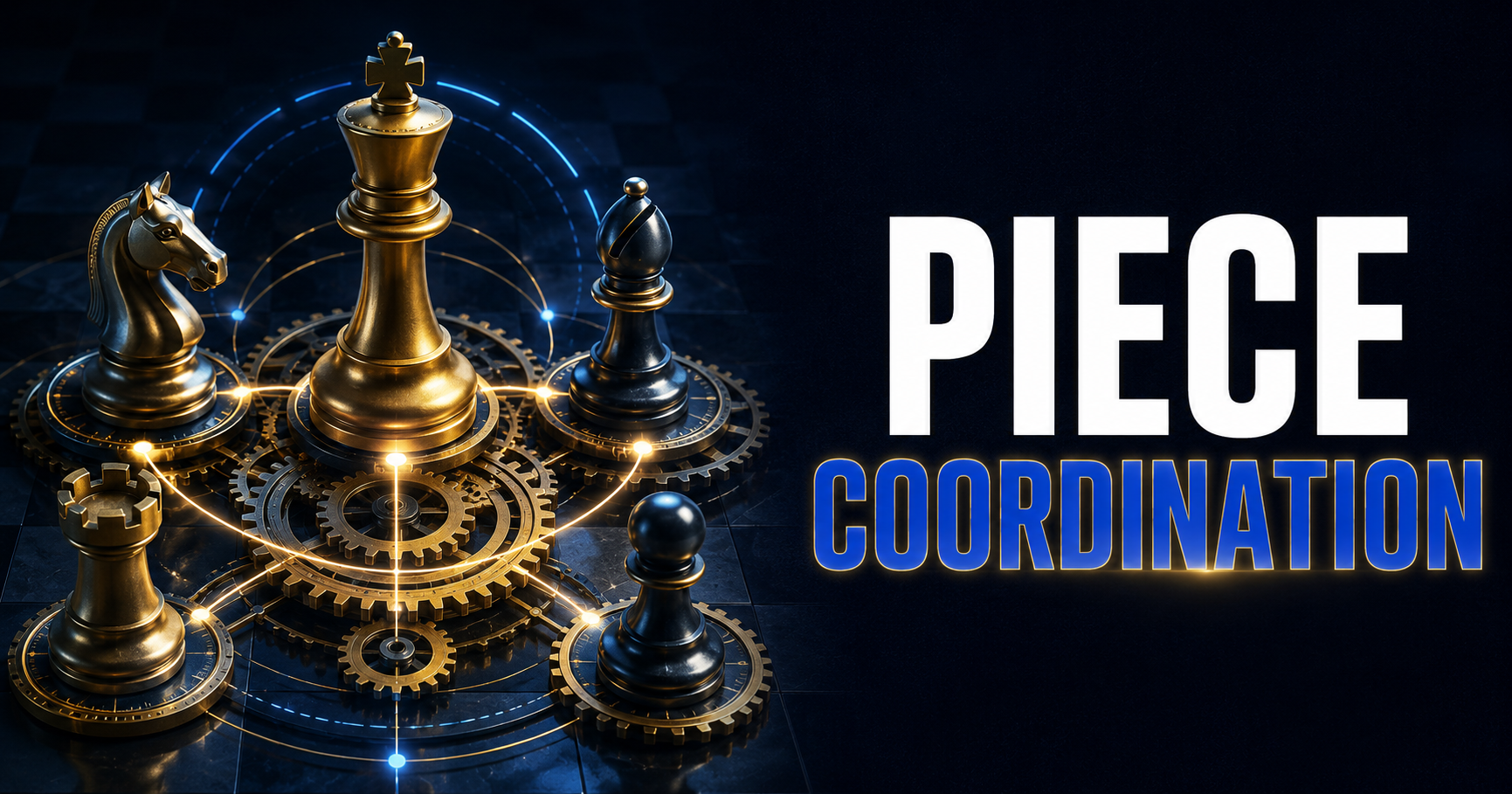
How To Improve Piece Coordination In Chess?
Piece coordination in chess is the difference between owning five active-looking pieces and having one army. 🎼 A knight, bishop, rook, and queen may each stand well, yet accomplish almost nothing if they attack different targets or block one another.
Great coordination feels almost effortless: every piece supports another, every move adds pressure, and tactical ideas appear naturally. 🔗 The secret is not moving pieces faster—it is giving them a shared purpose.
Give The Army One Clear Mission
Coordination begins with a target. It may be a weak pawn, an exposed king, an open file, or a critical square. Once the target is chosen, ask how every piece can contribute to the same story.
🎯 A rook attacks directly, a bishop removes a defender, a knight blocks an escape square, and the queen creates the final threat. The pieces do not need identical jobs; they need compatible jobs.
Improve Your Worst-Placed Piece
The fastest way to improve coordination is often to find the piece doing the least. One inactive knight or trapped rook can disconnect the entire position and force the other pieces to work alone.
🧭 Before searching for a brilliant move, ask: “Which piece would I remove from the board without noticing?” Re-route that piece toward the center, an open line, or a useful defensive square.
Let The Pawn Structure Guide The Pieces
Pawns determine where pieces can travel and which wing deserves attention. A closed center may invite knight maneuvers and flank play, while an open center rewards bishops and rooks on active lines.
🧱 Build your piece setup around the structure instead of placing pieces on attractive-looking squares. The Master Chess Strategy course shows how structures, squares, and piece roles fit together.
Connect The Heavy Pieces
Rooks become powerful when they communicate along ranks and files. Clearing the back rank, moving the queen from a blocking square, and placing rooks behind pawn breaks can transform a quiet position.
🏗️ Do not double rooks simply because a file is open. First ask what they will attack, whether the entry squares are controlled, and which rook should lead.
Coordinate Before You Attack
An attack usually fails when the first piece arrives alone. Count attackers and defenders, identify the piece that is missing, and prepare the line before sacrificing material.
🚀 The queen is often the finisher, not the starter. Bring minor pieces and rooks into position first. The Attacking Mastery course develops this layered approach to king attacks.
Coordinate The Defense Too
Defensive coordination is equally important. One piece can block a file, another can guard an entry square, and a queen exchange may remove the opponent’s attacking network.
🛡️ Avoid assigning three pieces to the same small threat while another weakness collapses. The The Art Of Defense course teaches active defense, defender transfers, and counterplay.
Avoid Positional Traffic Jams
Pieces can be active individually yet interfere with one another. A knight may block a bishop, a queen may occupy a rook’s file, or two pieces may compete for the same square.
🚦 When your position feels cramped, trace each piece’s route. Move the piece with the fewest alternatives first, and keep flexible squares free for pieces that may need to switch wings.
Use Exchanges To Improve Harmony
An exchange can remove your opponent’s best coordinator or eliminate one of your own awkward pieces. Trading a bad bishop, a blockading knight, or a dominant defender may unlock the whole board.
🔄 Evaluate the position after the recapture. If your remaining pieces gain clearer lines and common targets, the exchange has improved coordination even when material stays equal.
Create A Logical Move Order
Correct ideas can fail in the wrong order. A rook may need a file opened before it enters, while a knight may have to control a square before the queen approaches.
⏳ The Middlegame Planning course helps connect long-term plans with precise move orders, so every move prepares the next one.
A Piece-Coordination Checklist
- What is my main target or defensive priority?
- Which piece is contributing the least?
- Are any pieces blocking one another?
- Which open file, diagonal, or outpost should the army use?
- Do I have enough pieces near the attacking area?
- Can an exchange improve the roles of my remaining pieces?
- What move order brings the pieces together safely?
📋 Use this checklist whenever your position looks promising but you cannot find a concrete plan. Usually the missing clue is one disconnected piece.
How To Train Piece Coordination
Choose a master game and pause every five moves. Describe the job of each piece in one short sentence. If you cannot explain a piece’s role, predict how the player will improve it.
🧪 In your own games, mark the moment your pieces stopped cooperating. Look for blocked lines, duplicated jobs, and neglected defenders. This kind of review turns an abstract idea into a practical habit.
Final Thoughts
To improve piece coordination in chess, create one clear mission, activate the worst piece, follow the pawn structure, and choose the correct move order.
✨ A coordinated army makes ordinary moves feel powerful. When every piece contributes to the same plan, tactics become easier to calculate and strategy becomes easier to execute.

You may also like
How to Study a Chess Course: 5 Easy Steps
How To Play Gambit Positions In Chess?