
How To Use A Space Advantage In Chess?
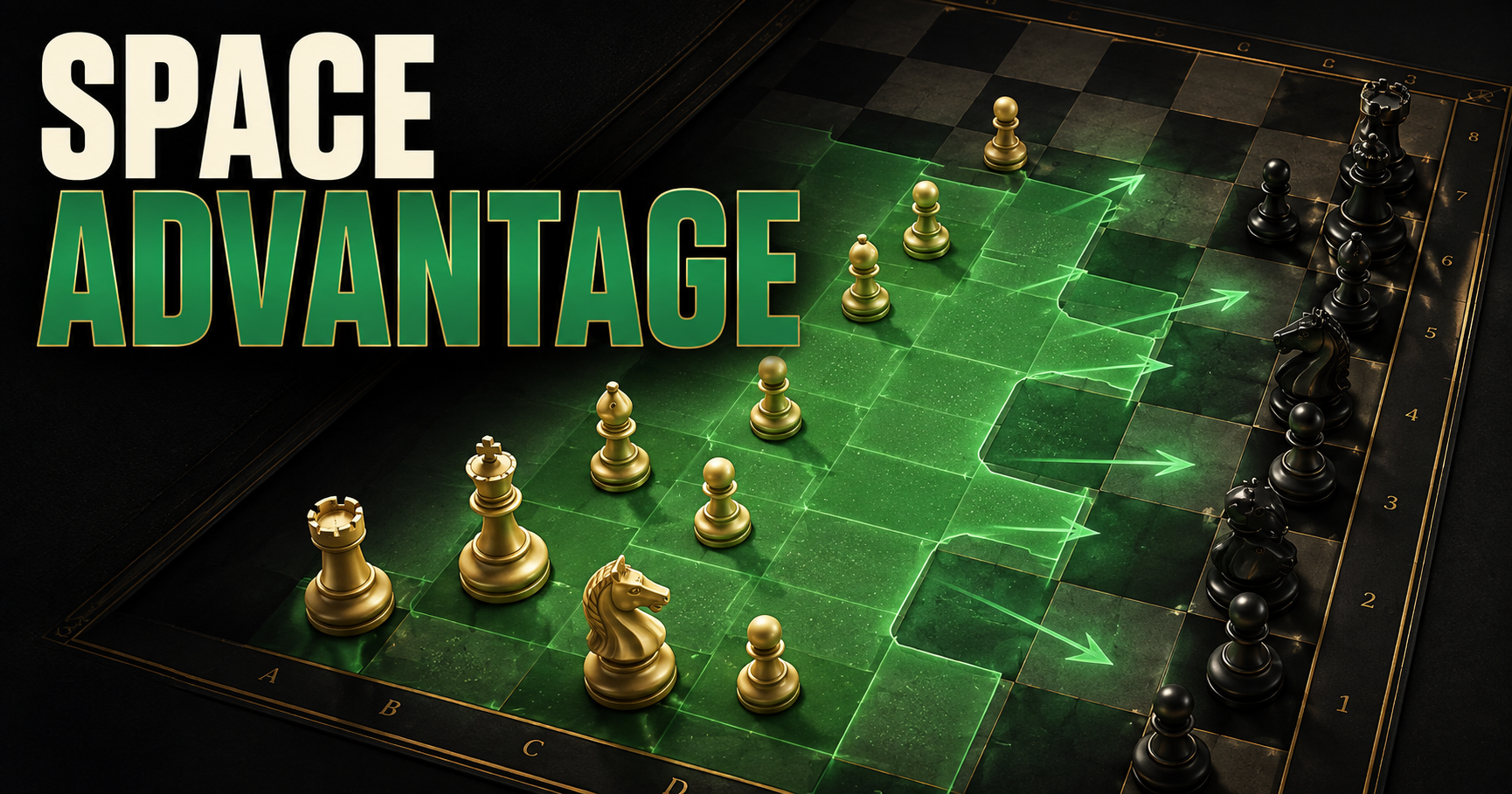
A space advantage in chess gives your pieces more room and leaves the opponent fewer comfortable squares. 🗺️ It can make a position feel easy—but space is potential, not a result. If you do nothing with it, the opponent may regroup and strike back.
The real skill is turning territory into restriction, better piece placement, and a well-timed breakthrough. 🚀 Done correctly, the opponent’s position becomes smaller with every move.
Understand What Space Actually Gives You
Space usually comes from advanced pawns that control squares in the opponent’s half. Those squares restrict enemy pieces and create safe routes for your own army.
📐 Do not count advanced pawns alone. Ask which pieces are restricted, which maneuvering squares you own, and whether your pawn chain can be attacked.
Restrict Before You Attack
A space advantage often works best when you first remove the opponent’s counterplay. Control their pawn breaks, deny active squares, and make every piece retreat or defend.
🔒 Restriction creates time. Once the opponent has no useful break, you can improve your position slowly without allowing tactical distractions.
Support The Advanced Pawn Chain
Your space-gaining pawns can become targets if they move too far without support. Reinforce the base of the chain, watch backward pawns, and calculate every attack on the front pawn.
🧱 The Master Chess Strategy course explains how pawn chains define both your attacking direction and your long-term weaknesses.
Improve The Pieces Behind The Pawns
More space means more squares, but you still need to choose the best ones. Place knights on protected central posts, bishops behind useful diagonals, and rooks behind the pawn break you intend to play.
♟️ Avoid pushing again merely because you can. Often the strongest use of space is a quiet maneuver that brings the final inactive piece into the game.
Switch From One Wing To The Other
The side with more space can usually transfer pieces faster. Create pressure on one wing, provoke defenders to move, and then switch to the opposite side.
🔀 This is especially powerful when the opponent’s pieces lack central squares. Your army crosses the board while theirs remains tied to defensive duties.
Prepare The Correct Pawn Break
Space becomes concrete when a pawn break opens a file, creates a passed pawn, or fixes a permanent weakness. Prepare the break with pieces before changing the structure.
🔨 The Middlegame Planning course helps identify the right break and coordinate the pieces that must support it.
Control The Opponent’s Liberation Break
A cramped position often has one freeing move. Find it before the opponent plays it. You may stop it, meet it with a favorable exchange, or allow it only when it opens lines for your pieces.
🚨 Treat that break as the opponent’s emergency exit. If you ignore it, your beautiful space advantage can disappear in a single tactical sequence.
Do Not Overextend
Advanced pawns gain territory but leave squares behind them. If the opponent attacks the pawn chain successfully, the extra space can turn into extra weaknesses.
⚠️ Keep enough pieces behind the structure and avoid pushing both wings without a reason. A space advantage is strongest when the pawns restrict the opponent without becoming loose targets.
Convert Space Into A Second Weakness
Once the opponent is tied to one weakness, use your space to create another. Fix a pawn on the other wing, invade through a new file, or improve the king before opening the position.
🏆 The Advantage To Victory course focuses on transforming positional advantages into concrete winning plans.
A Space-Advantage Checklist
- Which enemy pieces are restricted?
- What is the opponent’s freeing pawn break?
- Is the base of my pawn chain secure?
- Which of my pieces can improve without changing the structure?
- Can I switch pressure to the other wing?
- Which pawn break converts space into an open line?
- Am I gaining territory or creating targets for the opponent?
🧭 Space gives you choices. Use the checklist to make sure those choices lead toward a concrete plan rather than endless maneuvering.
How To Practice Playing With More Space
Study games from structures you actually play. Pause before every pawn advance and predict whether the strong side improves a piece, prevents a break, or opens the position.
📚 Replay the same position from the cramped side as well. Understanding the defender’s liberation plan will make you much better at preventing it when you hold the space advantage.
Final Thoughts
To use a space advantage in chess, restrict counterplay, support the pawn chain, improve every piece, and prepare the right pawn break.
🌟 Space is like extra room in a crowded building: it matters only if your pieces know where to go. Convert territory into activity, pressure, and finally a concrete breakthrough.

You may also like

How to Study a Chess Course: 5 Easy Steps

How To Play Gambit Positions In Chess?