♟️ Learning how to attack the king in chess starts with a position check, not a pawn push. Before you sacrifice, compare king safety, attackers and defenders, open lines, and the opponent’s counterplay. A sound attack is usually built by …


♟️ Learning how to attack the king in chess starts with a position check, not a pawn push. Before you sacrifice, compare king safety, attackers and defenders, open lines, and the opponent’s counterplay. A sound attack is usually built by …
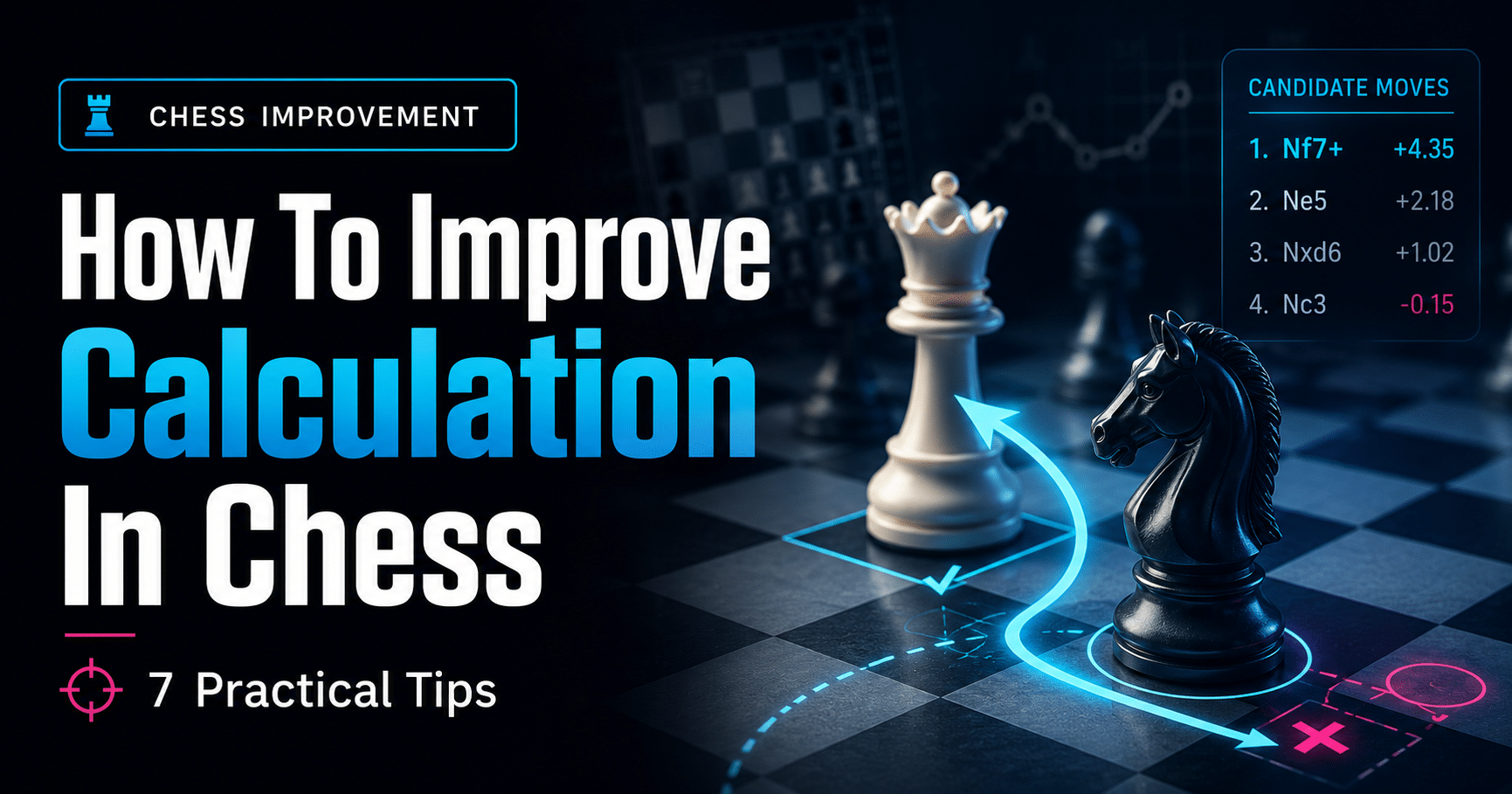
♟️ Many players ask how to improve calculation in chess, but the answer is not just “solve more puzzles.” Tactics are important, but learning how to improve calculation in chess requires more than finding a one-move trick. You need a …
♟️ Chess players blunder winning positions for predictable reasons. The advantage changes the task: instead of creating chances, you must control counterplay, improve your pieces, and convert patiently. One careless move, missed tactic, or wrong exchange can erase hours of …

Return to chess with a manageable playing routine instead of trying to recover everything at once. Use these five steps to assess your current needs, review recent games and choose your next training priority.

Make repeated calculation more useful by giving each pass a clear question. Learn to preserve conclusions, revisit changed assumptions and verify your choice without automatically restarting every line.

Test whether a rook can hold the square ahead of a passer, keep useful lines and hand the task over without releasing the pawn.

Compare king entrances, knight routes and useful bishop diagonals in a compact ending. Learn when a pawn change creates access and when it helps the defender.

Judge the entry into a rook ending by its immediate demands: surviving rook duties, checking lines, king shelter and the first useful action you can take.

Use a quiet king move to remove a checking tempo or pin before your next operation. Compare both move orders and test the new square against resistance.
Not a member yet? Register now
Are you a member? Login now