
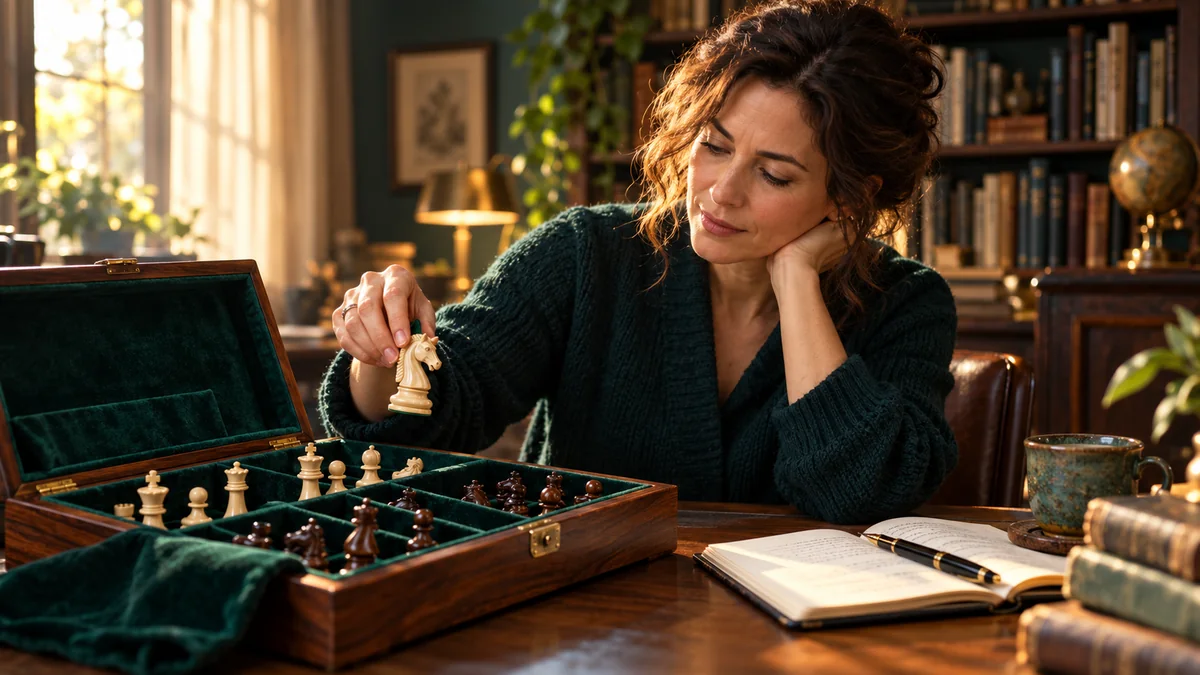
Playing Chess After a Long Break: 5 Steps for a Manageable Return
Playing chess after a long break can leave you unsure where to start. You may remember familiar ideas but need more time to make decisions. Begin with a few current observations rather than treating your old rating as a deadline.
The first goal is straightforward: find a playing and review routine that fits your life now. These five steps help you return without turning preparation into a reason to keep postponing your first game.
🎯 1. Choose the kind of return you want
Decide what you want from chess this month: relaxed games with friends, regular online play or preparation for a club event. Each calls for a different amount of study.
Choose one realistic playing slot and leave time to look back afterwards. Pick a pace that gives you room to think and fits the time you have. An ambitious schedule that you repeatedly abandon needs adjusting.
Write a small aim: “Play one thoughtful game and understand one decision afterwards.” You can make the goal more demanding once the routine is working.
🔎 2. Find out what feels rusty
Before buying new material or changing your openings, sample what you already know. Review a familiar explanation, attempt a few suitable exercises and play a practice game. Keep the sample short enough to finish.
- Recall: what could you explain without checking your notes?
- Thinking: where did you struggle to choose or check an idea?
- Pace: which decisions took longer than you expected?
- Workload: did the game and review fit your available time?
Record observations, not verdicts. “I spent too long searching for an old opening memory” is more useful than “I have forgotten everything.” One game cannot describe your whole playing strength.
🔁 3. Repeat a small playing cycle
Before the next game, refresh one familiar topic that matters to your play. Keep the session bounded; you do not need to relearn your entire repertoire before starting.
Afterwards, note what you remember about one uncertain decision before opening outside analysis. What were you trying to do? What made you hesitate? Then investigate that question using a game-analysis method.
Choose one follow-up task from the review. It might be revisiting an explanation, practising a checking habit or arranging a game at a more suitable pace. Keep the task small enough to complete before adding another.
🛠️ 4. Adjust the part that is not working
After several sessions, look for a repeated difficulty. Compare broadly similar conditions: a distracted late-night game and a rested weekend game may tell different stories.
- The session never fits: shorten the study component or choose another playing slot.
- One familiar idea stays unclear: revisit its explanation instead of adding a new subject.
- You keep circling around old memories: practise switching from recall to independent assessment.
- You cannot identify the problem: save a precise question for a coach or training partner.
Change one main part of the routine at a time where practical. Changing the workload, openings and time control together makes it harder to judge what helped.
✅ 5. Move into a normal routine
Your return phase can end when you have a workable schedule and enough recent experience to choose your next training priority. Reaching your former rating is not a prerequisite.
Ask whether you can finish the planned sessions, explain what needs attention and choose the next task from recent games. If so, build from that evidence. If not, identify the unresolved part rather than restarting an enormous “learn everything again” plan.
📋 Checklist for playing chess after a long break
- Choose a playing time you can realistically protect.
- Refresh one familiar idea, then stop preparing.
- Leave a separate window for a short review.
- Write down one uncertainty immediately after play.
- Choose the next task from that review, not from the result alone.
A competitive event adds its own preparation needs. Check the organiser’s information and use a separate tournament preparation checklist rather than assuming this return routine covers the event.

You may also like
How to Study a Chess Course: 5 Easy Steps

Gambit Positions in Chess: 5 Keys to Strong Compensation